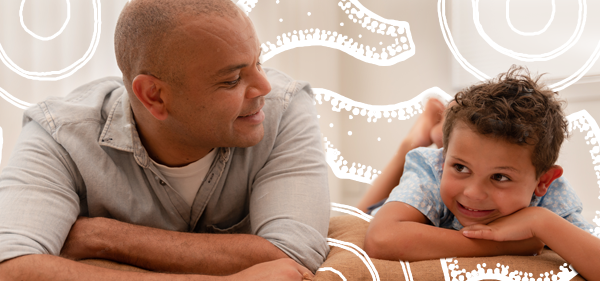



As one in five First Nations children face undiagnosed hearing loss in the years before starting school, Hearing Australia urges early hearing checks

As thousands of Australian families prepare for their child’s first year of school, Hearing Australia data shows that one in five First Nations children aged 0-6 experience undiagnosed hearing loss1, a hidden barrier which can impact listening, language, learning, and social skills. Hearing Australia is urging parents, carers, educators and local health services to prioritise hearing checks early in the school year to give every child the best possible start.
Through Hearing Australia’s Hearing Assessment Program, Early Ears (HAPEE), more than 70,000 hearing assessments have been provided to young First Nations children since the program launched in 2019. Around 37 per cent had ear health issues, with one in five experiencing undiagnosed hearing loss on at least one occasion.1 Through HAPEE, children are then referred for critical medical attention and support services to get the help they need.
“Identifying and addressing hearing issues early, before school starts, is important for children’s success,” says Yorta Yorta woman Kirralee Cross, Partnership Specialist at Hearing Australia. “Early school years lay the foundation for lifelong learning. Regular ear checks when they’re young, every six months and at the start of school, are vital for First Nations children, as middle ear infections can be hard to detect. Good hearing is essential for reaching key developmental milestones and thriving in the classroom and beyond.”
The HAPEE data also shows that around 8 per cent of Aboriginal and Torres Strait Islander children assessed experience chronic persistent ear trouble.1
Furthermore, the Australian Institute of Health and Welfare (AIHW) recently revealed for ear related hospital procedures, First Nations children aged 3–4 had the highest rate of any First Nations age group in 2023–24.2
Spotting the signs and regular checks can even the playing field for school starters
Professor Kelvin Kong AM, Chair of the AIHW Aboriginal and Torres Strait Islander Ear and Hearing Health Data and Reporting Advisory Group and Ear, Nose and Throat Surgeon, says, “Early detection and treatment of middle ear infections are critical, especially for very young children aged 0–4, to prevent repeated infections and hearing loss.”
HAPEE is a national program focusing on early intervention and delivering services to First Nations children aged 0-6, with more than 10,000 children accessing the program every year. A free hearing check includes a number of age-appropriate tests of hearing and middle ear function.
Empowering educators with play-based resources
To strengthen school readiness, Hearing Australia recently launched the Spirit of Sound Educator’s Guide, a new play-based resource designed to celebrate the power of sound and support the hearing health of Aboriginal and Torres Strait Islander children in early learning settings. It has been downloaded more than 1,000 times since it was released in September last year.
“The Spirit of Sound Educators’ Guide helps educators embed sound, story and connection into everyday teaching,” says Kirralee. “It offers practical, inclusive approaches to sound-based learning to help school-aged children have the best possible start.”
Working with communities to improve ear and hearing health outcomes
Kim Terrell, Managing Director of Hearing Australia says, “We are committed to working in partnership with Aboriginal Community Controlled Health Services and local health services, educational institutions and the broader healthcare system to help close the hearing health gap. Through education and hearing health programs, we can identify children experiencing ear health issues early and connect them with support sooner, in turn giving them a greater chance of reaching their full potential.”
To learn more about Hearing Australia’s First Nations services visit hearing.com.au or to download The Spirit of Sound Educators’ Guide visit https://www.hearing.com.au/spirit-of-sound-2025/
Disclaimer
The Hearing Assessment Program is funded by the Australian Government. Aboriginal and Torres Strait Islander children not yet attending full time school (i.e. children in the years prior to primary school) are eligible to be seen.
All services provided under this program are free of charge. A hearing check includes a number of age-appropriate tests of hearing and middle ear function.
References
- Based on data collected by Hearing Australia under the HAPEE Program (during 2019-2025)
- https://www.aihw.gov.au/news-media/media-releases/2025/2025-december/improvements-in-ear-health-for-first-nations-children
Download The Sector's new App!
ECEC news, jobs, events and more anytime, anywhere.



Latest in Research

Practice
Quality
Research
Finland’s “Strength from Parenthood” project: What an international initiative can teach ECEC leaders in 2026
2026-01-21 08:30:07
by Fiona Alston

Policy
Practice
Provider
Quality
Research
NSW Child Safe Self-Assessment: Practical tool supports services to strengthen child safety planning
2026-01-20 07:45:27
by Fiona Alston

Practice
Quality
Research
Workforce
The hidden workload: Why educators shouldn’t be responsible for cleaning
2026-01-19 07:45:10
by Contributed Content


Popular

Practice
Provider
Quality
Workforce
Student placements are not a staffing strategy: The missing piece from our workforce conversation
2026-01-20 08:00:17
by Contributed Content

Policy
Practice
Provider
Research
Workforce
Reforms risk failing as new data reveals $2.4b child-safety gap
2026-01-19 07:15:41
by Contributed Content
Practice
Quality
Research
Workforce
The hidden workload: Why educators shouldn’t be responsible for cleaning
2026-01-19 07:45:10
by Contributed Content