

COVID-19
Understanding Children
What’s the impact of COVID-19 on pre-school kids?
Freya Lucas
Jun 26, 2020
Save
Young children are known for their ability to bounce back from illness and minor setbacks as they explore their world.
Trauma experienced or witnessed by young children, even babies, may leave emotional scars that sometimes need years to heal.
For that reason, Australian researchers have begun the COVID-19 Unmasked survey to learn how the pandemic is affecting young children, their parents, carers and broader family life.
DEFINING TRAUMA
The clinical definition of a traumatic experience includes events that are frightening and life-threatening – like car accidents, natural disasters or family violence. Children might experience these events or see them happening to a person they’re close to or their caregivers.A broader definition includes events that require significant adaption and pose a risk to future mental health. And this current pandemic may fall under this category.
Many children are resilient and have the resources and protective factors to cope with disruptive events. But for some, these experiences may lead to negative developmental patterns and mental health problems.
This pandemic has the potential to affect very young children because even if they don’ fully understand what is happening, they still may perceive a threat. Some children might pick up on the cues of their caregivers, who, for example, may be stressed and upset after losing their jobs.
In fact, this pandemic may have similarities to other disasters like bushfires, in terms of the impact on community and the economy, as well as the broader unpredictability of events.
There was also a period of negative academic impact which extended two to four years after the initial disaster.
CHILD DEVELOPMENT AND STRESS
COVID-19 can affect families in different ways depending on their situation.Other than the possibility of becoming ill, factors kids can find stressful include an increase in tension, separation, the impact of unemployment, exposure to negative reports in the media, as well as struggling with caregivers working from home and the challenge of learning at home.
COVID-19 Unmasked is an online survey that aims to build a picture of how the pandemic and other recent disruptive events, like the summer’s bushfires and floods, are affecting pre-schoolers aged between one and five.
Our team is working on the project with the Queensland Centre for Perinatal and Infant Mental Health and researchers from Griffith University, the University of Queensland and the University of Southern Queensland.
Our earlier research found that around 20 per cent of young children develop mental health difficulties that disrupt their functioning. But this number was even higher following traumatic or adverse experiences.
A key finding in our research is that following stressful events young children depend very much on their caregivers to help them regulate their emotions and process their experiences.
UNDERSTANDING COVID-19 STRESS
We think that children who worry a lot about COVID-19 and its consequences will show more anxiety and mental health problems – like sleep disturbance and irritability – but the COVID-19 Unmasked study will tell us more.These kids may be part of a family who are directly impacted – like those who may have a relative become ill or die from COVID-19, whose parents or carers are frontline workers, or those families facing financial difficulties.
More than 600 parents and carers have already taken part. So far, many have reported different stressors but some have also revealed positive changes – like more of an appreciation about what they have or an increased closeness in the family.
Our team is also working closely with researchers who are conducting a similar project on the wellbeing of children aged six and over. Our plan is to compare findings and possibly collaborate with researchers in the USA and UK to learn more about how families are coping in other countries.
By understanding how affected young children actually are, and how they and their parents are coping, we can work to avoid disruption to the kids in this age group who are developing so rapidly.
In coming months, they will need to support prevention programs promoting resilience and offer tailored mental health support to families who are affected. Our survey hopes to help inform these actions and public health advice generally.
In the meantime, we would encourage parents and carers to communicate with their child – children sometimes understand more than we think. There are wonderful materials out there that can help explain the current situation, like Queensland Health’s storybook series Birdie and the virus.
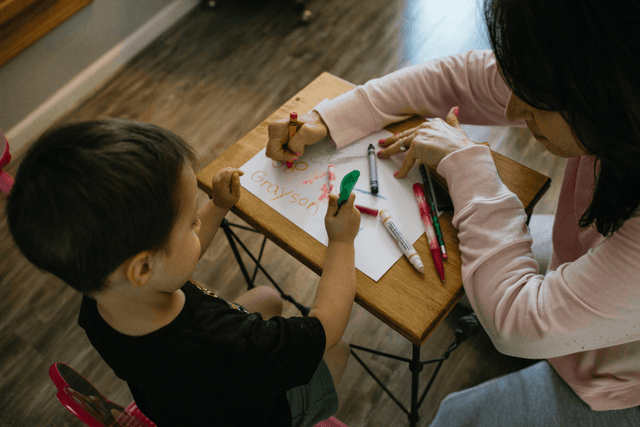
It’s also important to encourage kids to ask questions and to express feelings through drawings and play. Try to have a consistent schedule and show an extra patience. Look after yourself. Connect with your friends and family.
But if you do feel overwhelmed, it’s all right to seek advice from your GP, counselling hotline or other professionals.
The 20-minute anonymous online COVID-19 Unmasked survey is aimed at Australian caregivers of children aged one to five living in Australia or overseas and is open until 30 June 2020. Follow up surveys will be conducted three, six and 12 months after the initial survey.
This article was first published on Pursuit. Read the original article.



Don’t miss a thing


Related Articles