


The invisible problem: Smart glasses, child safety and the new ban in early childhood education
 Article
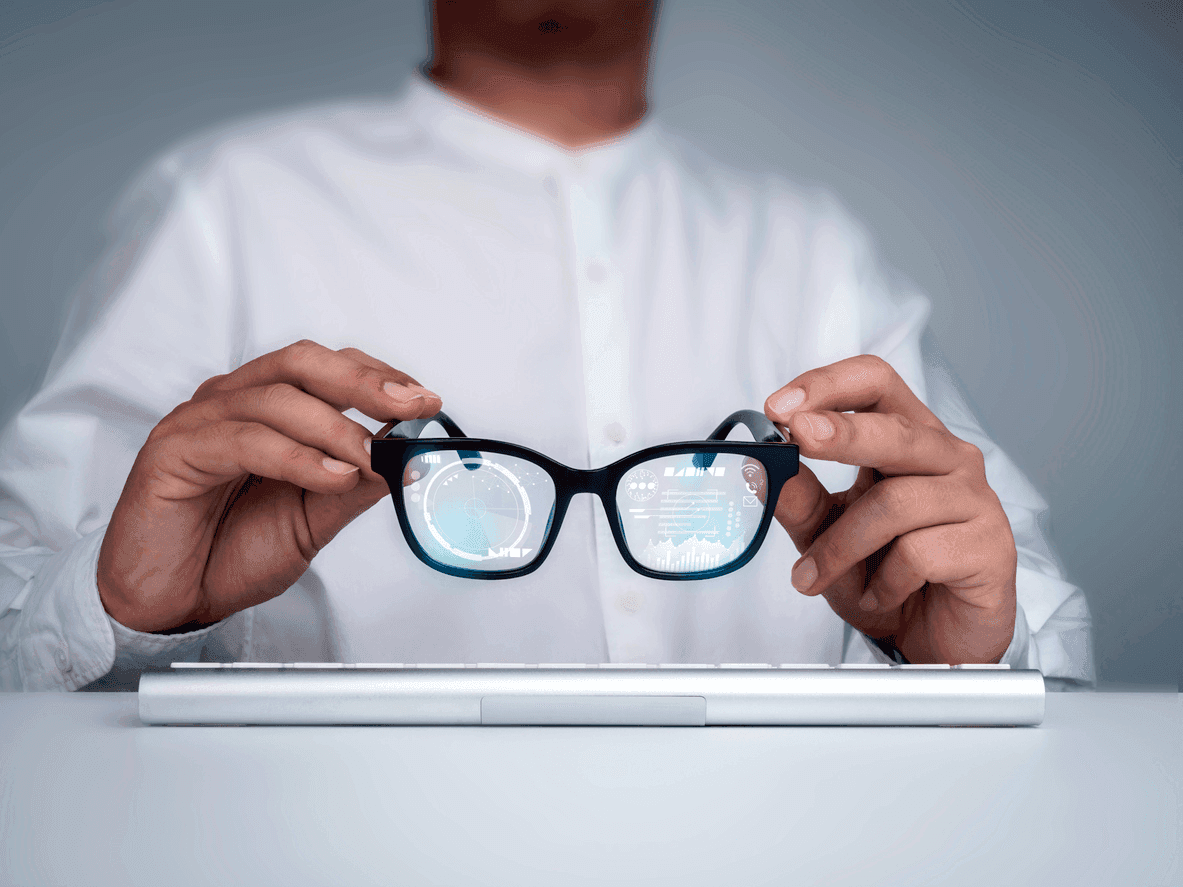
Australia’s move to restrict concealed recording devices in early childhood education and care (ECEC) settings signals an important shift in national child safety priorities. Yet even as these reforms strengthen expectations around increasing children’s safety through visibility and monitoring, educators may find themselves in an increasingly uncomfortable position. Are they now responsible for identifying devices that, by design, do not want to be identified? This is particularly the case for emerging technologies such as smart glasses that look identical to ordinary eyewear but can discreetly record video, audio and images.
The result is a widening gap between policy intentions and the realities of practice, especially as smart glasses become more discreet, more affordable and more difficult to detect. There is no evidence of smart glasses currently being used in ECEC settings. But it is precisely because of this emerging landscape that services need to be proactive not reactive, preparing for the possibility before the first incident occurs.
Going unnoticed
Smart glasses resemble ordinary eyewear, yet many models can capture video, record audio, take photographs or share the wearer’s view with nothing more than a soft voice cue or a subtle tap along the frame. The indicator lights used by some manufacturers are faint enough to go unnoticed, especially in rooms where educators are supporting children, managing transitions, greeting families and responding moment to moment. As these technologies become more widely available and increasingly affordable, the likelihood of them appearing in everyday family and community settings continues to grow, particularly as their design becomes more refined.
This matters because current child-safety approaches in early childhood settings assume that risks and devices will be visible. The Joint Action on Child Safety communiqué (2025) promotes stronger monitoring and clearer accountability for how children’s safety is protected within services. ACECQA’s Safe Use of Digital Technologies and Online Environments policy reinforces restrictions on personal devices, including smart glasses (ACECQA, 2025). These measures respond to real risks, and they emphasise transparency as a protective mechanism. But these measures only function in practice when educators can identify the very technologies they are expected to regulate. When smart glasses are indistinguishable from everyday eyewear, the assumption that educators can monitor or identify potential risks becomes difficult to uphold.
Prescription, fashion or recording device?
The early childhood sector also operates in ways that make this issue uniquely complex. Services routinely have adults entering and leaving the environment, including families, authorised contacts, visiting professionals and, at times, contractors. Parents wear accessories without a second thought. Grandparents arrive with sunglasses perched on their heads. Allied-health professionals move through rooms while supporting children. Tradespeople complete routine maintenance, at times during service operating hours. External program providers deliver on-site sessions and may be present in shared spaces as part of their work. In each of these scenarios, an educator may have no practical way to determine whether someone’s glasses are a prescription lens, a fashion item, or a device capable of capturing vision and audio.
These interactions sit within the relational core of early childhood practice, connecting educators with families, visiting professionals and the wider community. Educators build trust with families, often over many years, and work closely with colleagues and visiting professionals in ways that rely on openness and shared understanding. In this context, raising concerns about someone’s choice of eyewear, particularly when glasses are commonly used for vision support or as assistive technology, risks unsettling those relationships and can raise worries about appearing intrusive or even ableist. When there is no clear evidence for concern, the fear of escalating a situation or misjudging someone’s intentions can leave educators feeling vulnerable and uncertain.
Who is responsible?
This uncertainty becomes more pressing when we consider accountability. If someone records children without consent, who is responsible? The educator supervising the room? The nominated supervisor overseeing the service? The individual who used the device? Or multiple parties? Policy frameworks generally assume that misconduct is observable. Smart glasses break that assumption. They have the potential to create a situation where an educator could be held accountable for a breach they could not reasonably have detected, and that tension amplifies the stress already carried in a profession marked by scrutiny, staffing shortages, and increasing administrative load.
These practical concerns sit alongside a broader question about how surveillance is becoming part of everyday life for children, and how this shapes their sense of safety and vulnerability. CCTV is now being trialled in some early childhood settings, and many homes are equipped with technology such as camera-enabled doorbells marketed as protective tools. Children and families move through these environments with little awareness of where recorded information goes or how it might be used. Smart glasses complicate this landscape further because they obscure the presence of surveillance in ways that those responsible for children’s care cannot easily detect. This conversation is not about encouraging suspicion, but about supporting educators to navigate technologies they cannot reasonably detect.
Serious questions beyond compliance and risk
In this sense, smart glasses raise questions that extend beyond compliance and risk. They prompt us to consider how surveillance technologies shape the interactions and routines that underpin early childhood practice. When recording devices are difficult to detect, the boundaries between what is observed and what is captured become unclear, and those uncertainties influence how educators, families and professionals engage with one another. These are not abstract concerns; they speak to the values and expectations we bring into early learning environments and the trust that holds these relationships together.
Rather than offering solutions, it may be more useful to focus on the questions that now sit before the sector. How can services uphold the new restrictions without relying on guesswork? What does reasonable suspicion look like when two devices can appear identical? How should visiting professionals be briefed, particularly when they work closely with children and may not realise the implications of wearing recording-enabled eyewear? What kind of guidance do leaders need to support educators in these conversations? And what responsibility should manufacturers carry to ensure that recording functions are accompanied by indicators that are genuinely visible and accessible to the public?
Child safety blind spot
Smart glasses expose a child-safety blind spot that policy alone cannot address. Responding to this blind spot will require more than compliance measures or bans. It will require collective thought across early childhood education, digital policy, technology manufacturing, child-safety frameworks and ethical practice. Educators cannot be the only safeguard. Families, policymakers, researchers and technology developers all hold part of the responsibility for creating environments that are transparent and trustworthy.
As researchers and educators working in early childhood, we see this as an important starting point. Smart glasses challenge the assumptions that underpin current policy directions, and they compel us to look more closely at how visibility, consent and trust function in contemporary practice. This article does not claim to have clear answers. Instead, it invites the sector into a conversation about the future, a future where the line between ordinary objects and recording devices becomes increasingly thin, and where children deserve protection that extends beyond what the eye can see.
This article was originally published on EduResearch Matters by Nicky Thompson and Lauren Carn. Nicky Thompson is a lecturer and researcher in early childhood education at Southern Cross University whose work focuses on digital practices, child safety and the ethical use of emerging technologies in early learning environments. She has extensive experience as an educator, director and university lecturer, and is currently undertaking research on the ethical use of generative AI in early years education. Lauren Carn is a tertiary educator, researcher and early childhood keyworker with experience across early learning, community and disability services. She teaches in early childhood education at Southern Cross University and draws on training in career development in her research on international students’ attraction to and retention in the Australian ECE workforce. Republished with permission.


Don’t miss a thing


Related Articles