



The First Democracy
 Article
It’s the start of the year in a kindergarten; a small boy stands at the threshold of a room he has never entered before and performs the oldest human calculation. He doesn’t have the words for it, not yet. He has only a body that tightens and loosens, a hand that searches for something to hold, an instinct that swivels between curiosity and fear. The room is bright and loud in the gentle way early childhood rooms are loud with life. There is the soft thud of blocks, the high astonishment of a laugh, the sudden, theatrical grief of a toy taken and returned. There are photographs on the wall in which children are mid-flight, jumping, running, leaning into each other as if gravity were a negotiable agreement. There is the smell of fruit and sunscreen and disinfectant and paint, a cocktail of care.
The boy is late to the party the rest of us can’t remember attending. For him, it is the beginning of the public world.
In the language of policy, this room is a place of “learning outcomes” and “school readiness,” of “workforce participation” and “closing gaps.” It is a lever in the machinery of the economy, a support for parents, a site of intervention, a measurable good. All of that is true, as far as it goes. It just doesn’t go far enough.
Because the moment that child hesitates at the doorway, what is at stake is not simply whether he will recognise letters on a page by a certain age, or whether his parents can return to paid work without the dread of improvisation. What is at stake, before any of that, is something more elemental and more easily betrayed, whether the world, in its first official encounter with him, will treat him as a person.
Early childhood education is the first democracy most of us ever enter, as a lived arrangement of bodies and needs and rights. It is the first space in which we learn whether belonging is conditional, whether power is cruel, whether conflict ends in exile or repair, whether our feelings are tolerated only when they are convenient. It is the first public place where the state, through a room, a roster, a ratio, a wage, a curriculum, a set of assumptions, reveals what it believes a human being is worth when that human being cannot yet bargain.
Children are the least negotiable citizens a society has. They cannot vote. They cannot write submissions. They cannot threaten to leave. They cannot, in any meaningful sense, advocate for their conditions. They arrive, as we all once did, helpless in the way that makes a civilisation either honest or hypocritical. If you want to know what a society believes, look at the rooms it builds for those with the least power to complain.
The early years sector is accustomed to being asked to justify itself in the dialect of the measurable. Numbers are comforting because they pretend to settle arguments. They let us pretend that life is a ledger, that value is what survives translation into a chart. A government wants returns. A budget wants proof. A media cycle wants a
headline. In such a climate, the sector learns to speak in the language it is rewarded for speaking. It becomes expert at citing brain development, economic multipliers, and the long shadow of early disadvantage. It becomes fluent in its own defence.
But there is a danger in that fluency. When a field only justifies itself by what it produces later, it begins to treat the present as mere preparation. Childhood becomes a corridor, a valuable passage because it leads somewhere else. The child becomes a project with a deadline. Play becomes a tool, relationships become strategies, wonder becomes a method. The future colonises the present, and the
child’s life, this actual morning, this actual fear at the threshold, becomes collateral in an adult argument about outcomes.
The question then is “What do we believe a child is?” Not a future worker, not a future taxpayer, not a future student who must be readied for the assessments waiting like weather systems down the track. A child is a person now. Not an approximation of personhood. Not a draft. Not a promise. A person.
If that sounds like sentimentality, it is worth noticing how quickly adult systems become brutal when they forget it. The most common violence is the administrative kind, the small, repeated erasures in which a child learns that their inner world is a nuisance. It is the rushed transition in which tears are treated as a schedule disruption. It is the adult voice that explains the child away rather than listening. It is the hidden curriculum of being managed rather than met.
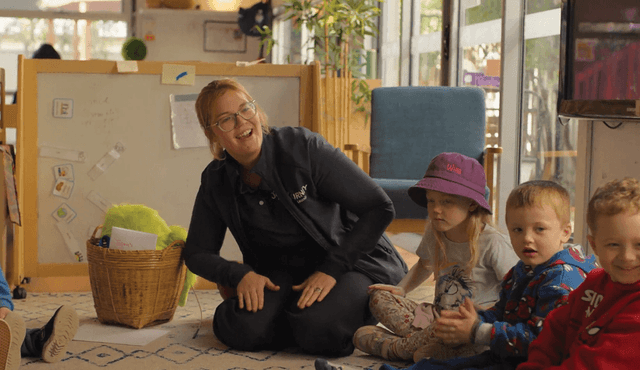
To meet a child as a person is to take them seriously. Seriousness in early childhood looks like an educator crouching until their knees complain so they can be at eye level when they say, “I can see you’re angry.” It looks like the slow labour of helping a three-year-old find a word instead of a bite. It looks like noticing that the child who pushes is not “naughty” so much as overwhelmed. It looks like the patient
construction of a day that a small nervous system can trust.
The sector’s most profound work often happens in what adults are trained to ignore. We are a culture that idolises the exceptional, the breakthrough, the transformation, the dramatic arc. Early childhood is built from the opposite. It is built from repetition. Arrivals and departures. Shoes on, shoes off. Snack and story. The same conflict over the same object that seems, to an outsider, absurdly minor. The same request for the same book. The same insistence on the same ritual that makes no sense until you understand what routine is doing, it is teaching a body that the world is predictable enough to relax.
This is infrastructure. Children learn safety through patterns. Predictability becomes a scaffolding on which curiosity can climb. When the day has a rhythm, the child’s attention is freed from the exhausting work of scanning for danger. When an adult responds consistently, the child begins to believe in continuity. This belief is a
foundation. Without it, learning becomes defensive. With it, learning becomes adventurous.
Among the sector’s hidden achievements is repair. Adults tend to treat conflict asevidence of failure. In many grown-up spaces, conflict ends in humiliation, or avoidance, or power plays so subtle they can be mistaken for manners. Children, meanwhile, live in conflict the way they live in weather. Their wants are immediate, their impulses honest, their capacities still under construction. A toy is taken, a boundary is met, a feeling is too large for the body holding it. A push, a shout, a collapse onto the floor.
The question is what happens next. Does the child learn that rupture leads to abandonment? Or do they learn that rupture is part of relationship and can be
repaired? When an educator guides two children through the slow work of naming what happened, acknowledging harm, and returning to each other, they are teaching something that will matter long after the child forgets the toy, that belonging can survive mistakes. That accountability is not exile. That there are ways to be angry that do not require cruelty.
This is moral education in its most basic form, and it cannot be separated from the conditions under which educators are expected to work. We have a habit, in Australia and elsewhere, of treating care as either “natural” or “nice,” which are two ways of denying its skill. Natural means anyone can do it. Nice means it doesn’t count as serious labour. Both are convenient for a society that wants the benefits of care without paying its true cost.
Early childhood educators are doing intellectually demanding work under conditions of high responsibility. They are reading behaviour as communication. They are constructing environments in which multiple developing nervous systems can coexist. They are holding the paradox that children need autonomy and boundaries at once, freedom and structure, challenge, and safety. They are partnering with families who are themselves under pressure, economic, emotional, cultural, often carrying private anxieties into public drop-offs. They are noticing what others may miss, the speech delay hidden behind charm, the sensory overwhelm mislabelled as defiance, the quiet child who never quite joins the group.
And they are asked to do this while remaining emotionally available, which is a form of labour our economy struggles to acknowledge. Emotional availability cannot be automated. It cannot be scaled without cost. It requires time, dignity, support, and, this is the unfashionable word, enough. Enough staff, enough planning time, enough pay to live without chronic stress, enough respect to feel that your expertise is
trusted rather than constantly audited.
There is a fantasy embedded in many policy conversations, that you can demand high-quality relationships while designing low-quality working lives for the people expected to provide them. But relationships are generated by humans. If an educator is running on depletion, if ratios are stretched, paperwork multiplies, turnover is constant, wages are insulting, then the room changes because the system is incoherent. You cannot build a pedagogy of dignity on an employment model of disposability. Children learn what people are worth by watching how people are treated.
The sector’s relationship with play reveals almost everything about our philosophy. When budgets tighten or accountability rhetoric rises, play is the first thing asked to defend itself. “What are they learning?” an anxious adult asks, as though learning must always look like a worksheet to be real. The sector replies, often dutifully, with the neuroscience, executive function, language development, problem solving.
These are true, and sometimes necessary to say in order to protect play from the adult appetite for premature performance.
But the deeper truth is that play is how children tell the truth.
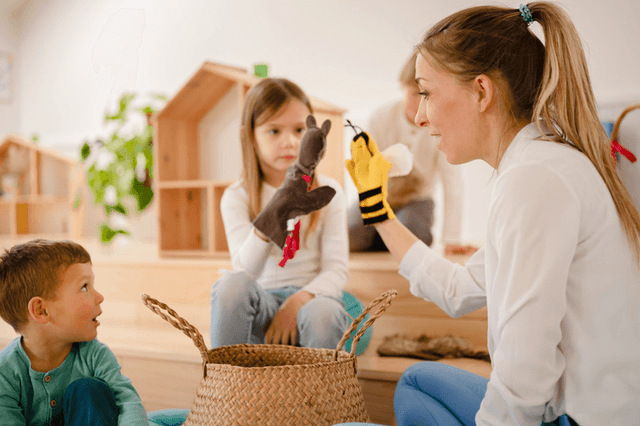
In play, children rehearse power. They reverse it. They process fear by giving it a role they can control. They restage experiences that made them helpless and rewrite the ending until it feels survivable. They practice empathy by inhabiting characters. They build worlds because the real world is often too big and too fixed, and play is
where they can be sovereign. The child who keeps playing “doctor” may be metabolising an anxious appointment. The child who builds towers only to knock them down may be working through the pleasure and terror of control. The child who assigns everyone a role and panics when the roles are disobeyed may be trying to create predictability where they feel little.
To dismiss play as “just play” is to dismiss the child’s primary language. It is like telling an adult their memoir is “just words.”
There is another reason play matters now, and it is one we do not say aloud enough. We live in an attention economy that profits from fragmentation. Novelty is delivered in endless, engineered doses. Even very young children are increasingly immersed in stimuli designed to keep them scrolling, watching, consuming. The result is a training of the mind away from sustained presence. The ability to stay with
something, to tolerate boredom long enough for curiosity to return, becomes rare.
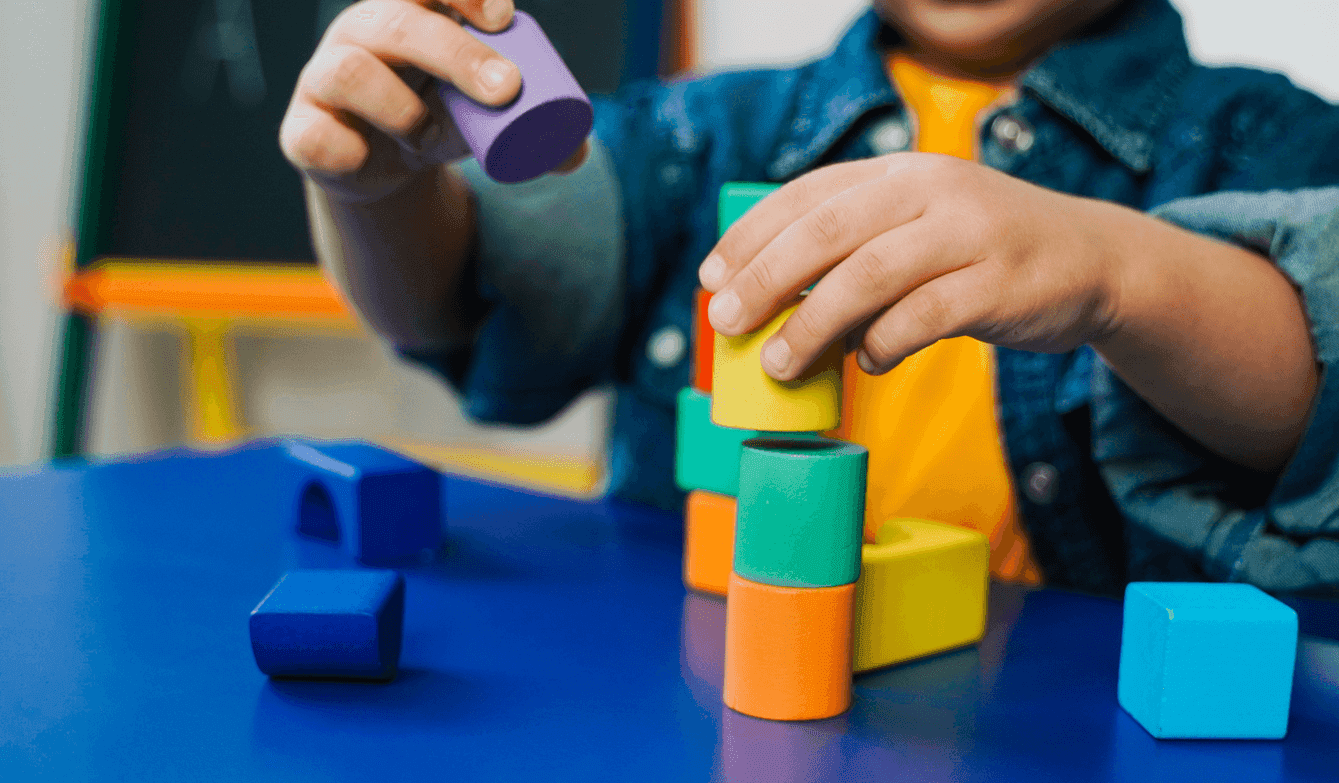
In that context, an early childhood room that protects deep attention is radical. It is one of the last places where a child can become absorbed in a block construction, linger over a story, follow an ant trail, mix mud and water and leaves into a private universe without being told to move on. Deep attention is the ground on which thinking, empathy, and selfhood stand. A child who can stay with a question is a child who can later stay with a person.
None of this is separate from equity. Early childhood education sits at the intersection of education, health, gender, migration, disability, and class, whether we admit it or not. When it is accessible, high quality, and culturally safe, it can soften the brute inheritance of circumstance. It can offer language-rich environments, stable routines, nutritious food, early identification of developmental needs, a widening of the social world, and adults with the capacity to notice and respond rather than simply manage. It can become a counterweight to the randomness of birth.
But equity is not achieved by turning children into deficit narratives. There is a subtle violence in the way we sometimes speak about “disadvantaged children,” as though the disadvantages were located in the child rather than in the conditions around them. A genuinely humane sector resists this gaze. It understands that what we call “challenging behaviour” is often adaptive behaviour in an unsafe context. It understands that some children arrive with nervous systems shaped by stress, by housing insecurity, family violence, racism, hunger, adult mental health, a parent’s exhaustion, conditions that are not the child’s fault and cannot be fixed by shaming the child into compliance.
The more ethical response is to create environments that are predictable, responsive, and spacious enough to hold big feelings without punishment. It is to interpret behaviour as communication and ask what the child is telling us about what they have lived. It is to offer choice as dignity, and structure as safety. It is, in other words, to be a society in miniature that does not blame its most vulnerable citizens
for the consequences of adult failures.
Cultural safety belongs at the centre of this. For many children, early childhood education is their first sustained encounter with the public world’s verdict on their family. Will their home language be treated as an asset or corrected into shame? Will their cultural practices be accommodated or regarded as inconvenient? Will the stories on the wall reflect their world, or tell them, subtly and repeatedly, that other people are the default humans and they are an exception? A room can become a form of recognition, or a rehearsal of erasure. The difference may be as simple as which songs are sung, which holidays are named, which foods are treated as normal, which families are shown in books, which pronunciation an adult takes the time to learn.
When a child experiences recognition, they learn that belonging does not require disappearance. When they experience erasure, they learn that public life has a price, parts of yourself must be surrendered to participate. We should not be surprised, later, when people who were trained early in that bargain grow up either angry or silent.
If the early years sector is a first democracy, it is also a first encounter with the state’s imagination. The room is shaped by decisions made far away, what is funded, what is regulated, what is valued, what is inspected, what is reported. The sector is asked to meet contradictory expectations. It must be nurturing but measurable, relational but efficient, child-centred but standardised, inclusive but under-resourced,
professional but underpaid. It is asked to produce trust while being treated with mistrust. It is asked to do slow work at speed.
Some days it manages anyway. Some days it performs the quiet miracle of a room full of small humans learning, through the ordinary acts of care, that the world can be relied upon. You see it in the child who arrives furious and leaves calm. You see it in the child who never spoke in the first month and suddenly tells a story. You see it in the child who used to hit and now, with visible strain, hands the toy back. You see it in the child who was terrified of separating and now runs in, scarcely glancing back, because the room has become a second home.
Which brings us back to the boy in the doorway. An educator notices him as a person negotiating the weight of newness. She doesn’t hurry him with cheerfulness that ignores his fear. She doesn’t coax him as though he’s performing. She simply goes to him and makes herself smaller, closer to his size, and says something that is both practical and metaphysical, “You can come in when you’re ready. I’m here.”
This is what the sector can offer at its best, the experience of being met. Not managed. Not rushed. Not interpreted as inconvenient. Met.
It may seem, in the grand theatre of national debates, too small to matter. But early childhood education is full of these small decisions that become a person’s first story about reality. The story might be that the world is patient. Or that the world is punitive. The story might be that feelings can be carried. Or that feelings must be swallowed. The story might be that mistakes lead to repair. Or that mistakes end belonging. The child absorbs that story and carries it, often wordlessly, into every later institution we build and every later relationship we attempt.
We talk, endlessly, about the sort of adults we want to create. We speak about resilience and wellbeing and social cohesion as though they are policies you can implement from the top down. But those qualities are seeded, quietly, in rooms like this, in the daily choreography of care and conflict and return. They are learned in the presence of adults who have the time and support to be attentive, and in systems that do not punish the very relational work they claim to desire.
Early childhood education should not have to pretend it matters only because it makes better future adults. It matters because it is where we practice, for the first time, what kind of society we are prepared to be toward those who cannot yet protect themselves. It matters because it is where a child’s inner life is either honoured or disciplined into silence. It matters because it is where the public world first says, without words, “This is what you are worth to us.”
If we want a less brutal public life, we should stop treating the early years sector as a convenient service and start seeing it as one of our most serious civic institutions because it is foundational. It is where we lay down the earliest habits of trust. It is where we teach, in the only way that counts, that a human being can be small and still be treated with dignity.
And perhaps that is the simplest definition of a decent society, the one in which the smallest people do not have to harden early to survive.
Author
Roger Chao writes across the major debates shaping contemporary Australia, examining political conflict, social change, cultural tension, and the policy choices that define national life. His work draws on a wide constellation of ideas, disciplines, and global perspectives to illuminate the deeper patterns beneath the headlines. Roger’s commentary connects immediate events to larger social currents, offering analysis that challenges orthodoxies, reframes familiar debates, and encourages a more reflective public conversation. His writing is guided by a belief that ideas matter, not as abstractions, but as forces that shape how societies understand themselves and decide their futures.


Don’t miss a thing



Related Articles