The bench we sit on: the role of pedagogy and risk in outdoor learning environments
 Article
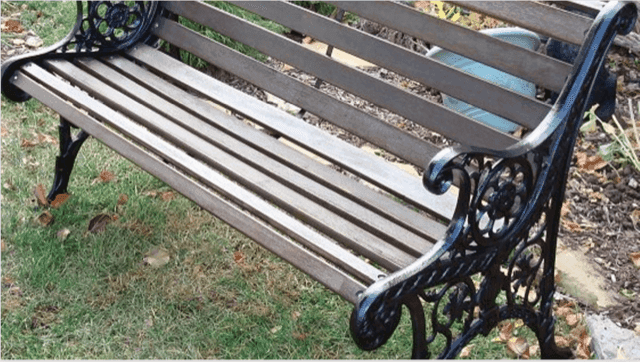
When I was a beginning educator, in my first ever job at an early learning centre, outdoor play looked like this:
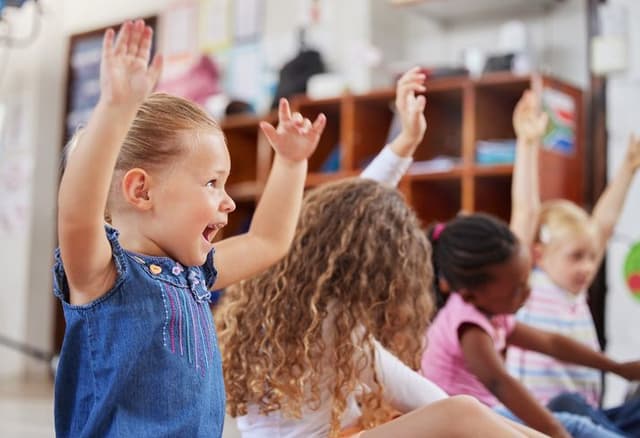
After a morning inside, we would open the door, and the children would run outside.
The educators would walk over to The Bench. There was always plenty to talk about, but the conversation was rarely about the children in front of us. The seasons came and went. Children moved through the program. The bench stayed exactly where it was, and if I am honest, so did we.
We called it active supervision. We scanned the environment. We counted heads and we responded if something went wrong. We were doing what we believed was required of us.
One day, I arrived at work and the bench was gone. Removed. Not because of wear and tear, but because we had been asked, more than once, to get off it. To move. To engage. To teach. And we hadn’t.
So, the decision was made for us.
At the time, it felt annoying. Now it feels revealing, because the removal of the bench was never about furniture. It was about pedagogy. The bench was never just about where we sat. It was about how we understood participation, ours and the children’s. When educators position themselves as observers of play, outdoor environments become sites of surveillance rather than sites of pedagogy.
In early childhood education and care, we plan indoor environments with intention. We align with frameworks, we document learning. And yet, when we think about and plan for our outdoor learning environments something shifts. We position ourselves for visibility rather than engagement, we prioritise scanning over interaction, and we interpret our role as supervisory rather than pedagogical.
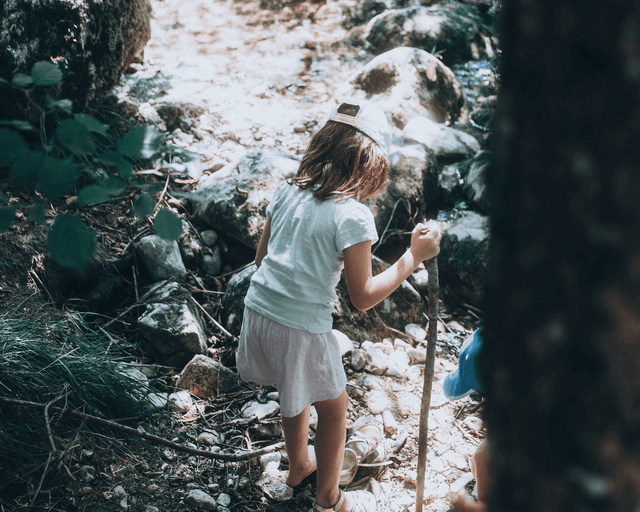
Outdoor environments are uniquely positioned to offer what indoor spaces often cannot, complex, variable, and uncertain conditions that invite children to test ideas, bodies and relationships. The inclusion of risk in these environments offers children the possibility of challenge, uncertainty, and growth.
And it is essential.
Children develop judgement by making decisions.
They develop coordination by testing their bodies.
They develop resilience by encountering uncertainty.
This kind of learning does not happen by chance. It demands something of educators.
It requires us to read environments for their affordances and to know children deeply, their capabilities, confidence, and dispositions. It involves making decisions about when to intervene and when to hold back, while navigating the ongoing tension between protection and participation.
This is not passive work. It is pedagogical decision making in real time.
Recently, I took a group of pre-service teachers to Atherton Gardens in Fitzroy, to encounter an environment where play, risk and community intersect in ways not easily replicated in more controlled early learning settings.
Within minutes, familiar questions emerged: Is that safe? Would we allow that?
These are important questions. They reflect a sector rightly concerned with children’s safety and wellbeing. But they also reveal something deeper.
Risk in early childhood settings is not only managed, but often reduced, regulated, and, at times, designed out altogether. In this framing, the educator’s role becomes one of surveillance, watching, anticipating, intervening.
The regulations had not changed, but the students’ relationship to the environment had. As they began to move through the space, climbing, balancing, swinging, they started to see it differently. They noticed what the environment invited.
A log became balance and judgement.
A slope became speed and decision-making.
Loose materials became possibility.
The playground shifted from a site of compliance to a pedagogical landscape. What the students encountered was not a lack of safety but a different construction of it, one that did not remove risk, but worked with it.
Perhaps the provocation is this.
Not to remove benches literally, but to recognise the many ways they still exist in our practice, in our language, our routines, and in how we interpret what it means to be a “safe” educator.
When we position ourselves primarily as supervisors, outdoor environments become sites of management. But when we step fully into our role as educators, they become sites of possibility.
So perhaps the question we need to keep asking is this:
In our efforts to keep children safe, are we unintentionally making their worlds smaller?
Author:
Karen has a background in teaching, academia, consultancy, and writing. Her work focuses on pedagogy and the design of environments that foster curiosity, dialogue, and deep engagement with practice. She has a particular interest in infant and toddler environments and the possibilities they offer for democratic participation.


Don’t miss a thing




Related Articles