Queensland kids thriving and on track
 Article
Seven years of local success offers a blueprint for actioning early childhood reforms
As Queensland prepares to implement the Thriving Kids reforms, a community-led initiative operating across Logan and Inala is showing what those reforms can look like in practice.
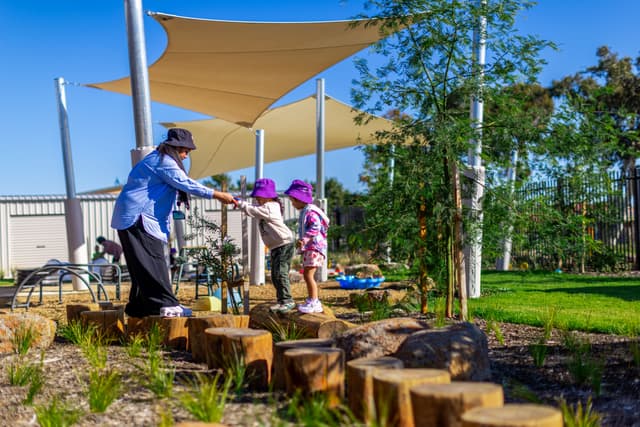
The Thriving and On Track (TOTs) model has spent seven years bringing health, early childhood and community services together around families, helping children access support earlier and improving developmental outcomes.
Delivered through the Brisbane South Primary Health Network (BSPHN) in partnership with Children’s Health Queensland (CHQ) and community organisations, TOTs has shown remarkable success in supporting children aged under five who are experiencing developmental vulnerability, trauma, family violence, housing insecurity and other complex challenges.
In FY 24/25, the TOTs model trained 370 early childhood educators to have early supportive conversations about development with families, and supported 172 families to access individual allied health support in community hubs.
A Griffith University evaluation found TOTs is already delivering many of the approaches at the heart of Thriving Kids, providing a proven model for supporting children and families through integrated, place-based services.
The evaluation found educators were more confident having supportive conversations with families about children’s development. As trusted partners in children’s early learning, they were well placed to connect families with support services, helping children access support earlier.
Tennille Burkitt, Director, Regional Early Years Strategy, said TOTs supports children's development where life happens. "By connecting families with healthcare, early childhood and social support services in the places they know and trust, we're strengthening the foundations that shape a child's health, learning and wellbeing throughout the critical early years."
"The model operates on a simple premise: the early years of a child's life lay the foundation for future health, development and wellbeing, and support is most effective when it is accessible to families. Rather than expecting families to navigate complex service systems, TOTs brings support into early childhood education centres, playgroups and community hubs where families already have trusted relationships and regular routines," she said.
Ms Burkitt said the success of TOTs lies not in creating new services, but in helping existing services work better for children and families.
"As Queensland moves to implement the Thriving Kids reforms, TOTs demonstrates what this approach looks like in practice. We've spent seven years building trusted partnerships between families, educators, health professionals and community organisations, and the evaluation shows it is making a real difference for children,” she said.
Children's Health Queensland Chief Executive Frank Tracey said the model demonstrated the value of embedding support in the places children and families already access every day.
"Families shouldn't have to navigate multiple services to get the support their child needs," Mr Tracey said.
"TOTs helps connect families with the right expertise earlier by bringing health, education and community services together around children and their families.
"The evaluation shows that when services work together and support is delivered through trusted community settings, children are more likely to receive help at the time it can make the greatest difference."
Suzie Felmingham, mum to four-year-old Olivia at Emmaus Kindergarten, Jimboomba, said the assessment organised via TOTs had reassured her that Olivia’s development was on track despite some concerns about her focus.
“It gave me complete peace of mind, and I was also provided with some helpful tools to manage her attention regulation,” she said.
Sulu Iosefo is the Maternal and Child Health Hub Manager at Village Connect, a faith-based hub in Logan Central providing intergenerational health and wellbeing support to local families. She works closely with a speech pathologist at the centre, who provides early intervention to families as part of the TOTs model.
Sulu said TOTs empowers parents to become active participants in their child's development.
“There is a genuine trust that develops between the health practitioner and the parent, and it’s making a tremendous difference here,” she said.


Don’t miss a thing




Related Articles