



Why everyday movement still deserves a bigger place in early childhood education
 Article
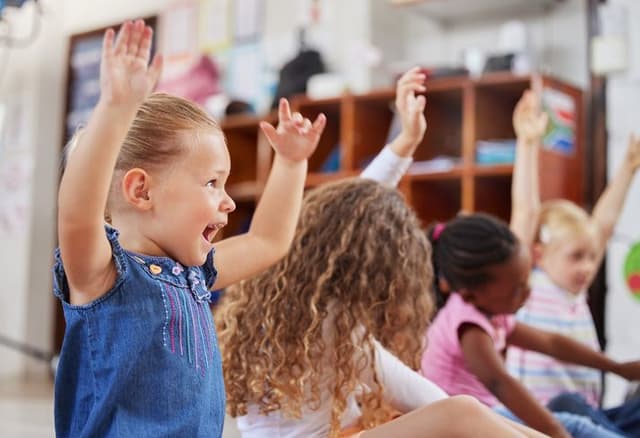
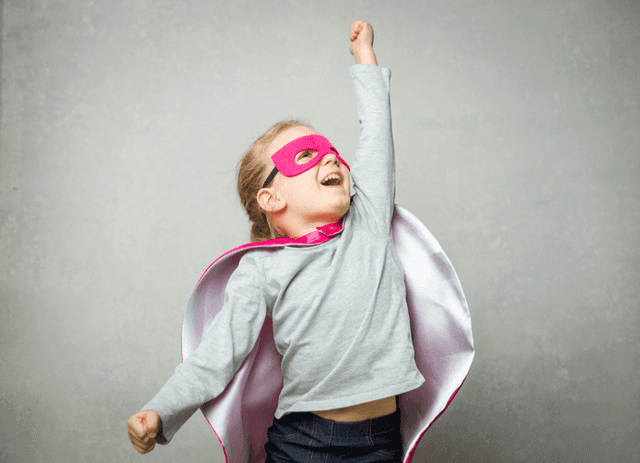
We know that movement is often viewed by teachers and parents alike as the portion of a child’s day spent moving about after participating in “learning” activities. Children are running, dancing, climbing, stretching, etc., prior to returning to more structured learning experiences; however, this distinction becomes increasingly blurred during the preschool years. In addition to providing a means for children to physically explore their environment and express themselves, movement also allows young children to develop new concepts and experiment with various ways to utilise their bodies.
As such, it is critical for early childhood education and care (ECEC) programs, which comprise a large portion of each child’s daily schedule, to recognise the importance of including movement as an integral component of the way children learn. Internationally, research has demonstrated that ECEC settings provide numerous opportunities for young children to engage in physical activity. In fact, studies indicate that certain variables, such as educator involvement in children’s movement activities, amount of time spent outdoors, availability of space in the classroom for unstructured play, and the presence of portable play equipment all contribute significantly to the number of opportunities available for young children to engage in physical activity.
More than Developing Gross Motor Skills
While the physical benefits of movement are obvious (i.e. improved coordination, increased strength, enhanced ability to control body positioning, etc.), the other aspects associated with the process of engaging in movement can be less apparent. ZERO TO THREE explains that movement influences children’s thought processes, methods of communicating, and self-confidence as they engage with the world surrounding them. For example, creating an obstacle course provides children with ample opportunity to practice coordinating their gross motor skills. However, in doing so, they are also making decisions regarding what they will do next, attempting to problem-solve when a method fails to produce the desired outcome, organising a series of sequential steps towards achieving a specific objective and utilising imagination to create new paths through the obstacle course. A single experience can incorporate multiple areas of learning including decision making, communication, persistence and creativity.
A Social & Emotional Dimension
When a child attempts to balance along a line for the first time they may fall off. Jumping may require assistance from an educator. Climbing may require them to watch repeatedly before they choose to participate. Each of these small successes provides children with opportunities to understand both failure and success while still receiving support from educators.
Researchers are also beginning to examine relationships between young children’s movement behaviours and their social/emotional development. One study conducted in Australia that involved 1,363 children ranging in age from 2 through 5 years old examined associations between adherence to the Australian 24-hour Movement Guidelines and social/emotional outcomes. The authors reported positive associations for boys whose adherence included meeting specified combinations of guidelines related to physical activity, sleep and screen time. While similar positive associations did not appear for girls based upon these results, the authors noted that because this was a cross-sectional study the findings demonstrate association rather than a cause-and-effect relationship.
It is essential to note that movement cannot serve as a simplistic solution for addressing children’s behaviour issues or emotional regulation. Rather it can be seen as one aspect of the larger environmental supports for children’s developmental progress.
More Movement Does Not Have To Be Another Program
To many educators, adding additional scheduled time for movement can seem like yet another item to manage. Children can transition by going outside and engaging in animal-like movements while carrying necessary materials when getting ready for an activity. For instance, they can dance while listening to music, and mimic actions in stories or lift/gather items outside. Even simple gross motor activities (e.g. jumping, balancing and crawling) can provide educators with inspiration for movement-based activities without requiring specialised equipment.
Additionally, research identifying key elements of ECEC movement policies suggests that outdoor time, available open space in classrooms/centres, access to portable equipment and educator participation are all potential contributors to increasing the amount of time young children have to be physically active. Therefore, the focus on scheduling and implementing individualised "exercising" sessions diminishes and educators begin to view how the normal environment can prompt young children to use their bodies in varying capacities throughout their day.
The Role of the Teacher is Intentional and Not Complex
Making movement a more visible part of the curriculum does not mean directing every physical experience for a child. In many cases, it will be the role of the educator to note what is already happening and consider how the environment or routine can provide more opportunity. That may involve leaving enough space for a child to repeat a movement until they are satisfied with it; bringing music into transitions; taking activities outdoors; or providing materials that can be carried and arranged in different ways. It also may involve participation. Research reviewed in the ECEC context has identified staff involvement (and therefore role-modelling) as well as promotion of physical activity as factors that support children's levels of activity. The Play Active program developed through a decade of research and collaboration with the ECEC sector provides services with guidance on policy for physical activity, professional development resources and other resources designed to build opportunities for energetic play.
The idea is simple. Children do not stop learning when they stand up. When movement is allowed to sit beside language, creative expression, social interaction and other established fields of early childhood development, it becomes more obvious why physical activity is, in fact, an important part of children's everyday development. Giving physical activity a larger place in early childhood education may therefore require less addition than recognition. By simply noticing the opportunities already present and deliberately making room for more, we can take a big step forward.
Author bio:
Elena Maren is a writer and Montessori guide whose work examines both emotional/cognitive growth of children in prepared environments. Drawing from educational psychology and experience in international Montessori communities, she shares practical ideas that support creativity, curiosity and a lifelong love of learning.


Don’t miss a thing




Related Articles