Dance programs linked to developmental gains in toddlers, research suggests
 Article
Emerging research suggests structured dance programs may support physical, cognitive and social development in young children, offering early childhood educators another tool to support learning through movement.
Encouraging young children to stay active is an ongoing priority for families and educators.
Australian health guidelines recommend that children from birth to five years engage in at least three hours of physical activity each day. Meeting this target can be challenging, particularly as screen time increasingly competes for children’s attention.
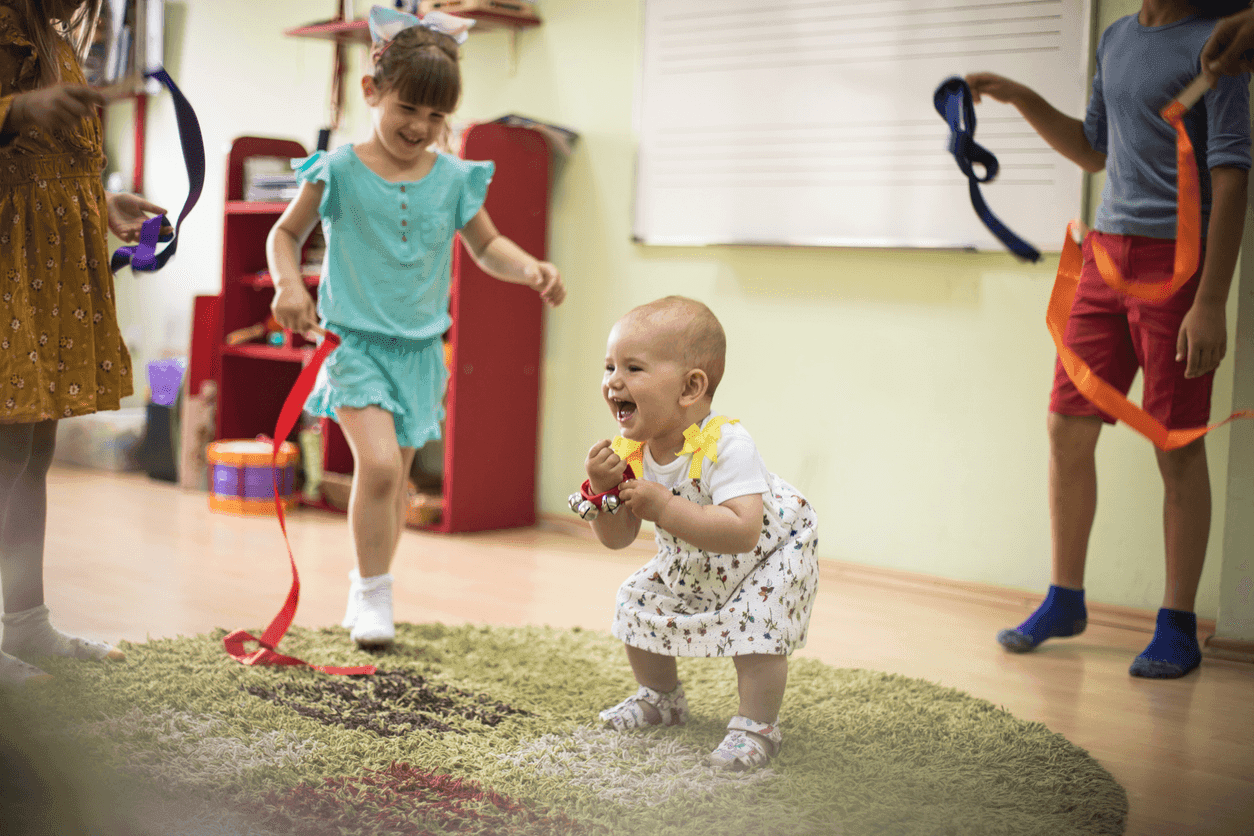
New research suggests structured dance programs may offer an effective way to support both physical activity and broader early childhood development.
Studies indicate that participation in dance can contribute to improvements in motor skills, spatial awareness, confidence and social development, highlighting the role movement-based learning can play in the early years.
The findings were recently highlighted by EducationDaily, which reported growing evidence linking structured dance activities with developmental gains in toddlers.
One of the most immediate benefits of dance programs is their impact on physical development.
Research published in the National Institutes of Health database has found that children participating in educational dance programs demonstrate improvements in motor development and balance.
Dance encourages children to move their bodies in different ways, supporting coordination, strength and flexibility. These activities can help build both gross and fine motor skills, which are essential during the early years of development.
Unlike some forms of unstructured play, dance often introduces guided movements and sequences that encourage children to practise specific skills such as balance, posture and coordinated movement.
Additional research published in the Journal of Dance Education has also found that preschool dance programs can support improvements in body coordination and balance, helping young children develop greater control over their movements.
Beyond physical development, researchers have also identified links between dance participation and early cognitive development.
Studies published in Mathematics Education Research Journal suggest that dance activities can support children’s spatial awareness. As children move through space, follow patterns and explore shapes through movement, they begin to develop foundational concepts that later support mathematical thinking.
Movement-based learning can introduce ideas such as position, direction and sequencing in ways that are both engaging and accessible for young children.
Research from Pennsylvania State University has also highlighted potential links between dance participation and improvements in memory and attention.
Learning dance routines encourages children to remember movement sequences and focus on instructions, which may support the development of early cognitive skills that transfer to other learning environments.
These skills develop during a critical period in early childhood when the brain is rapidly forming new connections that support learning and development.
Dance programs may also contribute to children’s emotional wellbeing and social development.
A 2025 study of London preschools published in the journal Early Years found that children participating in dance programs demonstrated increased confidence and communication skills.
Researchers observed that children became more comfortable expressing their ideas and interacting with others during group activities.
Group dance activities also encourage children to work together, follow shared routines and participate in collaborative movement.
For educators, these experiences can provide opportunities to support skills such as cooperation, turn-taking and emotional expression, all important elements of early childhood learning environments.
For early childhood educators, the growing body of research highlights the potential value of incorporating structured movement activities into learning programs.
Dance activities can support physical literacy, creativity and social interaction, while also aligning with play-based learning approaches commonly used in early childhood education and care.
Importantly, these programs do not necessarily require specialised facilities or equipment. Many movement-based activities can be delivered within existing early learning environments using music, guided movement and imaginative play.
As the sector continues to explore ways to support children’s holistic development, structured dance programs may offer a practical and engaging way to integrate physical activity with learning.
The research suggests that movement-based experiences can support development across multiple domains, helping young children build the physical, cognitive and social skills that underpin lifelong learning.
Source: EducationDaily


Don’t miss a thing




Related Articles