Bravehearts calls for everyday personal safety conversations in ECEC
 Article
Bravehearts is calling on families, communities and workplaces to turn awareness into action this National Child Protection Week, with Bravehearts Day returning on Friday 11 September 2026.
Held annually during National Child Protection Week, Bravehearts Day is Australia’s longest-running campaign against child sexual abuse. This year’s rallying cry, Together we CAN Fight Child Sexual Abuse, calls on Australians to support prevention, education and counselling services while taking practical steps to help protect children.
The scale of the challenge remains confronting. The 2023 Australian Child Maltreatment Study found that 28.5 per cent of Australians experienced sexual abuse during childhood, including more than one in three girls and almost one in five boys.
Speaking with The Sector ahead of Bravehearts Day, Bravehearts CEO Alison Geale said the figures demonstrated why child sexual abuse could not be regarded as a rare risk or one confined to strangers or a particular setting.
A central part of prevention, she said, was giving adults the confidence to talk with children in an age appropriate way about personal safety, boundaries and speaking up.
“If anyone makes you feel icky, unsafe or unsure, even if that person is really close to us or a member of our family, you can always come and talk to me, and you won’t get into trouble,” Ms Geale said, describing one of the simple messages adults can give children.
Rather than treating personal safety as a formal or frightening lesson, she encouraged parents and carers to show curiosity about children’s experiences and feelings.
“It is really about inquiry, not inquisition, with your children,” she said.
Building a shared language between families and services
Ms Geale said early childhood education and care services were well placed to reinforce these messages because educators and families already exchange detailed information about children’s development, routines, behaviour and wellbeing.
She compared the opportunity to the way families and educators work together during milestones such as toilet learning. Information moves in both directions, with families sharing what is happening at home and educators communicating what they observe within the service.
Personal safety conversations, she said, should become part of that same continuing relationship rather than remaining a separate or uncomfortable topic.
Services could begin by asking families, as part of enrolment and induction, whether they have started using personal safety language at home. Educators could then reinforce familiar, age appropriate messages and give families another trusted point of support.
“The responsibility isn’t on either one; it is on both,” Ms Geale said. “There needs to be a highway of information going from the parent to the centre and from the centre back.”
The purpose is not to place responsibility on children to prevent abuse. It is to ensure the adults around them create environments in which children understand that they can ask questions, express discomfort and seek help without fear of being blamed or punished.
Ms Geale said visible and consistent conversations could also strengthen organisational culture by making expectations clear to educators, families and anyone entering the service.
“Normalise the conversation, not the crime,” she said.
Moving from attention to lasting change
The renewed national focus on safeguarding has led to regulatory reforms, mandatory training and increased scrutiny across ECEC. Ms Geale said effective reform would require more than new requirements being added to already pressured services.
She acknowledged that strong consequences were necessary where organisations failed to protect children. At the same time, she cautioned that a system built primarily around fear and punishment could make people hesitant to act or raise concerns.
“If you create a culture of fear, you don’t see progression,” Ms Geale said. “If people in centres are too scared to make a wrong move, they don’t make any move. Most people want to do the right thing.”
Governments and sector organisations therefore need to work together to give services the time, space, resources and practical capability required to embed child safety into daily practice, she said.
Turning awareness into action
Funds raised through Bravehearts Day support personal safety education and specialist counselling for people affected by child sexual abuse.
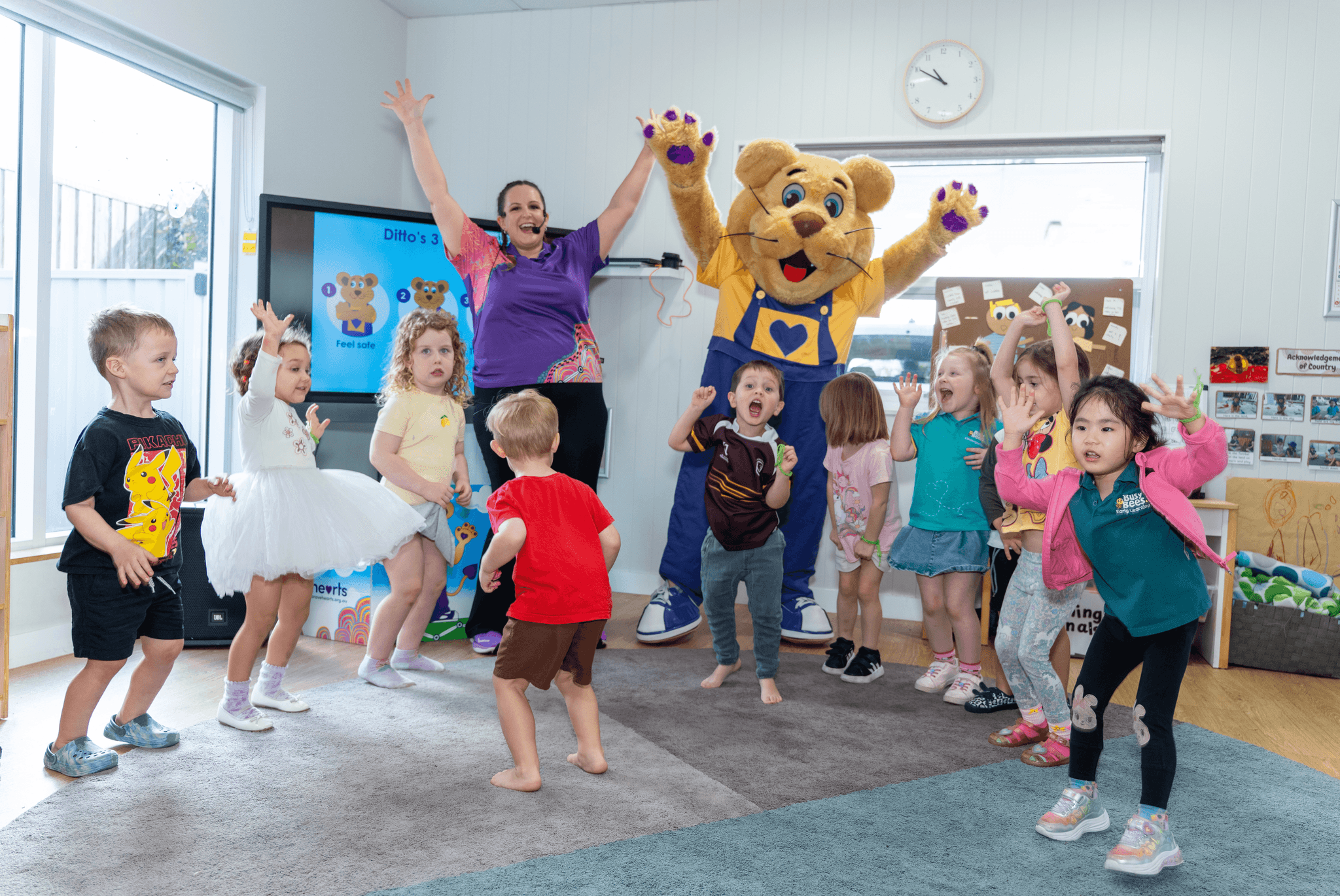
On Friday 11 September, Busy Bees Early Learning will match donations made to Bravehearts Day, doubling the impact of community support. A donation of $24 can teach two children personal safety skills through Ditto’s Keep Safe Adventure Program, $75 can provide a support call for a parent or survivor in crisis, and $150 can provide access to a trauma-informed counselling session for a child affected by sexual abuse.
Bravehearts encourages families, ECEC services and workplaces to participate through conversations, fundraising, donations and the use of its free tools and resources.
For more information, to register or to donate, visit www.braveheartsday.com.au.


Don’t miss a thing




Related Articles