Court proceedings following the death of Ebony Thompson highlight the importance of active supervision, risk assessment and regulatory compliance in early childhood services.
Incident and near miss records can help early childhood services identify patterns in supervision, staffing and practice. Reviewing those records can also reveal where further attention or changes to practice could reduce risk.
A child balancing across a log, negotiating a route with a friend or returning to a place after rain may be showing learning that is easy to miss in a conventional assessment record. Bush kinder educators face a familiar challenge: how to document that learning for children and families while preserving the open-ended character of outdoor play.
Jobs and Skills Australia’s regional roadmap identifies childcare access as a barrier to employment and includes early childhood roles in its measure of essential service vacancies.
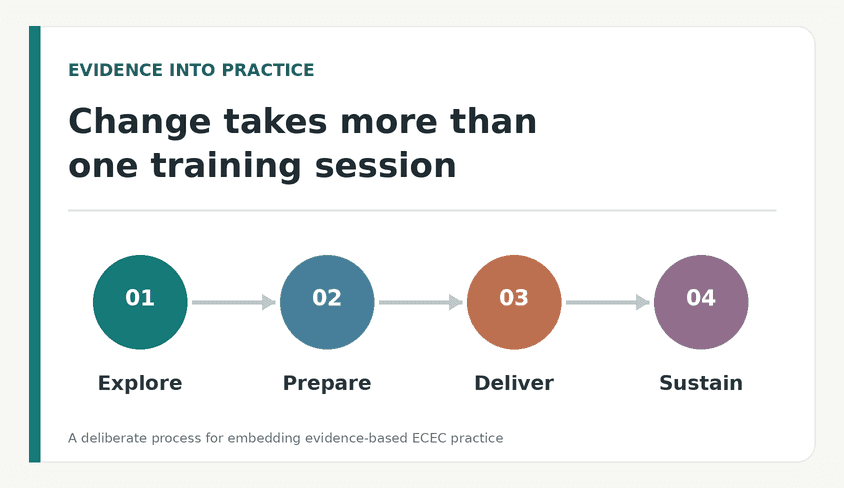
Finding a promising approach is only the beginning of changing practice in an early childhood service. Staff need time to understand it, decide how it fits their setting, use it with children and revisit what is working. New findings from the Australian Education Research Organisation (AERO) put that process, rather than a one-off professional learning session, at the centre of improvement.
The new guide brings together advice on mealtimes, food education, family engagement and service leadership. Its six modules offer educators and providers a way to review what children experience around food each day.
Early Learning Victoria (ELV) will visit five regional Victorian communities in October, connecting with families and prospective employees ahead of the opening of new government-owned early learning centres in early 2027.
The acquisition of another 250,000 shares takes Embark’s reported voting power in Mayfield to 50.04%, following its earlier takeover bid.
A new national campaign from the Australian Children’s Education and Care Quality Authority (ACECQA) is encouraging families to look beyond a service’s location and availability when choosing early childhood education and care.










 Article





















 Marketplace