


What’s your incident data already telling you about child safety?

 Marketplace
Incident and near miss records can help early childhood services identify patterns in supervision, staffing and practice. Reviewing those records can also reveal where further attention or changes to practice could reduce risk.
A South Australian customer recently shared how her team graphed its incident records and noticed a pattern of incidents around 3:30pm at shift change.
"When you get a number of the same things happening at the same time," she told us, "that's useful data."
A nominated supervisor in Queensland found something similar at her service.
After a run of unexplained injuries, she exported incident records and saw a pattern: most incidents happened early in the morning and late in the afternoon. That prompted her to review supervision arrangements and how groups were combined at those times.
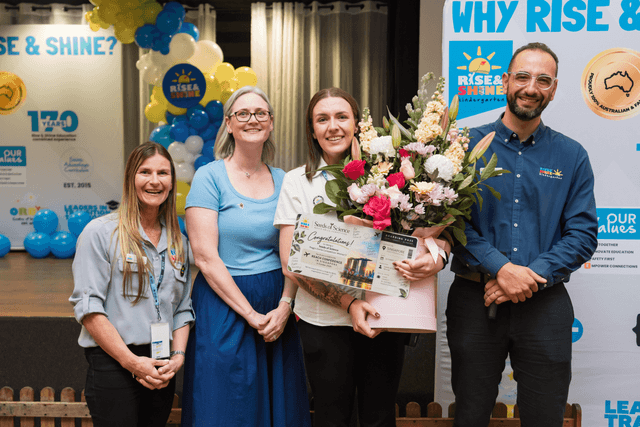
At The Sector Connect + ECEC Compliance and Risk Forum in Sydney on 4 September, Storypark CEO Jamie MacDonald opened a panel with these stories. They prompted a question we kept returning to: how can services recognise risks before harm occurs?
What incident and near miss records can show
An incident report documents something that has already happened. Near miss records can reveal hazards before someone is harmed, particularly when leaders review them alongside incident trends.
An unlatched gate caught before a child leaves the premises, a child redirected away from a car park or a medication error identified before administration can each prompt a review of controls. Each one shows where the next incident is likely to be. Few services track them consistently, so the pattern stays hidden.
Panellists named other early signals leaders will recognise: a centre that's struggling to recruit, a team with high sick leave, a new centre that inherits an old culture, and what families and educators are telling you, formally or not. None of these is an incident. All of them change the odds. Moments of transition, like shift change, can too. The 3:30pm pattern didn't explain itself, but it prompted her to reflect on what could reduce the risk at that time of day.
Make it safe to report concerns
Panellists also drew a line between everyday injuries and health events, and avoidable harm. Toddlers fall over because they're learning to use their feet. When a child has an asthma attack and the team calls an ambulance, it still needs to be recorded and notified, but it's a team doing its job well, not a failure. When everything is treated as a crisis, the real risks can get lost.
Blame shuts reporting down. If an educator expects trouble for logging a near miss, they may not log it, and the warning disappears. The operators on stage talked about moving from "who's responsible?" to "what could we do better?", applying the same critical reflection the sector already brings to its practice.
Support matters too. One operator on the panel shared how they had a central incident line: someone at a service can call a number and get help with a hard decision, so it doesn't rest on the person closest to it alone. However, smaller providers may not have such support arrangements available. ACECQA's latest figures show 78% of approved providers run a single service. For them, the nominated supervisor can carry most of the responsibility.
One practical step came up for those supervisors. When you decide not to report something, write down the facts, why you made that decision, and who was involved. If the decision is questioned months later, the record shows the reasoning at the time.
How Storypark supports record keeping
One thing we heard clearly that day is that technology can often feel like more work for educators. We don't dismiss that. The test is whether a tool makes the right thing the easy thing.
Digital tools need to make recording and reviewing information manageable for educators and leaders.
Fully customisable safety and compliance forms in Storypark including an AI builder that turns a paper form into a digital one in seconds. Moving daily hazard checks off paper allows leaders to see what's been done, when and by whom, across sites. The incident reporting feature also captures what happened in the moment, and can be updated as further information becomes available.
The two services Jamie described used information their teams were already entering as part of everyday practice to investigate patterns. Insights like these, shared by the services we work with, continue to shape how Storypark evolves.
That's also why we were proud to sponsor the forum. Bringing the sector together is how we work through the hard stuff, and it lets us hear directly from early childhood leaders and operators about the practical challenges of child safety and compliance. It’s important we all keep making room for these conversations.
Three questions to bring to your next team meeting
- What near misses have we recorded this month, and what did we learn?
- Are incidents occurring at particular times or in particular places?
- Which concerns raised by families or educators still need a response?
Record the team's findings and assign actions. At the next meeting, review progress and ask the questions again.
Katie Dowle is Chief Product and Marketing Officer at Storypark. For 15 years, Storypark has supported educators, families and leaders across Australia and New Zealand to help nurture each child's unique potential.


Don’t miss a thing




Related Articles