


Economics
General News
In The Field
Jobs News

Policy

Practice

Provider

Quality

Workforce
The year in review: 2025’s most impactful ECEC news stories and shifts

FDC-Friendly
Fiona Alston
Dec 16, 2025
Save
As 2025 draws to a close, it’s clear the early childhood education and care (ECEC) sector has reached new defining moments.
This year was marked by sweeping child safety reforms, leadership upheaval, major compliance action and rising expectations for sector transparency and accountability. But it also saw steady gains in quality, increased investment in access and infrastructure, and signs of long-term reform on the horizon.Here are 10 stories and themes that defined the year, each a reminder of the complexity, resilience and evolution of Australia’s ECEC landscape.
- Child safety reform and sector accountability take centre stage
2025 was the year child safety reform moved from policy to practice. New national standards under the National Quality Framework (NQF) came into effect on 1 September 2025, introducing faster incident reporting timeframes, updated digital safety requirements and other safeguards to strengthen how services approach reporting, oversight and risk. These changes followed extensive sector consultation and high‑profile media and parliamentary scrutiny of child protection failures, prompting national calls for systemic change.
In parallel, jurisdictions, most notably New South Wales, introduced significant legislative reforms to strengthen enforcement under the Education and Care Services National Law. These included new offences, stronger penalties and broader compliance powers, with maximum fines for serious breaches increased by up to 900 per cent for large providers and individual staff penalties reaching $34,200. Regulators can now suspend ratings, restrict Child Care Subsidy (CCS) approvals, impose supervision orders, direct services to install CCTV and close services where there is an unacceptable safety risk. As part of the reforms, services are required to publicly display their compliance and quality histories, and families can access up‑to‑date enforcement information via the federal government’s StartingBlocks.gov.au website. For example, the NSW Regulatory Authority imposed growth restrictions and enhanced oversight conditions on Affinity Education Group Pty Limited, including a cap on service approvals in NSW, elevated educator–to–child ratios, quarterly Quality Improvement Plans and a CCTV implementation program across all NSW services, one of the most comprehensive regulatory interventions seen in recent years.
Major NQF child safety reforms take effect ahead of further changes in early 2026
- Leadership shifts signal a new chapter
This year brought significant change at the top of some of the sector’s largest providers. Affinity Education CEO Tim Hickey stepped down amid child safety controversies, marking a new era of executive accountability. Governance changes followed across multiple organisations, with Craig Napier appointed CEO of Camp Australia, Todd Dawson confirmed as incoming CEO of The Atlantis Group, and Anne Hollonds named Chief Executive Officer of the Early Learning and Care Council of Australia (ELACCA). The Y WA welcomed three new board directors, and reshuffles at The Benevolent Society signalled evolving expectations of leadership and governance across the ECEC landscape.
Additional movements included four new board appointments at PeakCare Queensland and the conclusion of Meena Singh’s term as Victoria’s Commissioner for Aboriginal Children and Young People. At Busy Bees Early Learning, long-serving CFO Ann Caulton retired, with Richard Gregg formally appointed to the role. Sector leaders Elizabeth Death (ELACCA) and Julie Price (Community Child Care Association) also concluded their tenures in 2025, closing chapters marked by sustained contributions to early childhood policy, safety and reform.
Executive leadership shakeup at Affinity Education
- Enforcement reshape public trust
Public trust in early childhood education and care (ECEC) was reshaped in 2025 by heightened scrutiny and a renewed focus on safety and accountability. The New South Wales parliamentary inquiry placed early attention on leadership failures and regulatory oversight, with testimony revealing safety and communication lapses across both for-profit and not-for-profit services. Media headlines and public submissions intensified pressure on approved providers and contributed to growing calls for reform. The Walkley Award-winning Four Corners investigation further exposed systemic safeguarding failures, prompting enforcement action and heightened attention at both state and national levels.
In response, the Senate Education and Employment References Committee launched a formal inquiry into the quality and safety of Australia’s ECEC system. The inquiry, announced in August, is examining child health and safety, regulatory effectiveness, workforce conditions and funding models. While the final report is due in March 2026, early hearings have already positioned trust, governance and accountability as central policy priorities.
Senate Inquiry launched into quality and safety of early childhood education and care
- Mandatory training becomes policy priority
National child safety reforms introduced a new measure allowing early childhood education and care (ECEC) services to close early on up to five occasions each year so staff can complete mandatory child safety training.
The measure was announced as part of a broader suite of national safety reforms agreed by state and territory education ministers in August 2025 and reflected in government guidance released in December 2025.
ECEC services to close early for mandatory child safety training under national reforms
- Workforce pay and retention progress
Workforce stability remained a major issue throughout 2025, but several significant reforms signalled meaningful progress. The rollout of the Workforce Retention Payments, provided eligible educators and early childhood teachers with financial incentives to remain in the profession. Together, the award wage reform and retention measures sent a clear message: workforce value, stability and retention are not optional, they are national priorities.
The Fair Work Commission handed down a landmark decision on gender-based undervaluation in feminised sectors, recommending substantial increases to pay rates under the Children’s Services Award. The ruling, described as historic, followed extensive union advocacy and reflected growing recognition that early childhood education is skilled, essential and historically undervalued.
Minimum retention payment rates to take effect from 1 December 2025
- Quality rises amid sector challenges
Despite pressures around compliance, staffing and reform, services achieved significant improvements in quality ratings. By year-end, more than 91 per cent of services were rated Meeting NQS or above for the fourth consecutive quarter . Staff waiver numbers fell again, continuing a trend seen across multiple ACECQA snapshot reports.
Long day care openings rose nationally, with Western Australia recording a particularly strong increase, showing sector resilience in meeting demand.
NQF Snapshot: 91% of services rated Meeting NQS or above for fourth consecutive quarter
- Access and infrastructure get a boost
In 2025, several state and joint funding initiatives strengthened the foundation of early childhood access across Australia. A landmark Preschool Reform Agreement between the Commonwealth and all states and territories secured multi-year funding to deliver 15 hours per week of preschool for every child in the year before school. This national commitment supports participation, particularly among Aboriginal and Torres Strait Islander children and families experiencing disadvantage.
At the same time, the $1 billion Building Early Education Fund began delivering infrastructure support for new and expanded ECEC services in areas of unmet demand. States such as Queensland and New South Wales also made targeted investments to boost service access in regional, rural and low-participation areas.
Funding agreement reached on preschools
- Inclusion and equity stay in focus
Equity remained a key thread throughout the year. Gender equity took centre stage, with updates to the Children’s Services Award recognising historic undervaluation . There were also renewed calls to support First Nations children and educators, and multiple initiatives launched to support male educators in early childhood.
Inclusive practice frameworks were strengthened, and sector leaders reminded us that inclusion is a shared responsibility.
New mentoring initiative launched to support male educators in early childhood
- Budget 2025–26 confirms ECEC as economic infrastructure
The 2025–26 Federal Budget included modest but meaningful commitments for the ECEC sector. These included additional funding to support the rollout of the Three Day Guarantee, capital investment in priority growth areas, and an extension of workforce retention incentives. While the funding was not considered transformational, it reaffirmed the Commonwealth’s commitment to access and affordability.
Notably, the budget speech positioned ECEC as part of Australia’s economic infrastructure, essential to workforce participation, child development and social equity. Analysts suggested this framing may pave the way for future funding models that treat early learning as a long-term investment, not a welfare cost.
Additional ECEC spending in 2025/26 Budget modest as Chancellor champions 3 day guarantee
- Celebrating Educators: The Heart of Early Learning
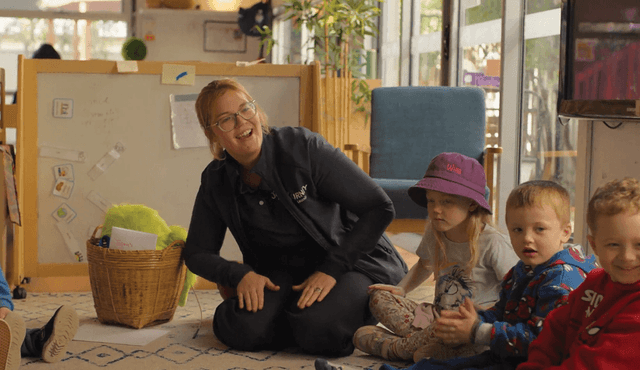
Amid a year dominated by reform, compliance and shifting public expectations, 2025 also brought moments of reflection and recognition, shining a light on the people at the centre of early childhood education and care. Educators across Australia continued to provide safe, responsive and enriching environments for children, often in the face of significant operational and emotional demands.
These everyday acts of care, professionalism and commitment underpin the entire ECEC system. While policy, funding and reform remain vital, the sector's strength lies in the relationships built between educators, children and families. As the year closed, many stakeholders reaffirmed that investing in the workforce means not just paying better, but recognising and valuing the expertise, resilience and heart that educators bring to their work every day.
Beyond the headlines: celebrating educators and the power of positive relationships in early learning
If 2025 was the year of reckoning, 2026 may well be the year of recalibration. And through it all, The Sector will be here to report, reflect and help the ECEC community navigate each step.


Don’t miss a thing



Related Articles