



Ecological identity: a new lens on an age-old practice
 Article
The journey to embed ecological identity is a personal one, as identity sits close to one’s heart and is shaped from our own foundational years. For myself, it was founded in warm summer afternoons playing in the rockpools along the beaches in Sydney, discovering the names of all the little creatures that lurked there, including the starfish that suctioned to my curious fingertips.
“To know nature intimately is to know its name” (Pelo, 2013). The knowledge of each plant and animal we meet helps us define where we are in the world. They give us a time stamp in our day or year, from the cockatoos that squawk good morning to us, down to the Christmas beetles that bring in our festive cheer. For many educators, this connection is a personal one, a quiet noticing.
For our Aboriginal and Torres Strait Islander brothers and sisters, this is much more than a quiet noticing; it’s a deep understanding and knowledge passed down over thousands of years. I witnessed this firsthand during my time on a visit to East Arnhem Land in 2019; it became a cornerstone in my evolving understanding of ecological identity.
As I walked along the beach, an Elder shared with me that she enjoyed the delicacy of stingrays. I asked, “How do you know when the sting rays are in the bay?” She took me over to a plant that was only budding and barely poking through the dunes. She told me, “When the plant has grown up to our knees, we know it’s the time the sting rays come into the bay to mate, and that’s when we can fish for them.” I was astounded…all of that from a plant that was on the dunes, a hundred meters from the shore. It was from moments like this that I realised Country shared everything the Yolgnu people needed to know, and that this could be true for everyone if we were courageous enough to slow down and watch closely enough. This is a courage that children instinctively have, however the fast pace nature of our modern world can erode over time.
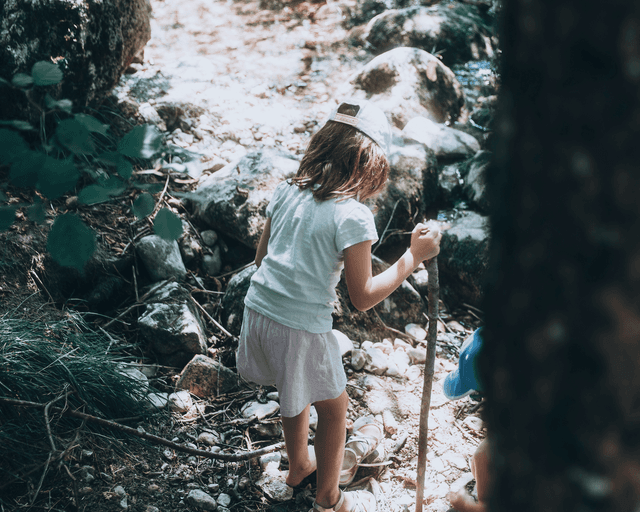
Fast forward to 2025, at Learning Avenues, nature play and ecological identity have emerged as a pillar of our philosophy, underpinning our pedagogy and practice with children. Our team started documenting our observations as a whole service on a Phenology wheel. Each of the 12 wedges of the wheel represented a month of the year in the Anglo-Saxon calendar. We aimed to capture the seasonal changes in our micro-environment, to revisit and reflect in the years to come. As I walked alongside the team and the children, our quiet noticing’s became visible. We delighted in sharing wonder with the children when they collected seed pods and followed butterflies bouncing from flower to flower. The interconnectedness of it all became abundantly clear, the butterflies called us to look at the blossoming wattle tree, the wattle tree that our resident crow squawks from as the sun falls on another day. Suddenly, we all found ourselves becoming more present.
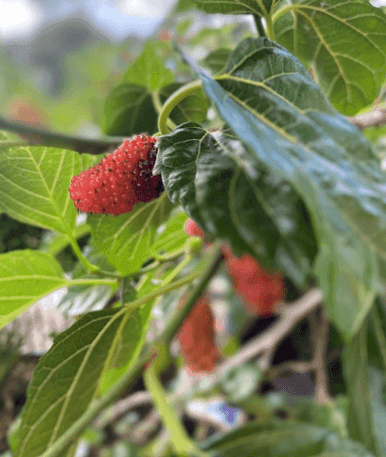
Although our story does not have a pretty ending, our beautiful calendar was damaged beyond repair in a weather event; this too becomes interwoven into our story…our ecological identity. We still use the language “it’s grasshopper season again” and “we can’t wait for our mulberry season” because it’s become a part of who we are and what we do here.
I feel as though the term ecological identity is largely an idea born from the Indigenous ancestral knowledge of Country. As non-Indigenous Australians and Early Childhood professionals, it’s important we embrace these insights, share our own intimate stories of our local ecosystems and empower the next generation to build even stronger connections with Country.
Author
Ruby Rallis is the Educational Leader at Learning Avenues Early Education, Care and Kindergarten. She is a graduate of the University of Wollongong, where she studied her Bachelor of Education - The Early Years and has been working in the sector both in Sydney and the Gold Coast over the last 10 years. Ruby has a particular interest in nature play in the early years and, alongside her educational leadership role, is fulfilled by her work on the Connection to Country (Bush Kindy) program at Learning Avenues.
References:
Pelo, A. (2013). The goodness of rain: Developing an ecological identity in young children. Exchange Press, Inc.


Don’t miss a thing



Related Articles