When war and conflict shows up in children’s play
 Article
When frightening events are happening in the world, many parents and carers wonder how much children really understand. Some children ask direct questions about war, politics, violence, or our world leaders. Others say very little at all. Yet often, what children cannot express in words begins to appear somewhere else: in their behaviour, their emotions, and especially in their play.
Children do not process the world in the same way adults do. Adults tend to seek information, explanations, and certainty. Children process through relationships, sensory experiences, and imagination. Play becomes the place where worries, fears, confusion, and feelings begin to emerge.
As play therapist Garry Landreth famously said, “Toys are children’s words and play is their language.”
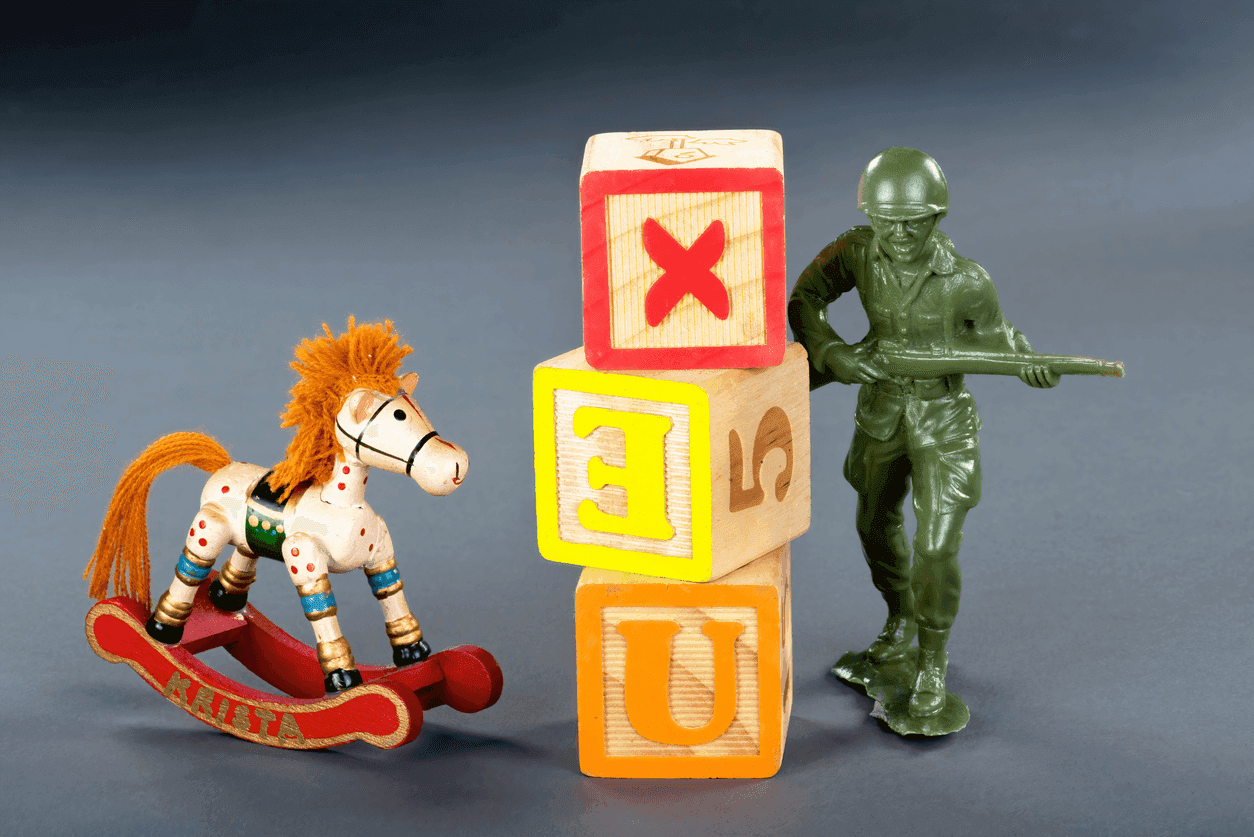
This means that when children repeatedly play games about fighting, hiding, rescuing people, explosions, danger, or “goodies and baddies,” they are not necessarily being disruptive or improper. Often, they are trying to make sense of something their nervous system has not yet fully processed.
For parents and carers, this can sometimes feel confronting. Watching your child act out violence or conflict in play may naturally stir up concern. But from a trauma-sensitive perspective, play is often part of the healing process. It gives children a safe distance from overwhelming feelings.
Children also absorb far more than we sometimes realise. Even when they do not fully understand politics or world events, they are highly sensitive to emotional tone. A younger child may hear the name of a political leader such as Trump without understanding who he is or what he represents politically. What they often notice instead is the emotional energy around the conversations adults are having. They pick up tension, fear, anger, confusion, and uncertainty long before they understand facts.
This is why children can become emotionally affected by war and conflict even when it is happening far away.
Some children may seek closeness more than usual. Others may struggle to sleep, ask repetitive questions, or suddenly become fearful about safety. Some may withdraw, become irritable, or appear unusually flat emotionally. Others may replay danger themes over and over again during play.
These responses are not signs that something is “wrong” with a child. They are signs that the child’s nervous system is responding to stress.
This is where understanding the nervous system and the brain can really help.
Play therapist Lisa Dion speaks about the “Four Threats of the Brain,” explaining that the brain is constantly scanning the environment asking one important question: “Am I safe?”
This happens beneath our conscious awareness. Children are constantly taking in information from facial expressions, routines, tone of voice, media exposure, tension in the home, and changes in the world around them.
The first threat the brain scans for is physical safety. Even indirect exposure to frightening news, violent imagery, or anxious conversations can activate a child’s sense of danger. Younger children especially can struggle to understand distance and may genuinely worry that war is coming close to home.
Simple grounding can help here. Showing children on a map where events are happening, limiting distressing media exposure, and calmly reassuring them that they are safe can make a real difference.
The second threat is the perceptions of the unknown. Children find uncertainty difficult because they rely on adults to help organise their world. When routines change or the world feels unpredictable, children can begin imagining worst-case scenarios.
This is why routines matter so much during stressful times. Everyday rhythms such as meals, bedtime stories, school, movement, and play help the nervous system feel more settled. Predictability creates safety.
Children also benefit from the soothing of honesty. They do not need adults to pretend everything is fine. In fact, children often sense when adults are burying their own emotions.
This connects to the third threat: incongruence.
Children are incredibly sensitive to things not matching up. If an adult says, “I’m fine,” while clearly appearing stressed or upset, children often notice the mismatch. Even if they cannot explain it, their nervous system can register it as unsafe.
This does not mean parents should share every worry with children. It simply means emotional honesty matters. Saying something like, “I’m feeling a little worried today, but I’m taking care of myself and we’re together,” helps children feel safer because the emotional tone now matches the words.
Children do not need perfect adults. They need regulated, connected adults willing to become what I playfully call “amygdala whisperers” - adults who can help soothe big feelings, make sense of overwhelming moments, and remind children’s nervous systems that they do not have to face things alone.
The fourth threat Lisa Dion describes is the pressure of “shoulds” and unrealistic expectations. Many parents and carers across Australia are carrying enormous pressure right now. Rising living costs, petrol prices, housing stress, grocery bills, and financial uncertainty are leaving many families emotionally and physically stretched.
With all of this going on, it’s no surprise that many parents and carers also have a loud little “should” soundtrack running quietly in the background:
“I should be handling this better.”
“I should be more patient.”
“I shouldn’t feel this tired.”
“I should have all the answers.”
Children experience similar feelings too. “I shouldn’t feel scared.” “I should be brave.” “I shouldn’t cry.”
But trauma-sensitive practice reminds us that stress responses are human responses. Exhaustion, irritability, overwhelm, and emotional ups and downs are not failures. They are signs that the nervous system is working hard to manage uncertainty and stress.
At The Foundation, one of our core principles is that the aim isn’t to achieve perfect calm - true regulation isn’t about being calm.
The goal is connection.
Children regulate through relationships first. They borrow regulation and safety from the adults around them.
This is why simple moments of connection can be so powerful.
Blowing bubbles together helps slow breathing. Drawing feelings can help children express emotions they cannot yet name. Music, storytelling, movement, cuddling under blankets, and imaginative play all help support regulation.
Sometimes, when children are invited to imagine safety, difficult feelings emerge first. A child asked to create a “safe place” may include danger, hiding places, or destruction. This is not something to correct. It is information about what safety currently feels like inside their body.
We do not need to fix or rush children out of these moments. Often, what helps most is simply staying present and curious.
You might say, “It looks like everyone is trying hard to stay safe,” or “That seems really scary.”
These gentle reflections help children feel understood without overwhelm.
Adolescents need something slightly different. Many are exposed to distressing content online, including graphic videos, misinformation, and strong opinions through social media. Rather than shutting conversations down, curiosity helps.
Asking questions such as, “What have you been hearing about this?” or “How does it make you feel when you see those videos?” creates space for connection and critical thinking.
Across all ages, children share the same core needs: safety, connection, predictability, and what Deb Dana describes as nervous system alignment - the felt experience of being emotionally and relationally anchored with others.
Perhaps most importantly, children come to understand themselves through the way the adults around them respond to their emotions, behaviours, and experiences. When children feel met with empathy rather than shame, curiosity rather than criticism, they begin to develop a more compassionate understanding of themselves.
In times of uncertainty, conflict, or fear, children do not need adults who have all the answers. They need adults who can stay emotionally present alongside them with honesty, warmth, steadiness, and connection.
As Fred Rogers wisely reminded us: “Anything that’s human is mentionable, and anything mentionable can be more manageable.”
When children are given safe opportunities to express difficult feelings through play, conversation, art, movement, or storytelling, those experiences often become less overwhelming and less isolating.
Meaning-making does not happen by asking children to simply “move on” or “be brave.” It begins when children feel safe enough to be seen, heard, and supported exactly where they are.


Don’t miss a thing




Related Articles