



Vietnamese preschool program prompts more child talk, but English dominates
 Article
When a preschool introduces another language, the number of sessions delivered tells only part of the story. Children also need opportunities to participate. A new Australian study offers an unusually close look at who spoke, for how long and in which language during a Vietnamese exposure program.
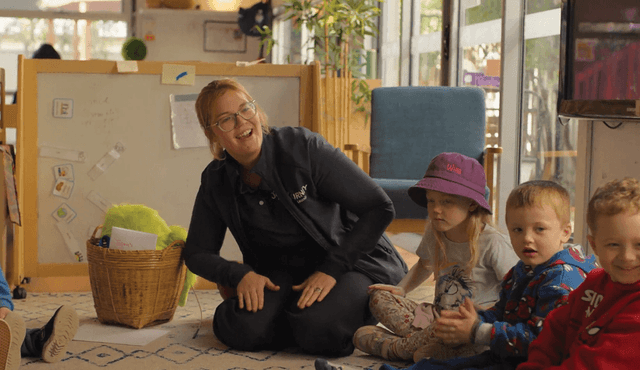
The research, published on 16 September 2026 in Frontiers in Education, examined sessions at one Melbourne preschool. A trained Vietnamese-speaking facilitator delivered 176 sessions across 29 weeks, with children who had Vietnamese at home alongside children learning it as an additional language. Researchers analysed speech from a facilitator and 41 children using samples of recordings across the program.
The distinction between hearing a language and using it is central to the findings. The facilitator spoke Vietnamese for 66 per cent of their recorded speech time, but English accounted for 87 per cent of the children’s recorded speech. Vietnamese accounted for the remaining 13 per cent of child speech time in the analysed recordings.
Across the program, the researchers found that children spoke more during the sessions. That is a meaningful observation for educators who want children to take an active role rather than listen throughout an adult-led activity. Yet the increase was largely in English. The study offers limited evidence of a corresponding increase in children’s Vietnamese speech.
The research does not suggest that hearing Vietnamese had no value. It shows that exposure and spoken output are different things, particularly in a mixed group where some children hear Vietnamese at home and others encounter it as an additional language. A child might respond in English while following a Vietnamese instruction or participating in an activity. Speech-duration data alone cannot capture everything the child understands.
Equally, it would be inaccurate to describe the program as having demonstrated Vietnamese fluency or large gains in language proficiency. This paper measured how long participants spoke in each language during sampled sessions. It was not designed to establish the children’s overall command of Vietnamese or the lasting effects of the program.
For services considering language programs, the findings encourage a closer look at participation. Are children offered manageable chances to respond in the additional language? Does the adult pause long enough for a reply? Do songs, games or familiar routines make it possible to contribute before a child can produce a full sentence?
Those questions follow from the study’s focus on speech opportunities; the researchers did not test which teaching technique would increase Vietnamese use. They also reported the group as a whole, so the figures should not be read as a measure of progress for individual children or as a comparison of children with different home languages.
The context matters. This was one preschool with one facilitator and a specific program. Its patterns cannot automatically be applied to every bilingual service, every language or every approach to supporting home languages. The study does, however, give ECEC leaders a more precise way to think about program aims: is the goal to make a language audible and valued in the setting, to increase children’s willingness to communicate, to develop their spoken use of that language, or some combination of these?
Each aim calls for different evidence. Recording the number of sessions can show what a service offers. Listening to children’s contributions, speaking with families and looking at their participation over time can help educators judge how the experience is working. This study’s contribution is to make one difference clear: adult use of an additional language does not, by itself, tell us how much children use it.


Don’t miss a thing



Related Articles