Rethinking stress in early childhood: Why balance, not elimination, is key to healthy development

 Article
A new working paper from the Center on the Developing Child at Harvard University is calling for a significant shift in how policymakers, practitioners and communities understand stress in the early years.
Rather than viewing all stress as harmful, the paper argues that the goal should not be to eliminate stress entirely, but to ensure children experience the right balance of challenge, support and protection.
Released by the National Scientific Council on the Developing Child, Finding the Balance: Transforming How We Think About the Body’s Response to Stress in Early Childhood reframes stress as a normal biological process that can either strengthen resilience or create harm depending on the environment surrounding the child.
Stress is not the enemy, overload is
The paper explains that the body’s stress-response system is designed to protect us. Short, manageable experiences of stress, such as trying something unfamiliar, coping with frustration or navigating change with support, help children build coping skills and strengthen developing biological systems.
Problems arise when stress becomes frequent, intense or prolonged, particularly when children do not have the buffering effect of responsive relationships or stable environments. In those circumstances, the stress-response system can shift from protective to harmful.
The report links persistent overload with increased risks for:
- developmental disruption
- behavioural and emotional challenges
- learning difficulties
- poorer lifelong physical and mental health outcomes
Rather than seeing stress as simply “good” or “toxic,” the paper says children’s experiences sit on a continuum shaped by adversity and protection.
React, adapt, restore
The authors outline a practical framework for understanding how the stress system works:
React – the body detects a challenge and activates systems that increase alertness, energy and readiness.
Adapt – biological systems adjust to manage the challenge and learn from the experience.
Restore – once the challenge passes, the body returns to baseline and rebalances itself.
This cycle is essential to healthy development. However, when children face chronic adversity such as persistent poverty, family instability, racism, violence or unpredictability, the recovery phase becomes much harder to achieve.
Protective factors are biologically important
A central message of the paper is that protective factors are not optional extras — they are biologically significant supports that help children regulate stress and build resilience.
These include:
- stable, nurturing relationships
- predictable routines and environments
- social connection and community support
- access to healthcare and basic needs
- policies that reduce pressure on families
- high-quality early learning environments
For the early childhood education and care sector, this reinforces the importance of consistent staffing, emotionally responsive practice and calm, structured environments.
The paper also emphasises that community-level conditions matter deeply. Housing insecurity, financial stress, food access and neighbourhood safety all shape how children experience and recover from stress.
Why it matters for policy and practice
The report urges systems to move beyond placing responsibility solely on individual families and instead focus on the wider conditions in which children are raised.
That includes investing in:
- community infrastructure
- safe and stable housing
- neighbourhood supports
- equitable access to services
- measures that reduce structural disadvantage
- programs that support caregiver wellbeing
For ECEC leaders, the findings are a reminder that behaviour, regulation and wellbeing are often shaped by pressures outside the service gate.
What it means for educators
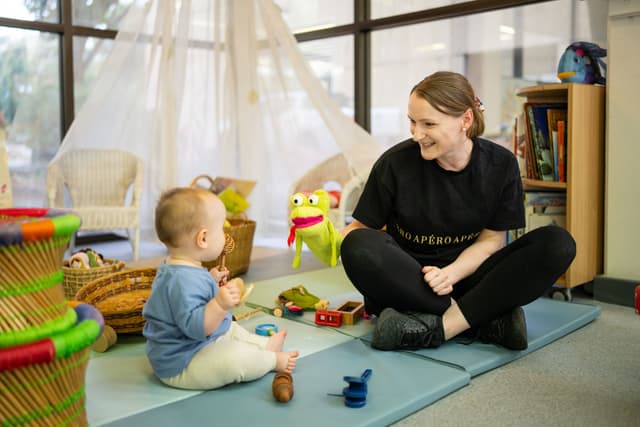
For educators, the message is clear: warm interactions, predictable routines, emotional co-regulation and secure relationships are not soft extras. They are core developmental supports that help children build healthy stress-response systems.
Children do not need a challenge-free childhood. They need challenges that occur in the context of safety, connection and capable adults.
A more balanced conversation
The paper concludes with a clear proposition: stress is part of life, but overload does not need to be.
With the right support, children can develop resilience, adaptability and strong foundations for lifelong wellbeing. For the ECEC sector, it is another powerful reminder that early environments matter not only for learning today, but for health and development across the life course.
Source: National Scientific Council on the Developing Child, Center on the Developing Child at Harvard University, Working Paper 18 (2026), Finding the Balance: Transforming How We Think About the Body’s Response to Stress in Early Childhood.


Don’t miss a thing




Related Articles