Five free movement challenges to try with children this November
 Article
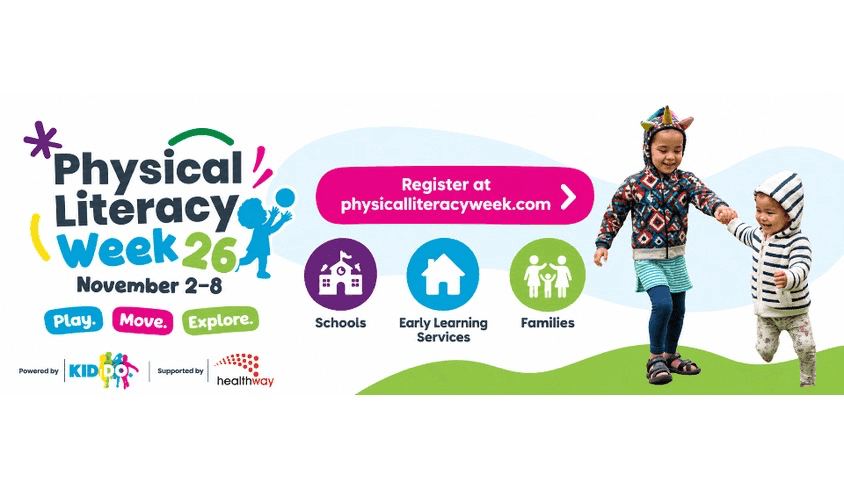
Physical Literacy Week offers ready-to-use activities for babies, toddlers and preschool-aged children, with free resources educators can keep using beyond the event.
A teddy, a beanbag or a hula hoop can provide the starting point for movement experiences during Physical Literacy Week 2026. Running from 2–8 November, the national initiative gives educators free activities exploring balance, jumping, throwing, catching and running.
Delivered by KIDDO at The University of Western Australia and supported by Healthway, the week is open to early childhood services, outside school hours care services, primary schools and families. Services do not need a KIDDO membership to participate.
“Seeing the children's confidence to participate builds as they revisit experiences. Our educators are more confident to be active with the children,” an educator from a participating early learning service said in feedback supplied by KIDDO.
Services can take part for one day or throughout the week. The activities are designed to fit into existing play experiences, giving teams flexibility about what they offer and how they involve children.
Five movement challenges for different ages
The ECEC resources include separate activities for babies and toddlers and children aged two to five. Educators can adapt the experiences to children’s abilities, interests and the spaces available, with minimal equipment required.
Monday’s Make & Move challenge explores balance through music, dancing and creative movement. Tuesday’s Adventure Trail focuses on jumping, climbing and exploring different ways to move, while Wednesday’s Catch the Magical Creatures uses beanbags and imaginative play to practice throwing.
Thursday’s Teddy’s Big Adventure introduces catching, tracking and handling objects through an active movement story. Friday’s Road Trip turns hula hoops into cars, encouraging children to explore running, stopping, starting and changing direction.
Free resources support educator confidence
Registered services receive access to an online hub containing daily challenge cards, instructions, posters, videos and practical teaching tips. A free educator webinar will also explore ways to support physical literacy and active play in early childhood settings.
KIDDO reports that more than 400 early learning services and 37,000 children participated in the inaugural event in 2025. Its evaluation found that 90 per cent of respondents agreed the week increased educator confidence, while 91 per cent reported increased children’s engagement in physical activities.
These figures reflect 153 respondents’ reported experiences. KIDDO also reports that services continued using activities after the week and shared resources with families, with 99 per cent of respondents indicating they would participate again.
Take the activities home and beyond the week
Matching Play at Home challenges give families opportunities to revisit activities children have experienced at their service. Families can also register independently for resources aimed at children aged birth to four and five to twelve, using everyday items such as chalk, paper and balls.
For educators planning participation, the starting point can be something children already enjoy. A familiar movement story, dancing or imaginative game may offer a way to introduce a challenge, with the resources providing ideas to extend it.
Registration is free through the Physical Literacy Week website. Teams can choose the activities that suit their children and revisit them after the event, allowing time for children to practise, try a different approach and become more confident with familiar experiences.


Don’t miss a thing