


Every child is a valued member of the community, and every voice matters
 Article
What happens when a high image of children becomes community advocacy and active citizenship in action?
In Room 6, the preschool room for children aged three to five years at Futuro Bardia a simple question about how children would like to contribute to decisions within their learning environment their preschool room to operate has grown into an ongoing Children’s Council project.The inquiry has taken children from conversations and dramatic play to voting, engagement with Campbelltown City Council and, ultimately, a meeting with the Mayor Cr Darcy Lound.
For Educational Leaders Navalpreet Kaur and Preeti Kafle, the experience has reinforced that children’s agency extends beyond offering choices. It involves creating genuine opportunities for children to influence their environment, express their views, participate in decision-making and see that their contributions can make a difference.
Starting with a big idea
The inquiry began with the introduction of the term “Children’s Council” to the preschoolers. Recognising that the concept could be abstract for young children, the educators explored its meaning through questions and conversations rather than providing a predetermined definition.
They asked:
“What is a room routine?”
“How would you like to set up your room?”
“What decisions would you like to make?”“Who is leader? What is leadership?”The children began suggesting changes, discussing solutions, asking questions and negotiating with one another.
The children responded with enthusiasm. They began suggesting changes, discussing solutions, asking questions and negotiating with one another.
Those conversations became the foundation of the inquiry. Rather than working towards a predetermined outcome, educators followed the children’s questions and emerging interests.
Creating a council of their own
Children were invited to nominate for the Children’s Council, with a voting process held within the room.
The children drew their own portraits as council members, proudly displaying them on the wall. They then worked together to establish a Council Office.
Families became part of the project, contributing resources including laptops and old-style telephones. A simple table was transformed into a space for meetings, communication, decision-making and dramatic play.
The table quickly became one of the most popular areas in the room.
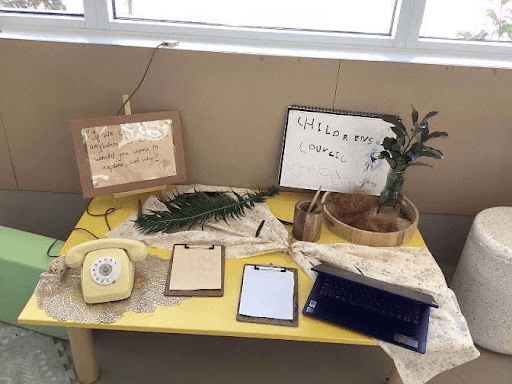
Children spent extended periods there talking with peers, exploring resources and engaging in dramatic play. They took on roles they had observed in their own lives and created their own understandings of what it meant to have a job, make decisions and contribute to a group.
One child sat at the council table and confidently announced:
“I’m Nav today and I’m doing learning story.”
The observation offered educators an insight into how children were interpreting the roles and responsibilities they saw around them.
The Council Office had become more than a play space. It provided a context for children to explore leadership, communication, collaboration, identity, responsibility and agency.
Giving every child an opportunity to have a voice
The initiative soon extended beyond Room 6, with children visiting other rooms and inviting their peers to participate in the voting process.
With support from Educational Leader Preeti Kafle, a centre-wide vote was held to elect six representatives from 14 nominees. Children from Rooms 2 to 5 looked at photographs of the candidates and used materials including buttons and coins as voting tokens.
Their curiosity was immediate.
“Why are we doing this?”
“What are the members going to do for us?”
Ms Kafle responded using language appropriate to the children’s ages and experiences.
The experience demonstrated that participation can take different forms across age groups. Understanding the formal structures of local government was not necessary for younger children to encounter concepts of choice, participation, belonging and having a voice.
When children’s questions became council business
As the Children’s Council developed, members began meeting weekly in our atelier space.
The conversations were increasingly connected to children's everyday experiences and concerns.
“What protection do we need outside?”
“What outdoor resources do we need to play?”
“What safety rules should we follow on the road?”
The meetings created opportunities to identify issues, hear different perspectives and consider possible responses.
These conversations also connected with our ongoing ‘Hello Sydney’ project, particularly our investigations into roads, transport, maps and safety.
Road safety had also emerged through the service’s engagement with the Kids and Traffic Early Childhood Road Safety Education Program while families had raised concerns about the lack of a pedestrian crossing near the service. Together, these threads gave the Children’s Council an authentic community issue to investigate.
“The Children's Council is informed by a local lens of the Reggio Emilia idea of a ‘High Image of the Child’.”
When learning travelled home
Perhaps one of the clearest signs that the project had become meaningful was that children began talking about it with their families.
One parent approached us and asked:
“What is Children’s Council? My child keeps talking about it at home and says, ‘I have to go to childcare because I have a job to do.’”
For the educators, the comment suggested that children were beginning to view themselves not simply as participants in an experience, but as people with responsibilities and contributions to make.
The next question was how far that participation might extend beyond the service.
Building a relationship with our local council
We contacted Campbelltown City Council and shared what the children had been learning.
To our delight, the council responded and offered to visit the centre.
On 18 June 2026, members of the the council’s Community Engagement team visited our preschool.
The children prepared a welcome and thank-you poster for the visitors and eagerly participated in the experience.
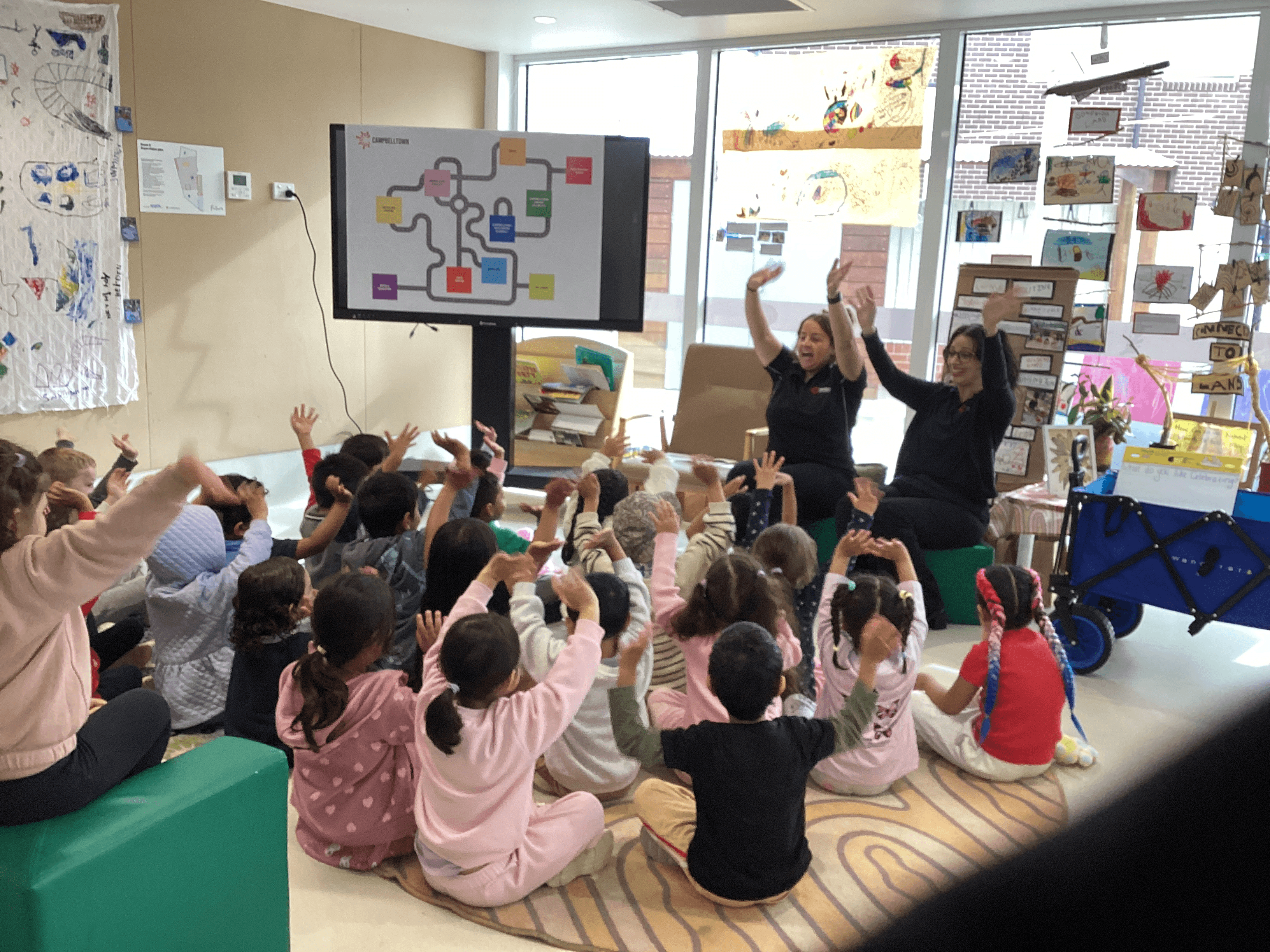
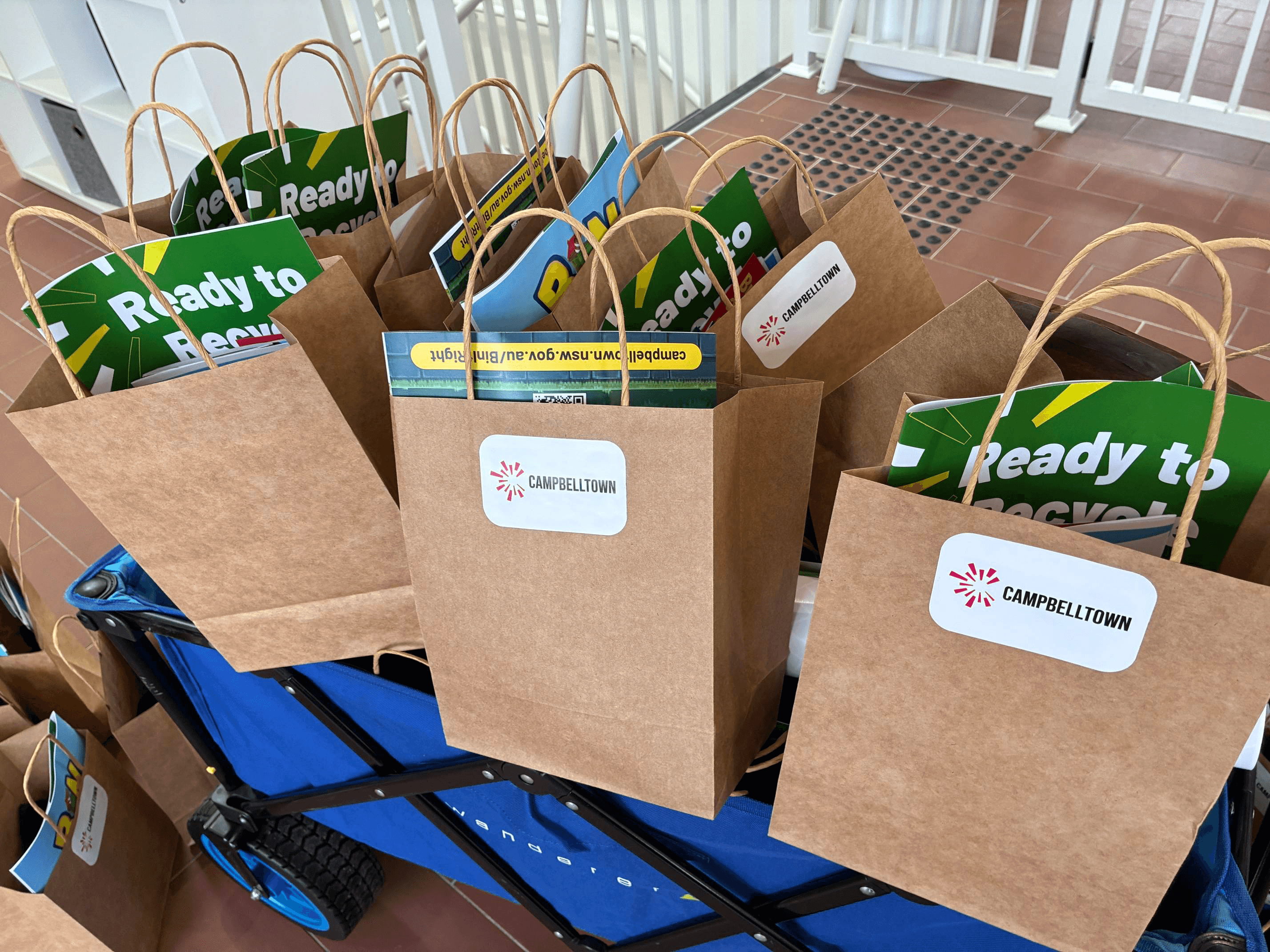
The council team introduced a large interactive map representing the Campbelltown community. Using a bus sticker and visual prompts, the children travelled across the map while learning about local services and facilities, including recycling, bicycle education, arts, animal care, Bushcare, early education and the Civic Centre.
As they sang The Wheels on the Bus and moved the bus around the map, the experience prompted further conversations about the people, places and services that make up a community.
The council team asked:,“What do you like celebrating?”
Their responses were collected to contribute to the council’s future community event planning.
It provided a tangible example of children’s perspectives moving beyond the preschool room and into a wider community conversation.
From road safety inquiry to community advocacy
At the same time, our Children’s Council was investigating road safety.
Children had been learning about crossing roads, pedestrian safety and ways people can stay safe in their community. Their attention increasingly turned to the road outside Futuro Bardia.
“Why don’t we have a road crossing across the road?”
“Why is there no roundabout?”
“Why is there no traffic light?”
These were not hypothetical questions. Children and families experienced the road conditions as they arrived at and left the service, and families had also raised the lack of a crossing with educators.
These were not hypothetical questions. Children and families experienced the road conditions as they arrived at and left the service, and families had also raised the lack of a crossing with educators.
Rather than providing an immediate answer, educators supported children to investigate.
The children discussed their concerns, developed questions and created drawings before preparing a proposal outlining why they believed a pedestrian crossing should be considered near the service.
The inquiry was shifting from learning about community and road safety to participating in an authentic community issue.
The invitation we had been waiting for
Following the council team's visit, our relationship with Campbelltown City Council continued.
Council representatives suggested that the children take their ideas directly to the Mayor.
Then came the email we had been hoping for.
The children were subsequently invited to visit Campbelltown City Council on 26 August 2026 and meet the Mayor at the council offices. In preparation, children revisited their inquiries and considered what they wanted to ask and share.
Even the bus journey extended the inquiry, as children observed their surroundings and discussed what they expected to encounter at council..
At council, the group was welcomed by Emily Cavanagh Community Engagement Officer and Stephanie Roberts Community Engagement Specialist, who guided the children through the building.
When the Mayor arrived, the children quickly began asking questions:
“What do you do?”
“Can you help us get a crossing near our centre?”
“What is your favourite colour?”
The children had not come simply to observe. They had arrived with questions, ideas and a proposal they wanted decision-makers to hear.
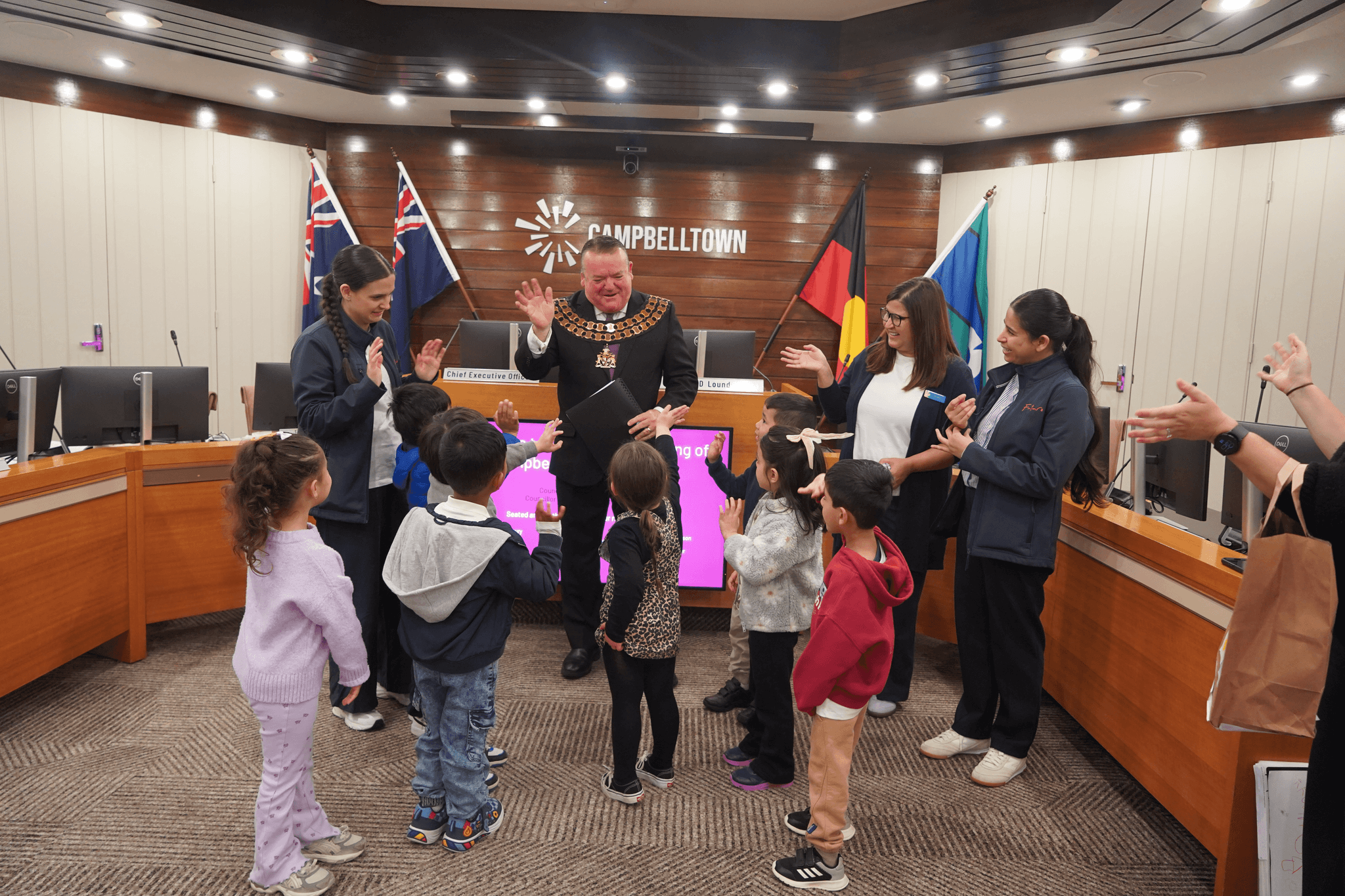
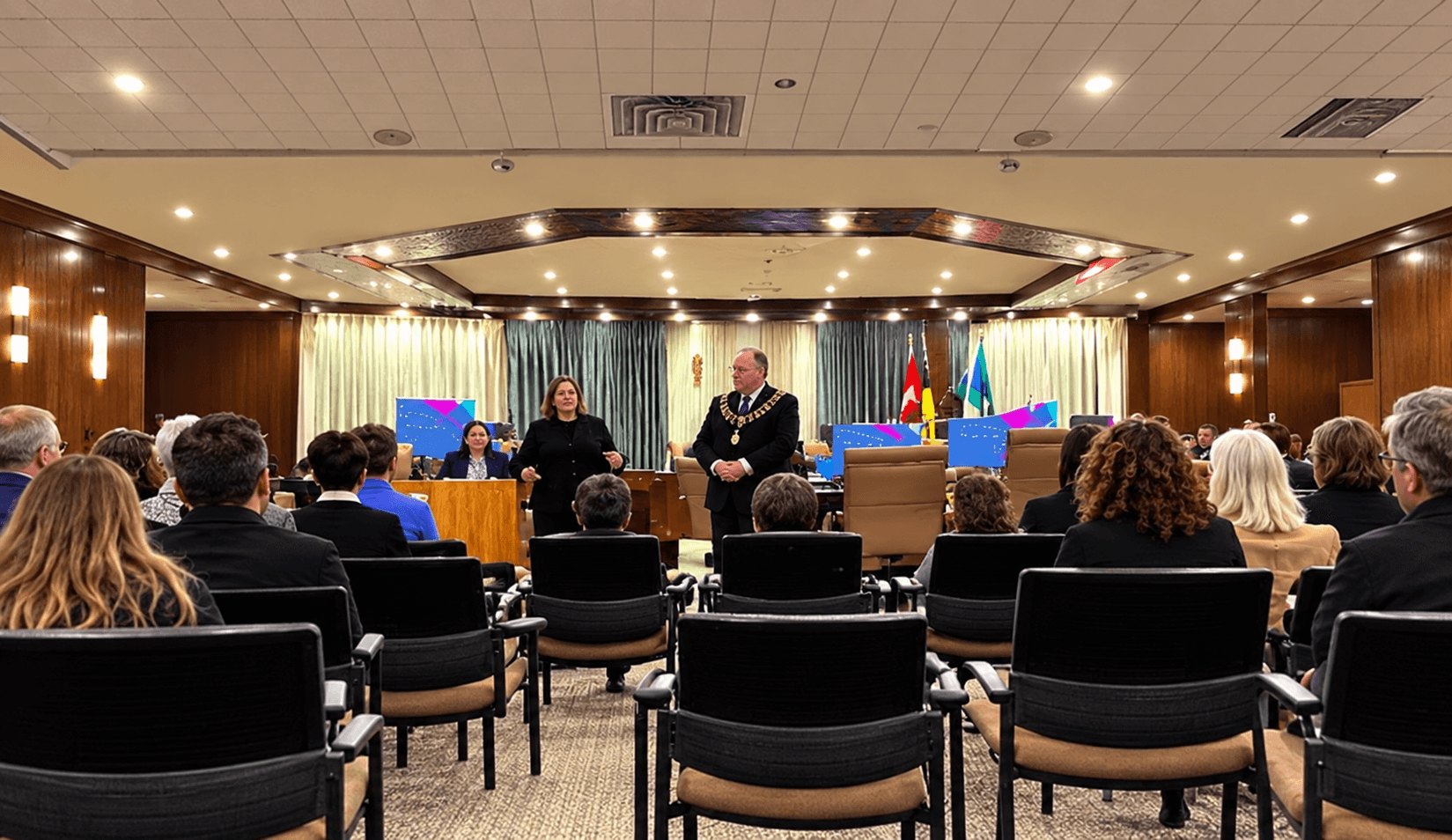
In the Council Chamber, they presented the Mayor with a handmade photo frame featuring a drawing of him, an invitation to Futuro Bardia’s upcoming showcase and their proposal seeking consideration of a pedestrian crossing near the service.
The proposal has since been referred to the relevant area of Campbelltown City Council for consideration, a significant outcome for an inquiry that began with children questioning the road outside their preschool. “They had not come simply to observe. They had come with something to say.”
The excursion became another beginning
When the children returned to Futuro Bardia, the learning continued. They eagerly shared their experiences with their peers and educators.
We asked:
“What did you see at council?”
“How was your visit?”
“Did you meet the Mayor?”
“What did you ask him?”
“What would you like to find out next?”
The children revisited their experiences through conversations, drawings, dramatic play and further inquiry.
For the educators, this reinforced the value of viewing an excursion not as the end point of learning, but as a provocation for what might come next.
Seeing the EYLF in action
Our Children’s Council journey also provides clear connections with the Early Years Learning Framework for Australia V2.0.
Children’s agency has remained central to the project. Children have expressed preferences, initiated ideas and participated in decisions affecting their learning environment.
The inquiry has also created opportunities for children to become connected with and contribute to their world, developing understandings of community, participation and belonging.
Through conversations, collaboration, voting, role-play and real-world engagement, children have used communication in increasingly diverse contexts – with peers, educators, families and council representatives.
Partnerships with families and the local community have extended the inquiry beyond the early childhood setting and provided children with an authentic context in which to see that participation can have consequences beyond the classroom.
Rethinking leadership and the image of the child
The project has also prompted significant critical reflection for Ms Kaur and Ms Kafle.
When the Children’s Council concept was first introduced, both educators questioned whether such an ambitious initiative could work alongside the demands of the preschool program. Their perspective changed as children increasingly began to lead the inquiry themselves.
The experience prompted the educators to reconsider their image of the child and their own assumptions about what young children could contribute.
Leadership did not always need to be formally assigned. It could emerge through play, questions, conversations and opportunities to participate.
A button used as a voting token could introduce concepts of democratic participation.
A telephone on the council table could become a tool for exploring communication and responsibility.
And a child asking, “Can you help us get a crossing near our centre?” could begin a genuine process of community advocacy.
What began as educators asking children small questions about their room ultimately became an example of what can happen when educators listen closely, allow an inquiry to evolve and trust children to help determine where it goes next.
The journey continues
The Children’s Council remains an evolving project at Futuro Bardia.
The service intends to continue its relationship with Campbelltown City Council, while the Children’s Council will continue to meet, investigate questions and identify new opportunities to participate in its community.
For an inquiry that began with a deceptively simple question about children having a say, its next destination remains appropriately open-ended.

Don’t miss a thing


Related Articles