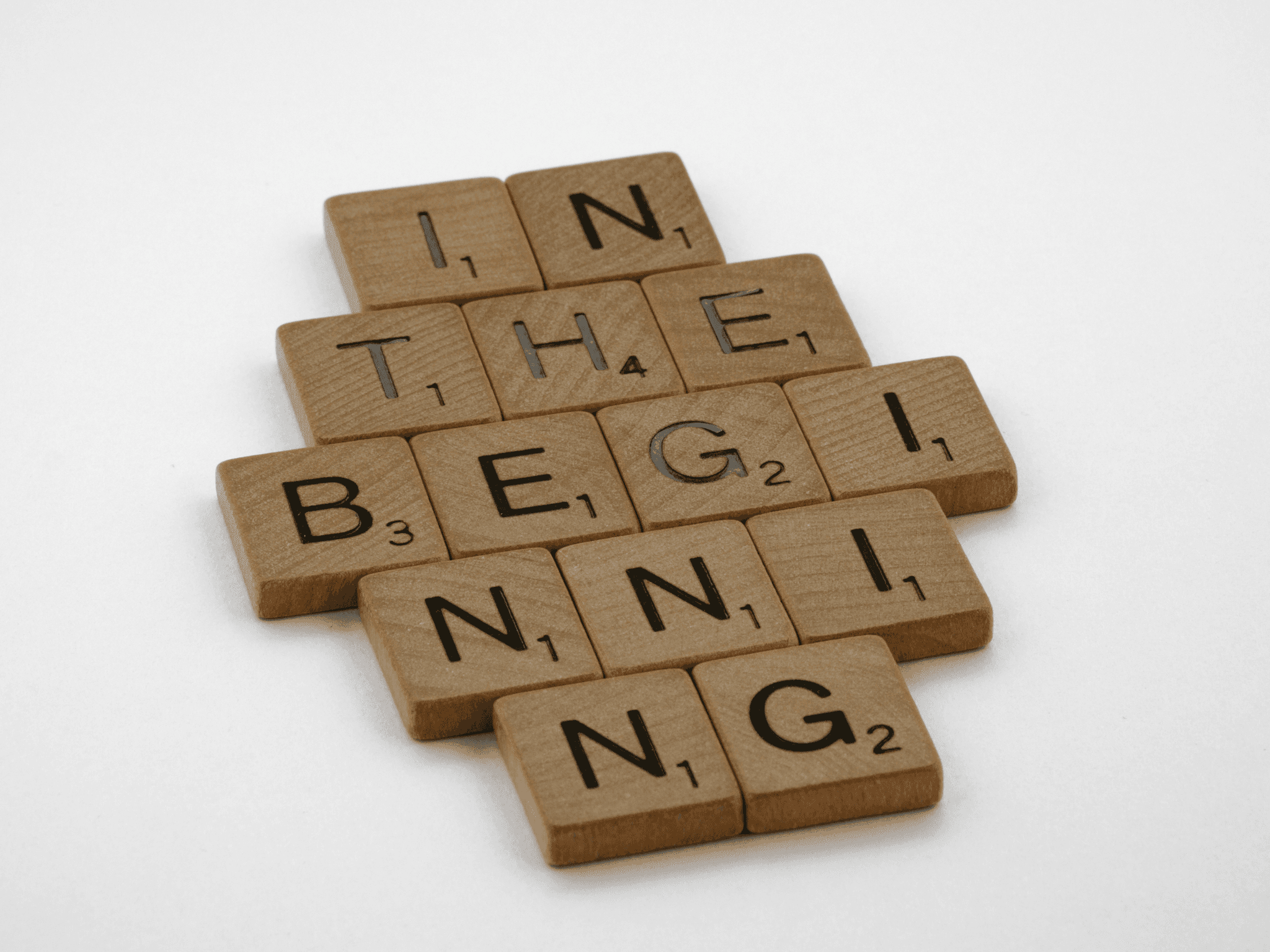
Have we forgotten the middle word in Belonging, Being and Becoming?
 Article
Australia’s Early Years Learning Framework has a fine title - Belonging, Being and Becoming. But one of those dimensions keeps getting overlooked.
In the dominant public case for investment in early childhood, the future side of this equation gets most of the analysis, and most of the action.
This comes in several different forms. We might point to the influence of early learning on developmental outcomes, on our future potential, if you like, or the wider notion of ‘lifelong learning’, which has some very real connotations for our longer-term capabilities. We might also describe early childhood education as an important form of early intervention, again focusing attention on the importance of getting things right.
And while all these framings are important in and of themselves, and certainly not equivalent to each other, they can all become connected to debates about employment and national productivity.
Meanwhile, we can also find arguments that early childhood education matters because it gives parents, especially mothers, the chance to participate in the workforce, which maps directly onto employment and productivity preoccupations. It’s no surprise that so many media reports focus on this aspect.
It’s not an unintelligent reason to advocate for early childhood education, and Australian Government policy documents make it clear that a variety of different reasons inform their involvement in early childhood.
The Early Years Strategy, released in 2024, is an interesting document in this regard.
The title of Australia’s formal early childhood framework, Belonging, Being and Becoming, also acknowledges the things that often inform our thinking and behaviour. The future, for example, significantly shapes how we think about young children. Whether it is a desire for children to be prepared for school and able to read, or recognition of their rapidly developing brains, early childhood is often viewed through the lens of future preparation. This kind of thinking helps to justify the time and resources we invest in our youngest citizens. Preparation for the future sits hand in hand with window-of-opportunity or investment-foundation thinking, both of which have some credence, given what the evidence tells us about the importance of the early years. The future is alive and well in our thinking about children, and that is a good thing. What we need to consider, though, is whether we notice when the future becomes all-consuming.
Think about what this means on a Tuesday morning. Have you ever tried to break into a child’s ‘being’ when they are deeply immersed and do not want to be interrupted in the middle of what they were building? What does it feel like to have the child lose their focus and become disappointed because the adult listening to their story is ‘not really listening’ - they are too busy scanning the room for someone else who has ‘just popped in’?
What does children’s time look like? The National Quality Standard raises the concept of each child’s agency - their ability to make choices and decisions that influence events and their world. ACECQA’s guidance describes quality practice as supporting children to follow their interests and engage in uninterrupted play, and educators engaging with children in relaxed and unhurried ways.
The time of children prioritises children’s interests. It allows children to take the time they need to move slowly, become immersed in their own pursuits, and dabble in ways that may lead to meaningful learning.
In child-centred services, greater weight can be given to children’s time. Parents may want children’s education and care to fit their schedules, reflecting their valuing of the learning and care professionals provide. Parents’ needs must also be heard and accommodated, but there is scope for doing this while also respecting children’s time. Services can plan flexible schedules where possible, build in time for free play and exploration, and allow children to set the pace when moving between activities.
This focus on making connections for children, honouring their relationships and interests, can also be seen as a recognition of children’s time. The time it takes a child to become deeply absorbed in a book or puzzle, or to experiment with the same block structure sixteen times, can seem extraordinarily slow from an adult perspective. The time it takes to settle a distressed child is unpredictable and can result in a very differently shaped morning.
Institutional time looks different. It consists of opening and closing hours, meal times, staff breaks, transitions between rooms, deadlines for reporting or cleaning, and time allocated for programming in relation to ratios. Political time requires us to measure expenditure outcomes, evaluate programs and expect reforms. Educators straddle the clash between these different experiences of time. They know the tension of having to move children on from an activity or investigation they are engrossed in, or wanting to stay beside a child who is just building up the courage to leave their side while important documentation also needs to be completed.
The contexts in which educators work can place great emphasis on being ‘efficient’ - making transitions as efficient as possible, keeping the documentation system from strangling the time available to attend to children, and keeping the early childhood room calm and predictable.
Efficiency is certainly of value. But it may not always be the best option. Making transitions as efficient as possible might save eleven minutes, but did we really notice whether they could actually be worse for the children? A documentation system may be efficient, but the requirement for evidence can pull educators out of learning in order to show learning. An early childhood room may appear to be managed to the minute but can actually reduce children’s agency. We need calm and predictability in our programs, and ACECQA’s guidance on predictable routines, along with educators’ own experience, clearly documents its importance.
We can’t have everything we want, so we need to think carefully about trade-offs. Here’s a quick test you can apply to a specific reform.
Being Test
• Will this reform make access easier for more people?
• Will it maintain or improve the same level of quality for the same cost?
• Will it make the system safer?
• Will it encourage greater workforce participation?
• Will it improve outcomes over the short run?
• Will it improve outcomes over the long run?
• Will the experience of the person affected be better while they are living through it?
Applied to early childhood education, that final question becomes particularly important.
It doesn’t sound much like either a properly constructed question or a legitimate test of policy, does it? But perhaps it should be. And perhaps we shouldn’t be held back from pursuing early childhood policy that aims to make childhood better while childhood is happening simply because it’s hard to prove the long-run economic return. After all, we value play for its own sake regardless of the very difficult-to-prove long-run economic return.
When we talk with people who shape public policy, they often want assurance that what the sector does is grounded in evidence. And they are right to do so.
Some ask directly, others indirectly, “If you can’t demonstrate, unequivocally and with reference to the available evidence, how much of an impact these programs have on the scores children get in standardised tests in Year 3, their chances of attending university and their later employment and adult income, how can we be certain that what you are doing is really worthwhile?”
A substantial body of evidence examines how play and play-based approaches contribute to learning and development.
Even if that were not the case, or if tomorrow research showed that one particular form of joyful, imaginative play had no measurable effect on Year 3 test scores, university completion, later employment or adult income, it would not diminish its worth.
It’s hard to quantify a child’s laughter, or the moment it becomes the uncontrollable shaking of their body while they share a joke with another child. The same is true of the sense of belonging that comes from being together and supports their wellbeing and opportunities for learning.
Just as rest and tiredness matter, being listened to, having a voice and being treated as a person have consequences in the now.
The Productivity Commission recommended that all families with children aged 0–5 who choose to use early childhood education and care should be able to access at least 30 hours, or three days, of high-quality early childhood education and care each week for 48 weeks of the year.
All Child Care Subsidy-eligible families can get at least 72 hours of subsidised care each fortnight under the Commonwealth’s Three-Day Guarantee. The guarantee does not, however, guarantee a place with a provider.
If we want to set our sights on a much larger system to give many more children access to whatever kind of childhood this system contains, we need to know much more about the quality of the lived day.
One way to give our Being Test practical effect would be to require every major change to early childhood policy to include a Childhood Impact Statement.
Any requirement that draws on hundreds or thousands of educators’ hours needs to be considered from the perspective of children’s ordinary experience. Does that time take educators away from working directly with children? Does it disrupt the continuity of relationships with familiar educators? Does it result in children being observed and recorded more often? And is it anticipated that this new information will improve practice significantly?
Likewise, any change to the pace or rhythm of children’s lives needs to be considered in terms of relationships and experiences. If we get enrolment right, some of the difficulties surrounding reform may become easier to address.
If the Government can do as much of this work as possible using information already available, then a Childhood Impact Statement may be worth considering. If not, it may become a new score imposed on services, which would be the worst possible outcome. You cannot preserve childhood by making educators spend their time recording seventeen indicators that prove childhood has been preserved.
The Australian Government is demonstrating a healthy trend with its Early Years Strategy by listening directly to children. The Strategy’s development drew on conversations with 115 children aged three to five.
They were asked what matters most to them in their lives, including people, places and activities, and what would make today a better day. The Strategy commits government to “include the voices of children and their families in the policies and decisions that affect them”.
As a glass-half-full person, I embrace this approach to listening to children. Verbal, playful and active contributors to their own lives, these young citizens have much to offer.
However, there is a less comfortable side to this commitment. It arises from how easily we adults verbalise what is in young children’s best interests and, at times, forget to consider their interests.
Consulting with young children through a government strategy process is one thing. Being with, interacting with and taking notice of children’s ideas and experiences in their everyday lives takes considerable commitment.
If we are genuinely interested in children’s ‘being’, we need to be curious about the lives they think they are living. A focus on relationships with children as a guiding principle in early childhood education could help.


Don’t miss a thing




Related Articles