New research shows childhood adversity does not determine long-term wellbeing

 Article
A major Australian study tracking adults for more than a decade has found that many people who experienced adverse childhood experiences maintain strong mental wellbeing later in life, highlighting the powerful role resilience and supportive environments play during the early years.
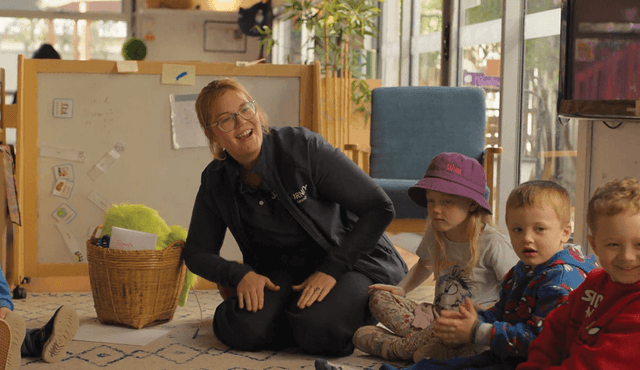
For professionals working in early childhood education and care (ECEC), the effects of adversity are often visible in children’s behaviour, emotions and relationships.
Adverse childhood experiences (ACEs), including neglect, family conflict, domestic violence, serious illness and extreme poverty, are known risk factors for mental health challenges later in life. These experiences can influence development, learning and emotional regulation during the early years.
However, new Australian research suggests that childhood trauma does not inevitably shape a child’s future.
A long-term study led by researchers at the University of New South Wales (UNSW) Sydney has found that many people who experience adversity in childhood still maintain strong wellbeing into adulthood.
The findings offer an important reminder for the early childhood sector: resilience can be built, and supportive environments make a measurable difference.
The study, published in American Psychologist, analysed data from the TWIN-10 longitudinal project.
Researchers followed more than 1,600 Australian twins across four study periods between 2009 and 2024 to understand how childhood adversity influences mental wellbeing across the lifespan.
Participants were assessed for 17 different adverse childhood experiences and their wellbeing was measured using the COMPAS-W Wellbeing Scale.
The scale examines multiple aspects of wellbeing including:
- composure
- self-worth
- mastery
- positivity
- achievement
- life satisfaction.
Among nearly 900 participants who reported experiencing adverse childhood experiences, researchers found that two-thirds maintained moderate to high mental wellbeing in adulthood.
While participants who had not experienced adversity were more likely to remain in the high wellbeing group, more than 85 per cent, the findings clearly demonstrate that early adversity does not automatically lead to poor long-term outcomes.
Researchers identified two distinct wellbeing patterns among participants who had experienced childhood adversity.
One group experienced ongoing challenges with wellbeing across adulthood. However, a second group demonstrated what researchers described as an “ACE-resilient” pathway.
Individuals in this group showed strong long-term wellbeing despite early adversity.
Participants in the resilient group were 74 per cent less likely to develop a psychiatric condition compared with those in the lower wellbeing group.
They also experienced broader health benefits, including lower risks of:
- obesity
- sleep disorders
- migraines
- alcohol misuse.
Beyond physical health, the resilient group reported stronger relationships, higher life satisfaction and more positive coping strategies.
Adjunct Professor Justine Gatt, Chief Investigator of the study, said the findings highlight the human capacity to maintain and rebuild wellbeing.
“What surprised me most was how people can maintain and rebuild their wellbeing over time, even after early adversity,” Professor Gatt said.
The findings contribute to a broader shift in mental health research.
Historically, mental health systems have focused on treating psychological distress once it appears. Increasingly, researchers are emphasising the importance of building positive mental wellbeing as a protective factor.
Professor Gatt said mental health should be viewed not only as the absence of illness, but as a capacity that can be strengthened.
“Mental health should be proactively treated as a positive capacity that can be built, not just a crisis to be managed when things fall apart,” she said.
For the early childhood education and care sector, this perspective aligns closely with trauma-informed and strengths-based approaches to learning and development.
Early learning environments play a critical role in shaping children’s emotional and social development.
Research consistently shows that secure relationships with educators and supportive learning environments are among the strongest protective factors for children experiencing adversity.
High-quality early childhood education programs support resilience by helping children develop:
- emotional regulation
- positive social relationships
- confidence and independence
- healthy routines and wellbeing habits.
These elements sit at the heart of the National Quality Framework, particularly Quality Area 5, Relationships with children, which highlights the importance of secure, respectful and responsive relationships.
Resilience is not a fixed trait. It develops through experiences, relationships and supportive environments.
Within early learning settings, educators can strengthen resilience through everyday interactions and learning experiences.
Key strategies include:
Building emotional literacy
Helping children recognise, name and express emotions supports early emotional regulation.
Providing predictable routines
Consistent routines help children feel safe and secure, particularly during times of uncertainty.
Encouraging positive social connections
Guided peer interactions support children to build friendships and develop social confidence.
Promoting movement and physical play
Active play supports emotional wellbeing, cognitive development and stress regulation.
Creating warm, responsive relationships
Secure relationships with educators provide children with a foundation for confidence and resilience.
The central message from the UNSW research is both clear and encouraging.
Childhood adversity may shape early experiences, but it does not define a person’s future.
For early childhood professionals, this reinforces the profound influence of everyday practice.
Through supportive relationships, emotionally responsive teaching and nurturing learning environments, early childhood education and care services help children develop the skills and resilience that support lifelong wellbeing.
Even in the face of adversity, the foundations built in the early years can shape a far more hopeful trajectory.
The full article is available via the University of New South Wales newsroom.


Don’t miss a thing




Related Articles