Child wellbeing needs whole-of-community action: What can we do to help?
 Article
Child wellbeing is a whole-of-community responsibility and a significant one at that. Concerns around the role of digital technologies (Harverson et al., 2025), impacts from the climate crisis (Dobson, 2025), and an increasing rate of serious incidents in early childhood services (Harper, 2026) have dominated headlines and conversations in recent times. Equity issues persist and children who are marginalised or more vulnerable experience higher risks around wellbeing (UNICEF, 2025). The time for meaningful action is right now, and much like wellbeing can be understood from an interconnected perspective (ARACY, 2024), there is great potential in pursuing interconnected solutions.
Children and young people may experience wellbeing issues as one-off events or in ways which are deeply persistent. They may also experience multiple intersecting wellbeing issues. For example, child poverty has increased in recent years, with the number of children living in income poverty reaching record levels (BCEC, 2025). Poverty can impact health and wellbeing, community participation, and other aspects of a child’s life which are key to how they experience childhood and the world around them (Bessell et al., 2025). When wellbeing issues are apparent, they can encompass every aspect of a child’s life, impacting their social-emotional wellbeing, their learning, and their development, which can have long-term consequences.
At first glance, this may be confronting. There is no denying that our children are growing up in a complicated world where there are many challenges and crises apparent. Just as there is intersection and overlap between the wellbeing issues that children experience, there are also opportunities and solutions which are inherently interconnected, or which are best approached from a collaborative, connected, and multi-systems perspective. It is critical that government leads this action. A key example is the need to address the cost-of-living crisis, which is a source of challenge and distress for many families and communities (Lund et al., 2023), and where there are many evidence-based solutions such as investing in improved supports and resourcing (Kent, 2025). Change must begin with meeting families and children in their communities, and responding to their needs. Emerging best practice for governments is to establish governance structures that engage children in decision-making processes; these structures, which can benefit the whole community, can be adopted across all sectors (Absalom-Hornby, Quinton & Dobson, 2024).
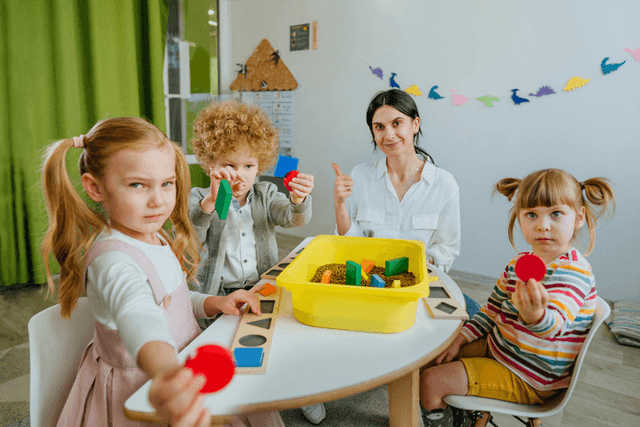
For the ECEC sector, there is opportunity to nurture the wellbeing of children and to engage in dialogue with families around actions and activities that extend beyond the service environment. With many questions and curiosities arising around digital technologies, it can help to look to ways forward that integrate with existing practices. Nature pedagogies are on the rise in ECEC (Alston, 2026) and there are ways that tech can be used thoughtfully and innovatively to engage children in exploration of the natural world, and to spark and sustain their connections to and care for nature (Vella & Dobson, 2024).
Trauma-informed approaches also provide a promising way forward, and rather than asking for more from educators, trauma-informed approaches invite us to reframe our practice through a relational lens characterised by compassion, generosity, and reflection (Martin et al., 2023). There is opportunity to bring together trauma-informed and nature-based pedagogies to bring children out into the natural world; this holds great hope for imaginative, playful, and rewarding experiences which can support wellbeing, particularly for children who are vulnerable or experiencing marginalisation.
When conversations about child wellbeing bubble up amongst family, friends, and colleagues, it can often feel overwhelming. It is concerning to consider the many issues which are facing children and young people in the here and now. It is worth taking a moment to dwell in that concern, not to avoid it, but to acknowledge it and to reflect on what sits at the heart of it, which tends to be a deep sense of care for children, families, and communities. That sense of care is an essential part of how we move forward: with hope and with determination to make a difference in the lives of young children. We can do so in solidarity with children and families, and with each other as colleagues and fellow advocates who can continue speaking up for the rights, needs, and voices of children.
Authors:
Dr. Madeleine Dobson is an Associate Professor at Curtin University. She is an Ambassador for the Valuing Children Initiative and an Associate Investigator for the ARC Centre of Excellence for the Digital Child. Madeleine's research encompasses trauma-informed practices, nature connectedness, and ethical approaches to engaging with and representing children.
Manatalah Soliman is a research officer at the Valuing Children Initiative and a PhD candidate in the School of Arts and Humanities (Creative Arts) at Edith Cowan University. She holds a Master of Arts from the American University in Cairo, where she focused on gender representation and visual communication.
References:
Absalom-Hornby, V., Quinton, S. & Dobson, M. (2024). A guide for children’s decision making: Empowering children to have a voice in our community. http://doi.org/10.13140/RG.2.2.16202.58561/1
Alston, F. (2026). The rise of nature‑based pedagogy: what services need to know. https://thesector.com.au/article/nature-based-learning-ecec-australia
ARACY. (2024). The Nest Wellbeing Framework. https://www.aracy.org.au/the-nest-wellbeing-framework/
Bankwest Curtin Economics Centre. (2025). Another 237,000 Australian children in poverty in four years. https://bcec.edu.au/media/another-237000-australian-children-in-poverty-in-four-years/
Bessell, S., O'Sullivan, C., Rose, T., Lang, M. and Avrahamzon, T. (2025). Measuring Multidimensional Child Poverty in Australia. Australian Economic Review, 58. https://doi.org/10.1111/1467-8462.70016
Dobson, M. (2025). Are we really listening to children’s perspectives about the climate crisis? Valuing Children Initiative. https://valuingchildreninitiative.com.au/news/are-we-really-listening-contemplating-childrens-perspectives-about-the-climate-crisis
Harper, E. (2026). Serious incidents in childcare centres are still rising. Why? The Conversation. https://theconversation.com/serious-incidents-in-childcare-centres-are-still-rising-why-275434
Harverson, J., Paatsch, L. & Horwood, S. (2025). New research shows digital technology is linked to reduced wellbeing in young kids: So what can parents do? The Conversation.
https://theconversation.com/new-research-shows-digital-technology-is-linked-to-reduced-wellbeing-in-young-kids-so-what-can-parents-do-253637
Kent, K. (2025). 1 in 8 households don’t have the money to buy enough food. https://theconversation.com/1-in-8-households-dont-have-the-money-to-buy-enough-food-264685
Lund, S., Dobson, M., Kelty, E., Archer, C., Wallace, R., Frantzich-Gardiner, S., McLeod, M., Quinton, S., Harahap, D. & Fitzgerald, K. (2023). Exploring Australian adults’ attitudes towards children for a better future. https://doi.org/10.13140/RG.2.2.35081.01125
Martin, K., Dobson, M., Fitzgerald, K., Ford, M., Lund, S., Egeberg, H., Walker, R., Milroy, H., Wheeler, K., Kasten-Lee, A., Bayly, L., Gazey, A., Falconer, S., & Berger, E. (2023). Best practice principles for trauma-informed schools. https://www.researchgate.net/publication/373643041_Thoughtful_Schools_Best_Practice_Principles_Poster_January_2021pdf
Vella, K. & Dobson, M. (2024). Tech can help kids connect with nature and go outdoors – here are tips to make it work. The Conversation. https://theconversation.com/tech-can-help-kids-connect-with-nature-and-go-outdoors-here-are-tips-to-make-it-work-240442


Don’t miss a thing




Related Articles