



Following their lead: How one service sparks curiosity through child-led learning
 Article
It Takes A Village member service, Park Street Early Learning, is a non-profit community early learning centre in Brunswick, Victoria. Rated Exceeding the National Quality Standards (NQS) across all areas, they deliver a high-quality program where inclusion, diversity and children’s voices are front and centre.
It Takes A Village spoke with Assistant Director Simone Franzoni about how Park Street co-create a supportive learning environment where children, their families, and staff can contribute and thrive.
Simone Franzoni, now Assistant Director at Park Street Early Learning Co-operative (Park Street), began her journey in the service almost 22 years ago as an educator in the kindergarten room. Although not on the floor as often now, Simone values using her position to support staff and families, and champion the service’s commitment to inclusion.
Being able to make a difference in the lives of children and families gives Simone a real sense of purpose.
‘Guiding the team to collaborate, learn and grow is special,’ she says. ‘But seeing children feeling safe and included and having a hand in laying the foundations for their learning journey or the rest of their lives, is extremely rewarding.’
Inclusion first
The service is proud to have educators, teachers and a leadership team that are passionate about supporting every child, an ethos deeply embedded at Park Street. Simone believes her
philosophy of inclusion is shaped by her own personal experiences.
‘My child has bilateral hearing loss, and I saw the benefits of early intervention when they were
young. We had access to so much support, and the value of that was immeasurable,’ Simone says. ‘You see firsthand what early intervention can do.’
Inclusive practices have been shaped by observing other services, drawing on ideas from families and experiences caring for children with diverse needs and bringing in specialist support through grant funding.
Simone recalls a successful funding application that secured support for a boy with Down syndrome by engaging an occupational therapist and a speech pathologist. This kicked off a
multidisciplinary approach where professionals are encouraged to work alongside the team.
‘There was a shift in the way we saw what inclusion looks like and what it means,’ she says. When the funding ended, the Park Street leadership team decided it would be invaluable to continue the connection with the specialists through their own budget.
‘You can never know it all. But with [the specialists’] expertise, we’ve built our confidence and capacity so every child has access and can participate,’ says Simone.
Turning curiosity into experiential learning
Park Street is committed to engaging all children meaningfully in experiences that foster their desire to learn, through a curriculum shaped by children’s interests.
We look at the child from a holistic perspective and get to know them and their families to inform activities and programs.
‘We know that children are more inclined to meaningfully participate when they’re interested in what they’re doing,’ explains Simone.
A child’s curiosity during a recent thunderstorm prompted the group to delve deeply into weather and storms. Educators brought in cotton balls, wet them and squeezed them out to recreate clouds and rain. That learning topic continued for weeks and went down different avenues, like seasons, stemming from one child’s reaction to thunder.
Use what you’ve got around you,’ says Simone. ‘And when children show you that they’re interested in something, you just go with it.
This often means the children spend significant time outdoors. Luckily, the service is located across the road from the Royal Park gardens, where children can easily access and explore nature as part of the bush kinder program.
‘We started little by little, and each week the groups return and continue building their teepees and bush huts,’ explains Simone.
‘We do it in all weather, off they go in their gumboots and their wet weather gear. The children adore it.’
Big learnings from small beginnings
There was a child at the service who showed a keen interest in vehicles but was nervous about the sounds they made. They had a condition that meant they had no vision or light perception, so the team began by bringing in [toy] trucks for them to touch and discussed the different parts of trucks, particularly the horn.
‘We made the sound of the trucks and then used technology to expose them to the horn,’ says Simone.
‘One of our educator’s dad’s a truck driver, who we now call “Truck driver Jim.” After weeks of preparation with the children, we invited him to drive his huge semi-trailer truck over and park it
across the road.’
The team worked closely with the child’s mobility specialist, so by the time they walked across the road, all the children had learnt about the pram ramps and tactile tiles the child would use to
access the vehicle.
‘The child got to climb into the cab of the truck,’ Simone says with pride. ‘We prepared them for the sound of the horn. After they heard it, they said “that was really loud”, but they experienced it.’
‘Sometimes you follow these little things, and it turns into a big learning opportunity. There’s learning, and there’s also personal achievements for the children,’ says Simone.
Part of the family
Park Street is proactive in involving families in children’s programs, recognising the importance of a strong connection between home and the learning environment.
‘Families come to cook with the children or read a book,’ explains Simone. ‘A father who is a karate instructor led sessions for three- and four-year-olds. We’ve had parents play guitar or just come and sit and listen to a story with their child.’
Park Street prides itself on being ‘a home away from home’ for everybody in the community, the team, children and their families.
‘We want families to know how important their presence is in their child’s learning space,’ says Simone. ‘This is a space they’re welcomed and included in.’
Empowering staff to include diverse perspectives
Many educators at Park Street, like Simone, have been part of the team for many years. Simone puts this down to the supportive workplace culture that gives staff autonomy, a voice and opportunities for growth.
Embedding Indigenous culture, traditions, and histories into the service environment was identified as a priority by the team, and they have dedicated time to listening and learning together.
The team regularly engage with the Wurundjeri Council and Senior Early Educator and Wurundjeri Woman, Rebecca Axford, to build educator capacity, promote Aboriginal perspectives in programming – and recently, incorporate Indigenous plants into their gardens.
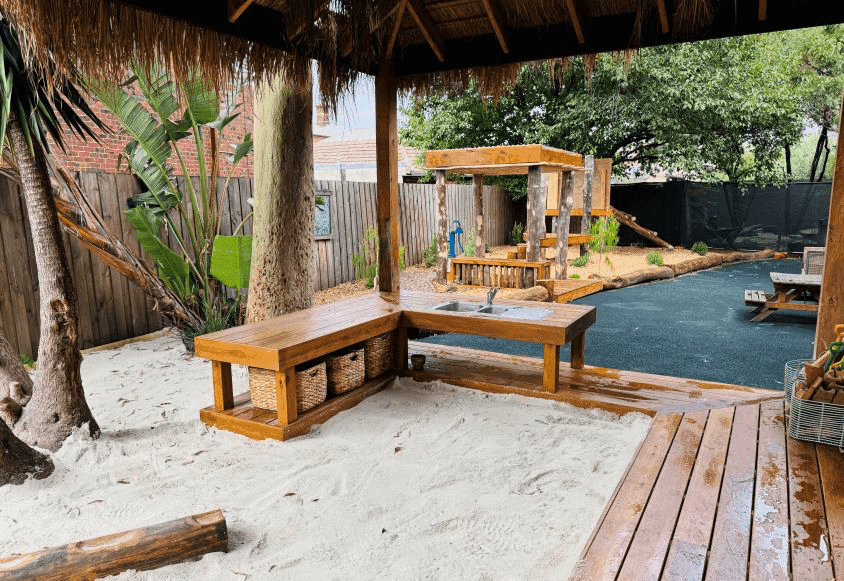
Park Street has integrated local Aboriginal knowledge and design into the planning of a major backyard renewal project.
‘We knew we wanted a yarning circle in the front and the back,’ says Simone.
‘Children and families have also shared their ideas and wishes for the space. We’re a third of the way into the development and it’s looking stunning,’ Simone shares. ‘I want to get out there and play and pump the water pump. It’s a beautiful space to explore.’
Park Street Early Learning is a member of It Takes A Village (ITAV), formerly Community Child Care Association. This article was originally published in ITAV’s Roundtable magazine, Autumn 2026. Find out more about ITAV membership here.
Photos:
Park Street Early Learning outdoor learning space
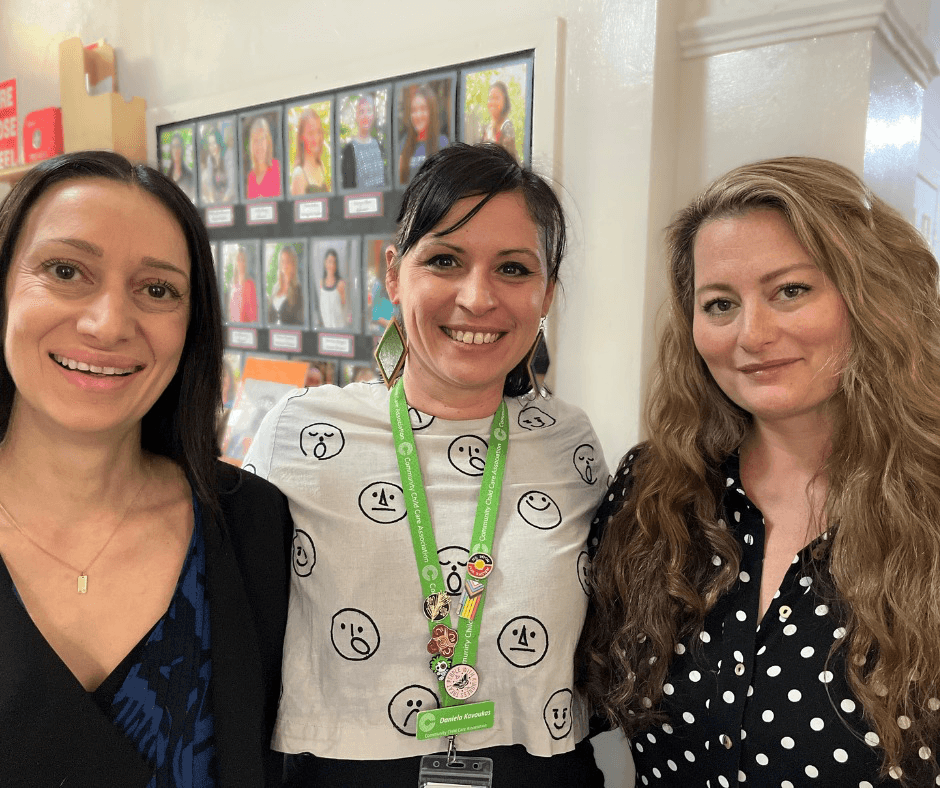
- Assistant directors Pauline Mesiti and Simone Franzoni with It Takes A Village CEO Daniela Kavoukas
Author:
Laura Boehm, Communications Officer/Content Writer, It Takes A Village.


Don’t miss a thing



Related Articles