Beyond visibility: Why effective supervision is about more than keeping children in sight

 Article
Supervision is often discussed in terms of ratios, visibility and compliance. While these remain essential components of safe practice, ACECQA is encouraging educators to rethink supervision as something much broader, a reflective, relationship-based practice built on professional judgement, deep knowledge of children and intentional engagement.
Within early childhood education and care (ECEC) and outside school hours care (OSHC), supervision is frequently described through the language of risk management. Educators position themselves strategically, maintain line of sight and respond to potential hazards to keep children safe.
These responsibilities remain fundamental. However, focusing solely on visibility can unintentionally reduce supervision to a technical exercise rather than recognising it as a professional practice grounded in observation, relationships and thoughtful decision-making.
In its article, ACECQA explores how effective supervision is shaped not only by where educators stand, but by how well they know the children in their care.
Some of the most effective moments of supervision are almost invisible.
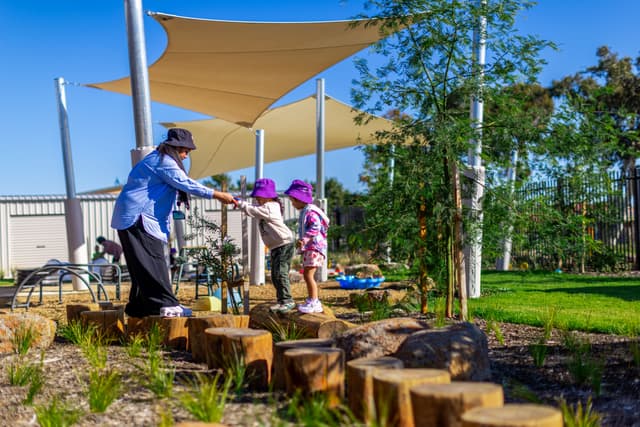
An educator pauses beside a climbing structure because they notice a child hesitating before attempting something unfamiliar. Their decision is not driven by procedure alone, but by an understanding of that child's confidence, capabilities and previous experiences.
In a family day care setting, an educator preparing lunch notices children consistently moving into spaces with reduced visibility during busy routines. Rather than calling reminders from another room, the educator thoughtfully adapts the environment, repositioning experiences and adjusting routines so children remain connected while continuing to explore independently.
In an outside school hours care setting, an educator recognises that a child is repeatedly attempting to join a game but is being excluded by peers. Instead of waiting for conflict to emerge, the educator enters the play, supporting children to negotiate roles and helping every child participate safely and confidently.
These are not simply examples of supervision. They demonstrate attentiveness, anticipation and professional judgement informed by strong educator–child relationships.
ACECQA's describe active supervision as a combination of intentional positioning, listening, scanning the environment, anticipating potential risks and remaining actively engaged with children's play and learning.
Yet the guidance also points to something less tangible but equally important: relationships.
Educators often recognise emerging risk, uncertainty, exclusion or emotional distress not simply because they are watching carefully, but because they know children's personalities, communication styles, interests and developmental pathways.
That professional knowledge enables educators to notice subtle changes that might otherwise go unseen and to respond before situations escalate.
Balancing safety with children's agency
The article also poses an important question for the sector:
How can educators keep children safe while continuing to honour children's agency, voice and right to play?
The answer is not found in eliminating every possible risk or tightly controlling children's experiences.
Instead, effective supervision creates environments where children feel secure enough to explore, challenge themselves and build independence, knowing educators are present, responsive and ready to provide support when required.
In these environments, supervision is experienced not as surveillance, but as connection.
Moving beyond compliance
This understanding of supervision aligns closely with the National Quality Framework, particularly Quality Area 2: Children's Health and Safety and Quality Area 5: Relationships with Children. It also reflects the principles of the Early Years Learning Framework, which recognises that children's learning and wellbeing flourish when they experience secure, respectful and responsive relationships.
For service leaders, the challenge is to move conversations beyond compliance alone.
Ratios, positioning and visibility will always remain critical components of supervision. However, the strongest supervision practices are those where educators combine these requirements with reflective practice, collaborative communication and deep knowledge of each child.
Ultimately, effective supervision is not simply about keeping children within sight.
It is about knowing children well enough to support their safety, wellbeing, learning and confidence as they explore the world around them.
For further guidance, educators can access ACECQA's Beyond visibility: Rethinking supervision in education and care settings, together with the accompanying Active supervision in 6 steps guide and Quality Area 2: Active supervision – Ensuring safety and promoting learning information sheet.


Don’t miss a thing




Related Articles