Balancing risky play and practical compliance in childcare environments

 Article
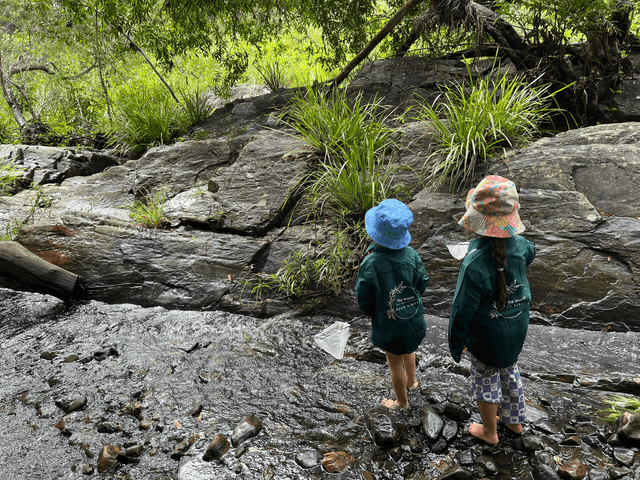
Children need challenges. They need height, speed, uncertainty, problem-solving and the freedom to test their own limits. In early childhood education and care (ECEC), we know that risky play builds resilience, coordination, confidence and critical thinking. It is not a luxury, it is a developmental necessity.
Yet across Australia, services face a daily tension: how do we encourage healthy risk while maintaining strict safety and regulatory compliance?
The answer is not to remove risk. It is to remove preventable hazards, and to close a significant knowledge gap around compliance that is quietly undermining supervision and safety outcomes.
There is a critical distinction between risky play and unsafe practice.
Risky play involves:
- Climbing to a challenging but developmentally appropriate height
- Balancing on uneven surfaces
- Exploring speed, movement and coordination
- Using loose parts creatively
- Testing physical limits under supervision
Dangerous hazards, however, are entirely different. These include:
- Objects placed against perimeter fencing
- Non-compliant or deteriorating softfall
- Equipment set up outside height guidelines
- Surfacing that shifts or slips
- Inadequate daily and Visual monthly and quarterly Operational inspection processes
- Contracting a qualified third-party playground safety specialist to undertake annual outdoor environment inspections and certification audits, as required under Australian playground standards, is considered best practice.
These inspections should be conducted by professionals with specific expertise in playground compliance and safety standards, rather than general building certifiers. Independent specialists in this field assess equipment integrity, surfacing performance, fencing compliance and fall-zone safety to help services identify risks before incidents occur.
Risky play supports learning. Dangerous hazards create preventable incidents.
The challenge for services is not eliminating risk, it is eliminating the unnecessary hazards that complicate supervision and increase liability.
It is estimated that a significant majority of educators, some nominated supervisors and operators are unfamiliar with the Australian Standards and many other standards and compliance requirements that apply to outdoor environments, including Playground Equipment, fencing requirements and impact attenuation (softfall) specifications, to identify just a few. Bearing in mind that “The onus is on the operator, right through to the Nominated Supervisor and educators to ensure compliance of such requirements of which are only implied in what is generalised as you must comply to the relevant Australian Standards, The Regulations, NQS and applicable frameworks NQF.
This is not a reflection on educators’ nor that of Nominated Supervisors' and many Operators' commitment or professionalism. Rather, it reflects a structural issue: detailed Australian Standards are not routinely embedded into formal Certificate III or Diploma training programs.
When staff do not fully understand:
- Minimum fencing expectations
- Climbable zones
- Softfall depth requirements
- Maximum equipment fall heights
- Surfacing compliance
Supervision becomes reactive instead of proactive.
Knowledge of compliance standards does not restrict play. It sharpens supervision.
When educators understand the “why” behind environmental standards, supervision changes in three key ways:
1. Targeted Hazard Identification
Educators know exactly what to scan for during daily checks, not just “anything unsafe,” but specific compliance risks.
2. Prevention of Egress Incidents
Children exiting services is one of the most serious and preventable incidents in the sector. Many events are linked to environmental setup errors, rather than intentional non-compliance.
3. Reduced Cognitive Load
If environments are correctly set up from the start, educators can focus on relational supervision rather than constantly managing preventable risks.
In short: better compliance knowledge reduces environmental noise and improves active supervision.
Across services, the same issues tend to appear repeatedly. They are rarely malicious. They are usually small, incremental oversights that accumulate.
One of the most common hazards is the placement of objects against perimeter fencing, including:
- Crates
- Tubs
- Loose parts
- Storage units
- Climbing equipment
These unintentionally create climbing platforms, increasing the risk of children scaling fences.
Daily checks must include:
- Walking the full fence perimeter
- Identifying newly placed objects
- Assessing climbable proximity
- Removing or repositioning materials
Fence lines should be treated as active supervision zones, not static boundaries.
Mobile play setups support dynamic programming, but they must meet safety parameters.
Common issues include:
- Equipment positioned too high for intended age groups
- Inadequate impact attenuation beneath climbing structures
- Surfaces that do not meet softfall requirements
Where mats are used, they must:
- Be compliant
- Be secured or stable
- Not shift during use
Mobile does not mean informal. Temporary setups must meet the same safety expectations as fixed equipment.
Another frequent issue is continued use of:
- Old rubber mats
- Mouldy or degraded surfacing
- Non-compliant or unstable flooring
- Mats that slide out from under children
Surfacing is not cosmetic. It directly impacts injury severity in fall incidents.
If a surface:
- Slips
- Moves
- Has visible deterioration
- No longer provides adequate cushioning
It should be replaced.
Understanding the difference between these checks is essential.
These should focus on:
- Fence line egress risks
- Newly introduced hazards
- Equipment stability
- Surface condition
- Climbable structures
- Environmental changes
They are dynamic and responsive.
Additional operational checks could include the below and be outsourced by trained professionals:
- Equipment integrity assessment
- Compliance with height and fall zone requirements
- Surfacing depth measurement (where applicable)
- Structural stability
- Review of wear and tear
- Documentation review
Operational checks are deeper, structured and documented.
Both are necessary. Neither replaces the other.
A culture of safety relies on upward communication.
Educators are often the first to notice:
- Deteriorating mats
- Loose fencing components
- Equipment instability
- Emerging climb risks
However, unless these are reported clearly and documented, replacement may be delayed.
Effective hazard reporting should:
- Be documented in writing
- Include location and description
- Note urgency level
- Be escalated if unresolved
Management carries the responsibility to act. Educators carry the responsibility to report.
Silence normalises risk.
If formal qualifications do not cover Australian Standards in depth, services must fill that gap internally.
Strategies may include:
- Professional development sessions focused on environmental compliance
- Toolbox talks on fencing and egress prevention
- Softfall awareness training
- Visual supervision mapping exercises
- Incorporating compliance education into induction processes
- Engaging external playground safety auditors
Knowledge empowers educators. It also protects services.
The goal is not sanitised play spaces.
Children should:
- Climb
- Balance
- Jump
- Test limits
- Experience manageable fear
- Develop judgment
But environments must be intentionally designed.
When compliance knowledge is embedded into everyday practice:
- Supervision becomes proactive
- Egress incidents reduce
- Equipment is maintained appropriately
- Staff confidence increases
- Children can engage in authentic risk without preventable danger
Risky play and compliance are not competing forces.
They are complementary when approached with clarity, education and accountability.
Balancing risky play with practical compliance is not about choosing one over the other. It is about removing preventable hazards so that genuine developmental risk can flourish safely.
The real issue is not that educators allow too much risk.
It is that many have never been formally equipped with the compliance knowledge that would allow them to manage it confidently.
When services invest in closing that gap, they strengthen supervision, reduce serious incidents and create environments where children can grow, bravely, safely and intentionally.
Contact Matt Ware for a 15 minute consultation via this link.
Matt Ware works with early learning services across Australia to assess playground safety, environmental compliance and outdoor learning design. Through CCEP services receive independent inspections and guidance aligned with Australian Standards and regulatory expectations.


Don’t miss a thing




Related Articles