Supporting young children in ECEC exposed to distressing global events: how services can respond with care, clarity and trauma-informed practice

 Article
Children in early learning settings are increasingly exposed to news about global conflict. They may overhear adult conversations, see images on television or social media, or sense the distress of family members with connections overseas. Even when children are far from danger, the emotional impact can be significant.
For many educators, this raises an important question: how can children who are observing war from afar be supported, and what signs should be recognised?
Guidance from the Raising Children Network on trauma and post-traumatic stress disorder (PTSD) in children provides a helpful foundation for the early childhood education and care (ECEC) sector. While PTSD is uncommon, stress responses to frightening or confusing events are not. With appropriate support, most children recover well, and ECEC services play a critical role in that process.
Young children do not need to witness violence directly to feel unsettled. The Raising Children Network notes that children may be affected simply by hearing that people they care about are in danger or by exposure to distressing media coverage.
In ECEC settings, this may present as:
- war or conflict themes emerging in play
- increased clinginess or separation anxiety
- irritability, frustration, or sudden emotional responses
- difficulty sleeping or appearing tired
- avoidance of certain activities or conversations
- heightened alertness or worry about safety
These behaviours are not signs of “bad behaviour”, they are indicators of stress.
What ECEC educators can do
- Provide calm, predictable environments
Children feel safer when their environment is consistent and responsive. Educators can support this by maintaining routines, using visual schedules to reduce uncertainty, and offering quiet spaces for children who need time to regulate. Predictability supports children to regain a sense of control.
- Respond to children’s questions with care and clarity
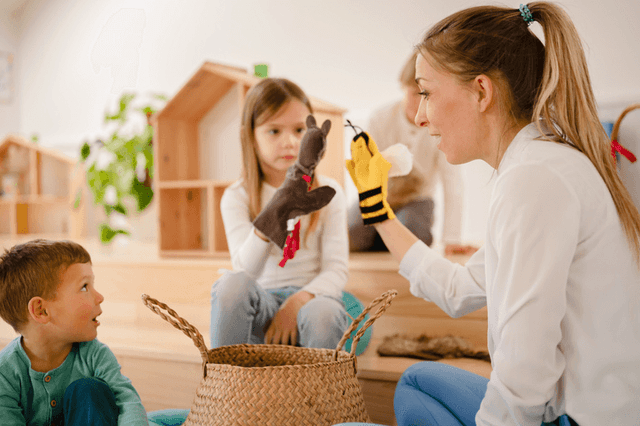
Children may ask direct or unexpected questions about war. Educators do not need to explain complex global issues. Instead, they can acknowledge feelings, offer reassurance that children are safe, and provide simple, factual responses without graphic detail or speculation. The focus should remain on emotional reassurance rather than information.
- Support expression through play and creativity
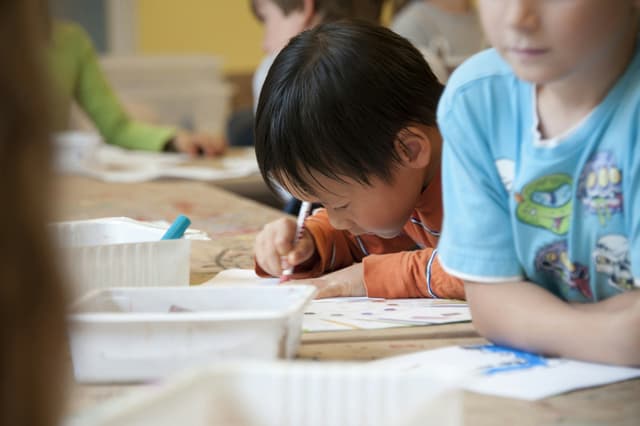
Play provides a safe and familiar way for children to process complex emotions. Drawing, construction, dramatic play and storytelling allow children to express what they may not yet be able to verbalise. Educators can observe emerging themes and support play without unnecessarily interrupting it, while ensuring it remains safe.
- Work in partnership with families
Families may also be experiencing heightened stress, particularly if they have personal connections to conflict. Services can share observations sensitively, seek context about children’s experiences, and provide reassurance about common stress responses. Where needed, educators can guide families towards additional support. Respectful, two-way communication is essential.
- Recognise when additional support is needed
The Raising Children Network advises that if symptoms persist for more than one month or significantly impact daily functioning, professional support should be sought. Educators should document patterns, share concerns early with families, and encourage consultation with a GP or child mental health professional.
While ECEC services do not diagnose trauma, they play a key role in early identification.
What service leaders can do
Strengthen educator capability
Targeted professional learning can build educator confidence in responding to children’s questions and behaviours linked to distressing events.Review wellbeing and communication policies
Policies should align with Child Safe Standards, inclusion practices and family communication protocols to ensure consistent and supportive responses.- Support educator wellbeing
Global events can also affect educators. Leaders can support teams through reflective supervision, opportunities for debriefing, and access to wellbeing resources.
ECEC services are uniquely positioned to provide stability, connection and reassurance during times of uncertainty. Through calm, developmentally appropriate responses, educators help children feel safe, even when the broader world feels unsettled.
The Raising Children Network resource reinforces a core principle of early childhood practice: strong relationships and predictable environments support children to process complex emotions and continue to thrive.


Don’t miss a thing




Related Articles