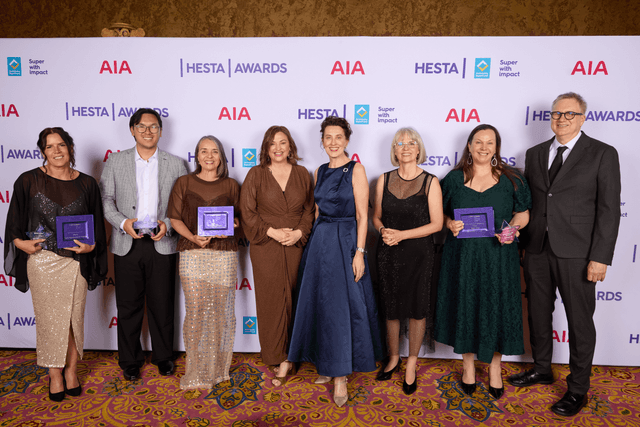


SunSmart marks 30 years of supporting sun protection in early childhood services

 Article
The free program helps services embed sun protection into outdoor play, everyday routines and family education.
For three decades, Cancer Council Victoria’s SunSmart Early Childhood Program has helped educators make sun protection a familiar part of children’s day.
Established in 1996, the program provides policy guidance, professional development and educational resources to support protective practices in early learning settings.
Cancer Council Victoria says approximately nine in 10 Victorian early childhood services now participate, reaching an estimated 366,000 children and their families each year.
The anniversary recognises the contribution of educators, service leaders and families in helping children develop sun-protection habits from an early age.
Early childhood services have an important role in reducing children’s exposure to ultraviolet radiation while supporting their participation in outdoor play.
Cancer Council Australia’s SunSmart guidance encourages services to implement evidence-informed policies, teach and model protective behaviours, and consider rescheduling outdoor activities during peak UV periods.
Regular policy reviews help services keep their practices aligned with current recommendations.
In practice, sun protection involves a combination of suitable hats, protective clothing, sunscreen, shade and thoughtful planning of outdoor experiences. Consistent routines give children opportunities to learn how these measures support their health.
The SunSmart membership program supports services through policy review, current advice, family information and free staff professional development.
Its combined Victorian membership across schools and early childhood services reaches more than 695,000 children and their families. That figure covers the broader membership program, while the anniversary’s estimated reach of 366,000 relates specifically to early childhood services.
Head of SunSmart Emma Glassenbury said early childhood services had made an important contribution by embedding sun protection into policy, education and daily practice.
At Cranbourne Day Care and Kindergarten Centre, Cranbourne Drive, which has participated for more than 20 years, approved provider Sharon Smith said children learn that hats, protective clothing, sunscreen and shade are ordinary parts of outdoor play.
She said the service’s SunSmart membership sign also communicates its commitment to children’s health to families.
Australian research published in the British Journal of Dermatology provides relevant context for childhood sun protection.
The Brisbane Twin Nevus Study examined acquired mole counts in 3,957 participants, drawing on successive samples of 12-year-old twins and siblings of similar ages between 1992 and 2016. Average mole counts fell by approximately half over the study period.
Researchers proposed that changes in childhood sun-exposure behaviour were the most likely explanation after considering other possible contributors. Childhood UV exposure influences the development of acquired moles, and mole count is an important predictor of melanoma risk.
The findings suggest potential benefits for future melanoma risk, but they concern children in south-east Queensland. The research was not an evaluation of Victoria’s SunSmart Early Childhood Program and does not establish that the program caused the observed decline.
A practical prompt for service reflection
The anniversary offers services an opportunity to review how their sun-protection policies guide daily practice.
Useful questions include:
- Are suitable hats and sunscreen readily available?
- Is shade available in the outdoor spaces children choose to use?
- Do educators consistently model protective behaviours?
- Do families receive clear information about service expectations?
- Are children supported to understand and participate in sun-protection routines?
SunSmart’s policy guidance encourages services to involve staff and families in developing and reviewing policies, helping ensure they reflect the needs of each community.
Services can access early childhood resources, including learning experiences, family information, posters and free online educator training. Membership in the Victorian program is free.


Don’t miss a thing


Related Articles