



Science in early childhood education: are teachers set up to fail

 Article
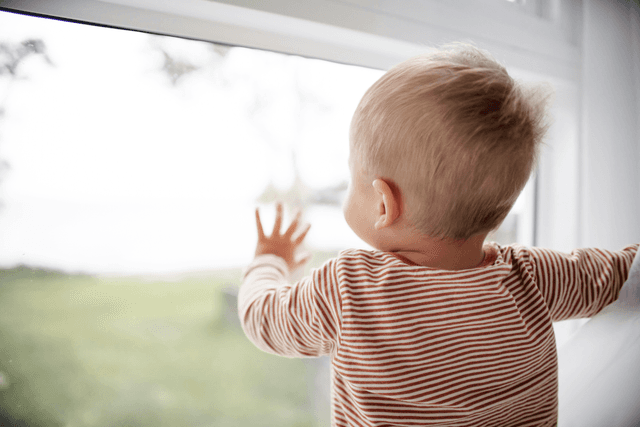
Young children are, by nature, scientists. Watch any toddler tip a cup of water onto the floor, or a preschooler crouch down to inspect an ant carrying something three times its size, and you will see scientific investigation in action. Curiosity, observation, and a drive to understand how the world works. As early childhood professionals, we know this. We talk about it, we celebrate it, and we build it into our practice.
So why are we not doing more to ensure that the teachers responsible for nurturing this curiosity are genuinely prepared to do so?
This is the question that drove our recent research, published in Research in Science Education. My colleagues Caroline Cohrssen and Naomi Lilley and I set out to examine how science is positioned within Australian early childhood initial teacher education (ITE) programs. What we found demands attention.
We audited 80 ACECQA-accredited early childhood teacher education courses (bachelor's degrees, graduate diplomas and master's degrees) across Australia. We were looking for science. In some courses, we found it. In others, we had to look harder, finding it buried within integrated STEM or STEAM subjects. And in four courses, we did not find it at all.
Four courses. No science content. Whatsoever.
For graduate diploma courses specifically, discrete science subjects were entirely absent across the board. Every single one. Students completing these qualifications, many of whom are career changers bringing valuable life experience into the profession, are entering early childhood settings without ever having studied how to teach science to young children. That is a significant gap in their preparation, and ultimately, in the experiences available to the children in their care.
And even where science was present, it accounted for just 2.5 to 8.33% of the overall course. This is not a rich, sustained engagement with science pedagogy. In some cases, it amounts to less than a whole subject across an entire qualification.
The consequences are well established in the research literature. Teachers who lack confidence in science teach it less frequently, engage children in it less meaningfully, and are less likely to respond to children's scientific curiosity when it arises naturally in play. When that happens, children miss out, not just on science knowledge, but on the thinking skills and the curiosity that high quality early childhood science experiences powerfully support, particularly the closer that children get to starting school.
These findings point to a clear and pressing opportunity. The recent inclusion of "scientific thinking" in the revised Early Years Learning Framework signals genuine and growing recognition of science in early childhood education. There is real momentum here, and it is worth building on. Clearer, more explicit guidance on science in accreditation documents would give universities a stronger foundation on which to design their programs and would go a long way towards ensuring that every early childhood teacher graduates equipped with the knowledge, confidence and pedagogical tools to nurture the young scientists in their care.
Early childhood professionals are doing extraordinary work every day. With stronger, more consistent support from policy and teacher education, the potential for transformative science learning in our earliest years settings is enormous.
Read the full article here.
Author
Dr. Cristina Guarrella (Senior Research Fellow, The University of Melbourne) investigates teacher practice at the intersection of science, technology, engineering, and early years education. Cristina’s work advances playful learning, assessment, equitable science opportunities and informs curriculum and policy development. Her ongoing research interests include early childhood and primary science education, science outreach and AI literacy.


Don’t miss a thing


Related Articles