



Using relational pedagogy to strengthen child safety culture
 Article
With changes to the National Law earlier this year making children’s safety, rights and best interests the paramount consideration in the operation and delivery of education and care services, the early childhood sector has entered an important new phase in strengthening child safety.
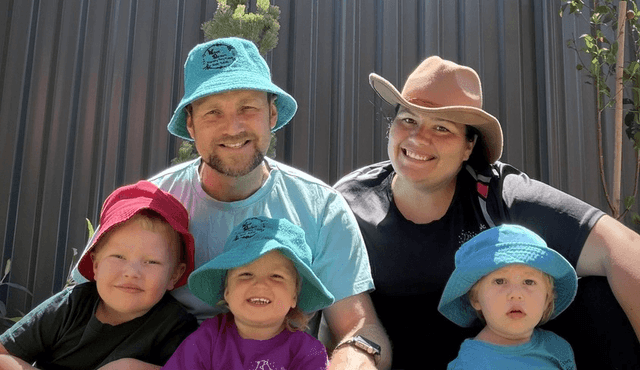
For our three family-owned Buckets Early Learning Centres, this has reinforced an important question: what does a strong child safe culture look like in everyday practice? Policies, procedures, screening, supervision and risk management are essential. However, we believe another important layer sits alongside them: relationships. When educators know children deeply, their personalities, behaviours, cues, communication styles and ways of seeking comfort or connection, they are better placed to recognise when something is different and respond appropriately. That belief has shaped a multi-year investment across our Services in relational pedagogy and attachment-informed practice, including training more than 75% of our educators and leaders in the Circle of Security approach since 2022.
A common language for understanding children
High-quality relationships have long been recognised as fundamental to children’s learning, development and wellbeing. We see those relationships as an important part of our approach to safeguarding children. Circle of Security has given our teams a practical framework for strengthening those relationships. The internationally recognised, attachment-based approach helps our educators better understand children’s relational and emotional needs. Importantly for a diverse early childhood workforce, its visual model and accessible language help translate attachment theory into concepts educators can recognise and use in everyday practice. Terms such as being at the ‘top’ or ‘bottom’ of the circle have become part of a shared professional language across our Services. That common language matters. It allows educators to communicate quickly and meaningfully about what a child may be experiencing and what they might need from the adults around them. Rather than simply asking “How do we manage this behaviour?”, the conversation increasingly becomes “What is this child communicating to us and what do they need from us right now?” For us, that shared understanding has further strengthened our capacity to recognise and respond to each child’s individual needs.
Safety through connection
Strong child safe organisations need robust structural safeguards. Working with Children Checks, policies and procedures, effective supervision, risk assessments, professional boundaries and clear reporting processes are all essential. However, systems alone cannot know a child, educators do. That is why we have deliberately invested in strengthening our educators’ capacity to recognise, understand and respond to each child’s individual cues and relational needs. An educator who understands how a particular child communicates distress, how they seek reassurance, what makes them withdraw or when their behaviour is outside their usual patterns has another valuable layer of knowledge available to them. This is where relational pedagogy becomes an important part of our approach to child safety. By building educators’ capacity to be genuinely attuned to children, we strengthen their ability to notice subtle changes, respond sensitively and, where appropriate, raise concerns. It also reinforces something fundamental to our philosophy, children should experience early learning environments in which they feel safe, known, heard and secure in their relationships with their educators.
Moving beyond training to everyday practice
One of our biggest learnings has been that meaningful professional development cannot finish when the training session ends. Our investment in Circle of Security has influenced how we think about the operation of our Services, from orientation and enrolment to transitions, staffing arrangements, risk assessment and excursions. When planning an excursion, for example, we don't consider only which educators have the appropriate position, qualification or experience. We also consider the individual children attending. Which educators know those children particularly well? Who is most attuned to a child who may find an unfamiliar environment challenging? Which relationships will help children feel secure while away from the familiarity of their usual learning environment? Those considerations form an important part of our decision-making, demonstrating how professional knowledge about attachment and relationships can influence operational decisions rather than existing only as theory. This also reflects our broader approach to professional learning – translating learning into everyday practice so that relational pedagogy is part of the culture of our Services, rather than simply another program educators have completed.
Families are noticing the difference
Perhaps one of the most encouraging outcomes has been seeing families recognise and value this approach. Some families now seek out our Services because they are already familiar with Circle of Security and want an attachment-informed approach for their child. Others encounter the concepts for the first time through their experience with us. One family recently reflected:
“Their attachment education style has played a critical role in the development and emotional wellbeing of our daughter. In the years she has attended Buckets, we have noticed a significant positive change in her emotional resilience, development of peer relationships and overall wellbeing. She has formed some beautiful bonds with her educators as they have created a safe space for her to be her true self.”
For families, knowing their child's physical needs will be met is fundamental. Knowing that the educators caring for their child have been deliberately supported to understand their individual needs, respond sensitively and build secure relationships with them provides another important level of confidence in their early learning experience.
Relationships as part of a child safe culture
More than 75% of our educators and leaders across our three Services have now undertaken Circle of Security training. However, we don't see the number trained as the measure of success. The more important question is what happens afterwards. Can we see the learning influencing educators' interactions with children? Is it shaping professional conversations between colleagues? Is it influencing the decisions leaders make? Ultimately, are children experiencing environments in which they are safer, more secure and better understood?
At Buckets, our work in this area continues to evolve. The early childhood sector has faced considerable change since we began this project in 2022 and priorities inevitably compete for educators' and leaders' attention. Throughout that change, relationships have remained at the centre of our approach.
For services considering how to further strengthen their child safe culture, our experience has reinforced a relatively simple principle: invest in the systems that protect children, but invest just as deliberately in the relationships that help us truly know them.


Don’t miss a thing


Related Articles