



Bringing fun back into early childhood: National Science Week reminds us what children really need

 Article
National Science Week 2026 invited Australians to explore, experiment and rediscover the wonder of how the world works.
Held from 15 to 23 August under the theme “Seeds of Science: Nurturing Knowledge for All”, the national celebration included more than 2,000 events delivered by schools, universities, libraries, museums, research institutions and science centres.
The Australian Government Department of Education used the occasion to highlight the importance of science, technology, engineering and mathematics (STEM), along with programs designed to support participation from the early years through to higher education.
For the early childhood education and care (ECEC) sector, National Science Week offered a broader and perhaps more timely reminder: fun is not separate from learning. For young children, joy, play, curiosity and discovery are often the pathways through which meaningful learning occurs.
As the sector navigates workforce shortages, strengthened child safety obligations, increasing administrative demands and heightened public scrutiny, protecting space for joyful learning has never been more important.
National Science Week encourages Australians of all ages to engage with science through experiments, workshops, community events, competitions and citizen science projects.
In early childhood settings, however, science does not require a laboratory, specialist equipment or a series of adult-led experiments.
It can be found whenever children:
- mix colours and observe what changes;
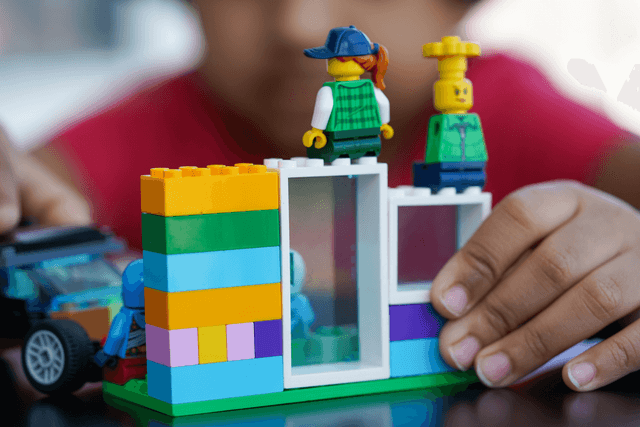
- build a tower and investigate why it falls;
- watch water move through pipes, funnels and containers;
- search for insects in the garden;
- compare the weight, shape or texture of objects;
- notice changes in weather and seasons;
- explore light, shadows and reflections;
- test which objects roll, float, sink or absorb water; or
- ask “why?”, “how?” and “what will happen?”
These everyday experiences contain the foundations of scientific thinking.
Children observe, predict, test, compare and revise their ideas. They may not use formal scientific language, but they are already investigating how the world works.
Early childhood educators have always understood the value of playful learning. The concern is not that fun has disappeared from services, but that the conditions supporting it may be under pressure.
Educators are balancing active supervision, documentation, risk assessments, mandatory training, workforce shortages, regulatory changes and increasing expectations from families and the community.
These responsibilities matter. Children have a right to environments in which their safety and wellbeing are actively protected.
However, when administrative and compliance demands dominate the working day, educators may have less time and capacity to be fully present with children—to follow an unexpected question, extend an emerging investigation or become absorbed in the joy of shared discovery.
“Bringing fun back” should not mean treating safety and accountability as obstacles to learning. Nor should it place another expectation on already stretched educators.
Instead, it should prompt services and systems to consider whether their structures protect enough time for educators to do the relational and pedagogical work at the heart of the profession.
In early childhood, fun is not simply entertainment or a break from “real” learning.
When children are interested, amused, surprised or excited, they are more likely to engage deeply, revisit an experience and remain involved when a challenge emerges.
A ramp-and-ball investigation may appear simple, but children can explore speed, distance, height, gravity and cause and effect. Building a bridge from blocks can involve balance, measurement, design, collaboration and persistence.
The learning is not reduced because children are laughing.
Joy can coexist with complexity. In fact, enjoyment may be one of the reasons children remain with a problem long enough to discover something new.
Play-based science does not mean leaving children alone with materials and hoping learning occurs. Educators have an intentional teaching role.
They observe children’s interests, introduce possibilities, model curiosity and ask questions that extend thinking without taking ownership of the investigation.
An educator might ask:
- What have you noticed?
- What do you think will happen next?
- Why do you think that happened?
- How could we test your idea?
- What could you change?
- Is there another material that might work?
- What is the same and what is different?
- How could we record what we discovered?
These questions encourage children to explain their ideas, listen to others and revise their thinking.
Educators can also introduce language such as predict, compare, absorb, dissolve, balance, transparent, heavier and evaporate when those concepts become meaningful within children’s experiences.
This reflects the intent of the Early Years Learning Framework, in which children are positioned as confident and involved learners who develop dispositions including curiosity, creativity, cooperation, confidence, persistence and reflexivity.
Some educators may feel hesitant about teaching science because they believe they need specialist knowledge or must be able to answer every question.
Young children’s inquiry offers another possibility.
An educator can respond, “I don’t know—how could we find out?”
This models intellectual honesty and demonstrates that not knowing is not a failure. It is the beginning of an investigation.
The educator remains responsible for ensuring the experience is safe and developmentally appropriate, but does not need to control the outcome.
When adults explore alongside children, they communicate that questions are valuable and that learning can be a shared process.
When fun and exploration are protected, children gain far more than scientific knowledge.
They develop confidence in their ability to ask questions, test ideas and influence what happens around them.
Playful STEM experiences can support:
- Curiosity — children are encouraged to wonder and seek explanations.
- Confidence — they begin to see themselves as capable thinkers.
- Persistence — children discover that an unsuccessful attempt can be changed and tried again.
- Creativity — open-ended investigations allow for multiple possibilities and solutions.
- Communication — children describe observations, explain ideas and learn new vocabulary.
- Collaboration — shared investigations require listening, negotiation and cooperation.
- Early numeracy — counting, measuring, comparing and pattern recognition arise naturally.
- Agency — children experience their decisions and theories as meaningful.
Children also learn that mistakes can be useful.
When a tower collapses or an experiment produces an unexpected result, educators can resist the urge to immediately correct or rebuild. Instead, they can help children consider what happened and what they might try next.
This is not only scientific thinking. It is a foundation for approaching uncertainty and challenges throughout life.
The sector should be cautious about creating a false choice between safety and fun.
Children need both.
A well-planned science experience includes active supervision, safe materials, thoughtful risk assessment and educators who understand the children involved. Those safeguards create the conditions in which children can explore confidently.
At the same time, safety should not be interpreted as eliminating every manageable challenge or unpredictable outcome.
Children need opportunities to test their capabilities, encounter uncertainty and learn how to assess risk with the support of trusted adults.
The role of the educator is not to remove exploration, but to make it appropriately safe, accessible and meaningful.
National Science Week offers several wider lessons for early childhood policy and practice.
Fun must be protected
Joyful learning should not depend on whether an educator has spare time after completing administrative tasks.
Providers and policymakers should consider whether systems, staffing and expectations allow educators to remain present with children and respond to emerging learning.
STEM already belongs in early childhood
STEM does not need to become a formal subject or commercial program. It is already embedded in block play, cooking, gardening, construction, sensory exploration and children’s questions.
The opportunity is to recognise and intentionally extend this learning.
Educators need professional trust
High-quality teaching depends on educators being able to respond to the children in front of them rather than feeling compelled to reproduce predetermined activities or generate excessive evidence.
Professional autonomy allows educators to follow children’s ideas while using their knowledge to introduce challenges and extend learning.
Families should see the learning within play
National Science Week experiences can help make play-based learning visible to families.
Sharing the questions children asked, the theories they tested and the changes they made can communicate more about learning than displaying a polished final product.
Celebrations can become a catalyst
National Science Week should not become an isolated week of themed activities followed by a return to business as usual.
Services can build on the momentum by creating ongoing investigation spaces, documenting children’s questions, revisiting experiments and connecting with local libraries, museums and natural environments.
Government-supported initiatives including Little Scientists, Let’s Count, the Digital Technologies Hub and Early Learning STEM Australia may also help educators extend STEM learning beyond the annual celebration.
Playful investigation can benefit educators as well as children.
Watching a child make a discovery, listening to an unexpected theory or helping a group persist with a shared problem can reconnect educators with the purpose and creativity of their work.
That enjoyment cannot resolve workforce shortages, excessive workloads or structural pressures. Educators should not be expected to overcome systemic challenges simply by becoming more enthusiastic.
However, services can examine whether their practices preserve room for educators to experience the professional satisfaction that comes from meaningful engagement with children.
Bringing fun back is therefore not about adding another themed activity, purchasing new resources or placing another expectation on the program.
It is about protecting the time, relationships and professional freedom that allow joy and learning to emerge.
National Science Week may have concluded, but its 2026 theme, “Seeds of Science: Nurturing Knowledge for All”, remains relevant throughout the year.
Young children do not need science delivered through formal lessons. They need time, interesting materials, responsive educators and permission to wonder.
Bringing fun back into ECEC is not a luxury, and it should not be treated as an alternative to safe, accountable practice.
It is part of how children learn, how relationships grow and how educators remain connected to the purpose of their profession.
Sometimes the most powerful teaching begins with a child asking “Why?” and an educator being willing to say, “Let’s find out.”


Don’t miss a thing


Related Articles