Family day care educators say they are ‘not just babysitters’ as sector declines
 Article
Family day care educators are highly qualified early childhood professionals who say they are being overlooked and undervalued within Australia’s early childhood sector, new research from Deakin University has found.
The national study of 200 Family Day Care (FDC) educators found that while educators take considerable pride in the education and care they provide, many feel professionally isolated and unrecognised beyond the families they work with.
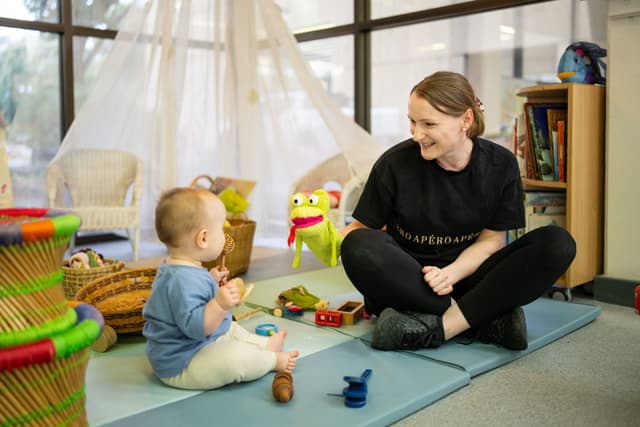
FDC educators care for and educate small groups of children in their own homes, regulated through the National Quality Framework, which sets strict standards for safety, educator qualifications, and child-to-educator ratios.
Respondents to the survey were from across metropolitan, regional and rural and remote areas. All respondents were women, with 82 per cent holding a Diploma or higher qualification.
Recognition from families, but not the wider sector
Respondents reported the home-based model as a key strength of FDC, allowing them to develop deep, individualised knowledge of each child and build strong, sustained relationships with children and families.
Despite this, educators consistently detailed feeling professionally unrecognised. Many described being ‘lumped in’ with centre-based childcare in policy terms while receiving none of the same professional support and being excluded from professional discussions.
FDC educators are on average, older and have more years of experience than centre-based educators*. Despite this, survey responders reported being perceived by outsiders as ‘just babysitting’ or ‘less professional’, of lower-status, or a lower-quality option despite holding equivalent qualifications and meeting identical regulatory standards.
Lead researcher Professor Andrea Nolan said the findings challenge perceptions of FDC as a less professional form of early childhood education and care.
‘Family day care is not just babysitting. These educators are qualified professionals who plan for children’s learning, work within the Early Years Learning Framework and National Quality Standard and make deliberate decisions about how they support each child’s growth and development,' Professor Nolan said.
‘Educators told us they take enormous pride in their work and in the relationships they develop with children and families. What they lack is a sense of belonging and recognition within the broader early childhood sector.'
Victoria Edmond, who started consultancy and coaching business Big Hearted Education to support FDC educators and help them feel more connected to their peers, said the research confirms something she sees every day in the family daycare sector.
‘When educators feel a strong sense of identity and connection to their profession and their peers, they remain deeply committed even when their sector is undervalued or under threat,’ she said.
‘These are highly skilled professionals who deserve genuine government recognition and funding, not just goodwill. If we gave family daycare even a fraction of the investment other parts of the sector receives, we would see it become the care of choice for families right across the country.’
Declining workforce numbers leaves less choice for families
Professor Nolan said these issues matter at a time when FDC is a declining part of Australia’s early childhood workforce.
Over the past few years, FDC services in Australia have declined in number from 16% of the total early childhood workforce in 2016 to just 3.6% in 2024. This decline has also been reported in other countries such as the US.
The research comes at a time when Australia's early childhood education and care sector is facing intense scrutiny over child safety, quality, workforce pressures and the financial sustainability of childcare providers. High-profile abuse allegations, regulatory action and the recent collapse of major childcare operators have prompted renewed questions about how Australia provides safe, high-quality early learning for young children.
In 2024, there were around 9,600 FDC educators across Australia*. In 2024, there were 55,000 Australian children enrolled in FDC, down from more than 180,000 in 2016*.
This fall is despite strong demand, especially in many regional and remote communities, where FDC can represent the only available childhood care option.
‘If we want families to have genuine choice about early childhood education and care, we need to recognise the value of the educators providing that choice,’ Professor Nolan said.
‘That means moving beyond outdated ideas about care as something separate from education. Caring for young children – whether in a centre or a home – is skilled professional work, and it is central to quality early childhood education.’
Recognising family day care as an important part of Australia’s Early Childhood Education sector
The Deakin study recommends strengthening connections and peer networks among FDC educators, challenging outdated perceptions of family day care, increasing understanding of quality practice in home-based settings, and involving FDC educators more meaningfully in policy and funding decisions.
Professor Nolan said the broader ambition of her work is to use these insights to inform government policy and address structural inequities, so family day care is treated as an equal, valuable option – not a second-rate one. She is currently seeking funding to extend her work, particularly in other countries where care work is historically undervalued.
The research, Educators’ Perspectives of Family Day Care in Australia: ‘Not Just Babysitting’, is published in Education Sciences.
*Early Childhood Education and Care 2024 National Workforce Census


Don’t miss a thing




Related Articles