


Every child deserves to be known

 Article
What should an early childhood education system guarantee? Australia is working towards building a much larger version, but this question rarely comes up.
It is straightforward to specify what a system should provide - places, subsidised hours of education and qualified educators for a certain number of children. Government can know how many families receive assistance and how many children use subsidised early childhood education and care. Regulators can know the policies, records and staffing arrangements that define the system.
But think for a moment about the young child who will actually use the system. What can it guarantee for that child?
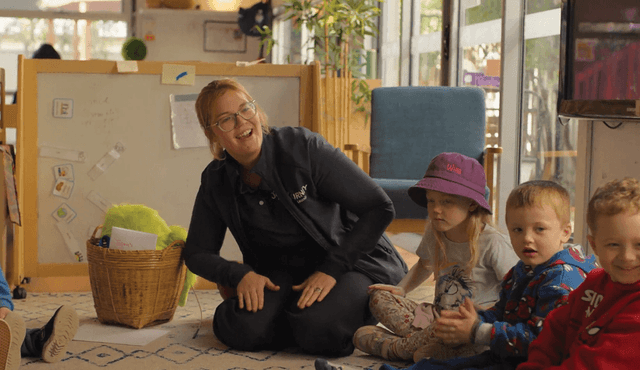
Ideally, it will be an education system in which educators know that child - they greet them and remember that separation has been difficult since Mum started her new job. They notice that today the child is standing at the edge of the group when normally they would be in the middle. They sense that an angry child might actually be frightened, rather than seeing only the anger. Someone remembers the story they began yesterday and will still be there tomorrow.
Every child deserves to be known. Well known and noticed when they are absent and appreciated when they are present. Their behaviour known well enough to give it meaning when it changes. Their distress understood in context. Their family spared the need to start over every few months, explaining who they are to a new group of adults who have only recently done the same for someone else.
Knowing is about relationships. Relationships between human beings who regularly spend time in each other’s presence, having lots of ordinary encounters, little of consequence in themselves but counting for everything on the day that it matters, whether someone is, or isn’t, there.
Australia’s National Quality Standard acknowledges the importance of responsive relationships. Quality Area 5 says responsive and meaningful interactions build trusting relationships, while Element 4.1.2 in Quality Area 4 states that “every effort is made for children to experience continuity of educators at the service”.
The trouble with public policy is that it rarely identifies the resource responsive relationships depend on.
This resource is relational capacity. Many people are familiar with systems that comply with legal ratios, yet greatly compromise relational capacity and the human elements of those ratios. An educator may be required to move between rooms to maintain ratios, so they spend their entire shift in contact with children at legal numbers but have little time to spend with particular children. Alternatively, they do planning and programming in the evening because they have no time during the day, or they do it during the day at the expense of time with the children.
The systems in these examples may respect the legal numbers of children, but they do not respect the human numbers.
Imagine two rooms with the same number of children and the same ratio. The first has a team that has worked together for years. The room is filled with settled routines, and families have formed long-term relationships with staff. The second has several new children; the regular educator is away for the week, one child is having an extraordinarily difficult week, another needs intensive support, and the relief educator has never worked in that room before.
These two rooms are identical on paper, but they are very different rooms to work in, different workplaces and different childhood experiences. They require different levels of relational capacity because their relational load is different.
Relational load is the interactive demand of a particular room at a particular time - the attention required, the emotional work involved, the observation, professional judgment, and coordination.
We should not use this term to label children. It should never suggest that children who have experienced trauma are a burden, or that disability or learning another language makes a child a problem. It reminds us to acknowledge and account for the additional relational needs of a baby who may not yet have settled to separation.
Relational load measures the interaction between children’s needs and our ability to meet those needs. The load is about the situation, and situations change. When relational load exceeds our relational capacity, educators make up the difference. We stay later, do documentation in the evenings, compress reflection time and hurry conversations with families. We take on extra shifts and fill roster holes. Eventually some of us leave.
Then we call it a workforce shortage. That tells us there is a vacancy. It does not tell us why.
The gaze turns to the workforce - how many leaders, educators, teachers, and graduates there are; how willing people are to return to the profession; and how much good work one person can sustainably do. We often ask educators to be more efficient, which can jeopardise some of the most important conditions for quality and compound the effects of working in a system that does not value the work highly enough or see its complexity.
If we broaden access to early childhood, the workforce will also need to grow. Since 5 January 2026, the Three-Day Guarantee has meant all Child Care Subsidy-eligible families can get at least 72 hours of subsidised care each fortnight. The Productivity Commission has recommended a universal system in which all families with children aged 0–5 who choose to use early childhood education and care could access at least 30 hours, or three days, of high-quality provision each week for 48 weeks of the year.
At its best, access is access to a relationship-rich service. Simply creating a subsidised place may secure access in an absolute sense, but not necessarily the conditions in which a child may flourish, and expansion without enough relational capacity could scale up depletion instead.
If Australia is to fulfil its ambition of systematically expanding access to early childhood education, it can do so more effectively by committing to an Every Child Known Guarantee. This Guarantee would set a national expectation that every child has a reasonable opportunity to form stable relationships with a small group of educators who know them well. To deliver on it, educators must be supported to form and maintain those relationships, with continuity recognised as an outcome in its own right.
For all children to be known, we need a far better understanding of what adequate staffing means.
Minimum ratios tell us what we cannot go below, but not what is adequate. Even meeting the minimum doesn't guarantee a sustainable working environment when educators are human and get sick. Anyone who has worked in this sector knows all too well how an apparently adequate roster can collapse after an illness at 7.12 in the morning.
We readily build resilience into technical systems, but people-based systems are often designed for minimum capacity. Resilience is just as relevant in education.
Time spent engaging with children, their families and other professionals is essential to the wellbeing and capability of any educator. Time spent thinking, observing, planning, and preparing reports is equally essential. If it isn’t acknowledged and protected, the work either does not happen or gets rushed, squeezed into evenings, or distracts from the time and attention given to children.
Time spent engaging with children and families is plainly part of the job. So is the professional time required to decide how to support each child. Accountability for that judgment has, in many cases, been addressed through regulation and serious safeguards.
These, quite rightly, come with a cost in professional time, whether through training, recording, reporting, verification, or compliance. Good policy makes those costs visible.
Every new regulatory requirement should explicitly identify its impact on frontline staff in time, what can be shifted off their plates, and what additional resources will be made available. This should become routine in regulatory policy proposals.
Educator attention is finite. Every additional requirement may be worthwhile, but ignoring the time it consumes reduces educators’ capacity to do other worthwhile things.
Wages are part of this. The Commonwealth’s Worker Retention Payment provides participating eligible services with funding equal to 15 per cent of the applicable award rate, plus funding for eligible on-costs, to support higher wages for eligible workers. This acknowledges what the sector has been saying for years - respected professionals need time to think and exercise judgment, a viable working life, and freedom from the false expectation that professional work should be completed through unpaid labour. Experienced professionals should be able to remain in the profession without exhausting themselves doing so by fifty.
Much of the workforce debate has centred on attracting and retaining staff and the numerical objectives that might achieve this. A mature workforce debate should also ask whether early childhood education offers a working life in which good people can remain good at the work throughout their careers.
Governments can relatively easily measure and monitor aspects of the structural quality of early childhood services - ratios, qualifications, environments, policies, and standards. It is far more difficult to pinpoint the elements that contribute to quality relationships with children, and harder still to measure them with certainty. Quality relationships will differ for every child and change from day to day.
While measuring relational capacity and relational load is difficult, we should not shy away from understanding the conditions that best support good relationships. We do, however, risk reducing relationships to another set of compliance measures. Indicators of relational capacity could include staff continuity and turnover, protected professional time, reliance on emergency staffing, movement of educators between rooms, and capacity at times of unusually high relational load.
Future major early childhood reforms should be put through a relational capacity test. As governments introduce new access entitlements, they should consider what those changes mean for the workforce and continuity behind those entitlements.
When providers change rosters to deliver a new access entitlement, what does that mean for the stability of children’s relationships? When regulators place new obligations on the sector, what does that mean for frontline time? When funding models are expressed in numbers of children, do we understand that services working in communities facing greater disadvantage and complexity may require greater relational capacity even when enrolment numbers are similar? Understanding relational load across the sector could also create a common language around an issue that too often fragments discussion across the country.
These precious early childhood experiences may be framed as social infrastructure that enables parents to work and participate in society. Still, they are also among a child’s first experiences of connection beyond the family. They begin to teach a child whether they will be noticed or become invisible in a world that does not notice enough. Will an educator notice when a three-year-old collapses on the rug in distress, crouch beside them and settle them, or pass them by unnoticed? In these little hours of day-to-day work, educators connect meaningfully with the lives in front of them.
When the ability to be fully present in those connections is continually threatened, we should not be surprised when patience becomes harder to sustain. Unlimited patience, like everything else, has its limits. The question is whether employers, providers and governments will give educators the continuity, time, and relational capacity to do the work well.


Don’t miss a thing




Related Articles