


Learn to be Safe with Emmy and Friends supports protective behaviours education in early learning

 Article
Act for Kids’ protective behaviours program offers resources and training to help children understand personal safety, communicate concerns and seek support from safe adults.
Talking with young children about personal safety involves more than teaching them to recognise when something feels wrong. It also involves helping them understand their rights, develop language to communicate concerns and identify adults who will listen and respond.
Act for Kids’ Learn to Be Safe with Emmy and Friends program supports these conversations through age-appropriate learning experiences for children and the adults involved in their care.
Designed for children aged 0–10 years, the program can be delivered in early learning centres and schools by qualified Emmy facilitators or trained educators. Activities, lesson plans, scripts and videos provide ways to explore personal safety, consent and help-seeking.
The program centres on two messages: everyone has the right to feel and be safe, and children can tell a safe adult anything.
Its learning experiences are organised around four focus areas:
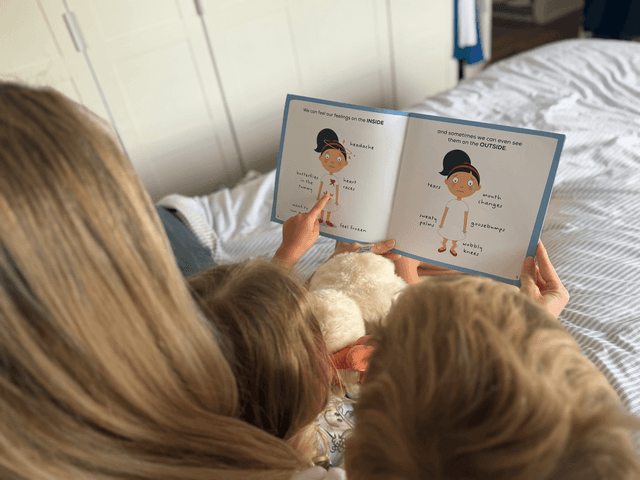
- Feeling safe: recognising emotions and how the body may respond when a person feels unsafe.
- Safe choices: exploring safe and unsafe situations, including those encountered online.
- Body safety: learning about consent, body autonomy, private body parts and different types of touch.
- People and safety: identifying a network of safe adults children can approach for support.
These areas give educators and families a shared framework for discussing safety in language suited to children’s understanding.
The program’s resources include songs, animations, books, posters and worksheets. Materials such as Tell, Tell, and Tell Again reinforce help-seeking, while resources addressing consent, feelings and body safety provide different ways to introduce and revisit concepts.
The Australian Institute of Family Studies’ program profile identifies two randomised controlled trials evaluating the program with children aged five and six.
Both evaluations found improvements in participants’ protective behaviours knowledge and confidence to disclose compared with children in control groups. In one study, parents also reported more protective factors among children who participated.
These findings support the program’s role in developing safety knowledge and help-seeking confidence. They are specific to the age groups studied: the profile notes that evidence of effectiveness for older children was not available. The findings should therefore be distinguished from the program’s broader current age range and delivery options.
For early childhood teams, access to resources is one part of implementation. Educators also need confidence in discussing sensitive topics and responding when a child communicates a concern.
The program’s professional development options include face-to-face and virtual training, coaching and on-demand learning modules. Options cover early years protective behaviours principles and recognising and responding to disclosures.
Act for Kids partners with Workhorse Advisory to provide tailored professional development packages, with a consultation available to discuss an organisation’s needs.
The program is also listed on Victoria’s School Readiness Funding Menu of Evidence-Informed Programs and Supports. The listing describes training that helps early childhood professionals use the program’s learning guide and resources with children aged 0–5, alongside guidance on responding to disclosures in early years settings.
Families are also included in the program’s approach. Parent and caregiver information sessions reflect the content explored with children, supporting adults to continue personal safety conversations at home.
The free Resource Hub provides materials for children, parents, educators and other adults, including family information, books, songs and animations. This offers opportunities to revisit safety messages across home and education settings.
Protective behaviours education forms part of a broader approach to safeguarding. Children’s knowledge and confidence matter, alongside adults’ ability to listen, recognise concerns and act protectively.
Act for Kids describes child protection as requiring a whole-of-community response, with preventative education for children, caregivers and educators operating alongside organisational systems and policies.
For ECEC services, this places protective behaviours learning within the wider work of building environments where children’s voices are heard and adults respond to their safety needs.
Early learning services, schools and families can explore resources and delivery options through the Emmy and Friends website, or enquire about professional development at [email protected]


Don’t miss a thing




Related Articles