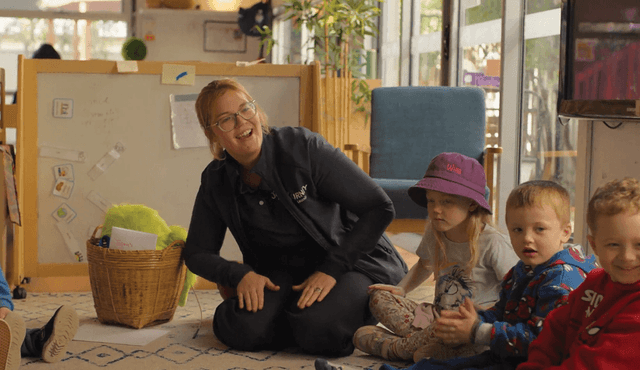




Working in ECEC and raising a child in the same centre: a case study in workforce participation and support

 Article
For many early childhood education and care (ECEC) professionals, balancing work and family responsibilities presents both opportunities and challenges. One Brisbane-based educator’s experience highlights how workplace conditions, team culture and access to care can support sustained workforce participation.
Ashlee, Assistant Centre Manager at Community Kids Enoggera and a long-term team member with G8 Education, has worked in the ECEC sector for 17 years. Her career began in Hervey Bay, where early exposure to the sector through a family connection shaped her decision to undertake a Certificate III qualification during secondary school.
Since joining Community Kids Enoggera in 2015, Ashlee has progressed from educator to Educational Leader, and now to Assistant Centre Manager, a pathway reflecting both experience and ongoing professional growth.
Ashlee’s professional journey entered a new phase with the birth of her daughter in 2023. Her daughter commenced at the same service at 11 months of age and now attends full time.
Working in the same service as her child provides a dual perspective, as both educator and parent, offering insight into the practical and emotional dimensions of early learning.
“Having my child at the centre each day is really special. It provides reassurance knowing she is happy, supported and part of the same community,” Ashlee said.
This proximity supports visibility of relationships, learning experiences and wellbeing, reinforcing trust in the service.
Returning to work following parental leave can present challenges for many educators. In this case, established relationships with colleagues supported a smooth transition.
“Because I already knew and trusted the team, I felt confident in the care and education my daughter would receive,” Ashlee said.
Strong communication between educators further supported this transition, enabling consistent information sharing about the child’s development, needs and daily experiences.
Ashlee’s experience highlights several factors that can support workforce retention in ECEC, particularly for educators with young children.
Access to workplace-based care reduces logistical complexity and supports continuity of employment. In addition, employment benefits, such as reduced fees, can ease financial pressure and support participation.
The physical environment also plays a role. Access to well-designed outdoor spaces supports children’s engagement and development, while reinforcing confidence in the quality of the learning environment.
Even logistical elements such as commuting can influence work–life balance. In this case, travel time has become an opportunity for connection and routine.
What might otherwise be considered a constraint has been reframed as a period for rest, conversation and transition between home and the service environment.
This reflects broader considerations for the sector, particularly in the context of ongoing workforce shortages and retention challenges.
Key themes include:
- the role of workplace culture in supporting educator wellbeing
- the impact of accessible, high-quality care on workforce participation
- the value of practical supports, including fee reductions and flexible arrangements
- the importance of strong relationships between educators and families
Experiences such as this highlight how organisational settings and employment conditions can influence career sustainability in ECEC.
As services continue to respond to workforce pressures, models that support educators to balance professional and family responsibilities may play an increasingly important role in attracting and retaining a skilled workforce.


Don’t miss a thing




Related Articles