



Early Learning Victoria shares insights from its first 18 months at ECA conference
 Marketplace
With 18 centres operating and more than 1,200 children enrolled, Early Learning Victoria shared lessons in workforce development, community engagement and establishing a new government provider.
Building a statewide network of early learning centres involves more than opening new services. It requires recruiting and supporting teams, establishing relationships with families and communities, and developing services that respond to the communities they serve.
These responsibilities were central to Early Learning Victoria’s presentation at the 2026 Early Childhood Australia (ECA) National Conference in Melbourne, where Chief Executive Officer Darren Youngs and Director, Quality and Compliance Nicole Pilsworth shared insights from the organisation’s first 18 months of operations.
Their session, Creating the future: The role of state government in Victorian ECEC provision, explored the organisation’s establishment, its contribution to early childhood education and care in Victoria, and the opportunities and challenges emerging as its network grows.
“After a whirlwind 18 months opening our first 18 services, we're very excited to be sharing our journey at the ECA conference,” Mr Youngs said.
Established within the Victorian Department of Education, Early Learning Victoria is responsible for establishing and operating the 50 government-owned early learning centres being delivered through the Best Start, Best Life reforms.
The initiative aims to improve access to early childhood education and care in communities with the greatest need, providing long day care and kindergarten programs.
18 Early Learning Victoria centres are operating across Victoria, supporting more than 1,200 enrolled children. Eight of those centres are located in regional areas.
A total of 31 centres will be open by 2028, with the full 50-early learning centre network operating by 2032. Of those 50 centres, 28 will be in regional Victoria, helping to meet local demand for early childhood education and care.
Families and sector stakeholders can explore operating centres and announced locations through Early Learning Victoria's centre directory.
Early Learning Victoria’s early experience has reinforced the importance of developing a clear organisational identity connected to its purpose, alongside strong recruitment and induction processes.
As centres open and new teams come together, consistent communication with staff, families and other stakeholders has emerged as an important part of establishment.
The organisation has also identified the need to plan deliberately for relationships with educators, children and families while maintaining engagement with the wider community. Balancing these responsibilities requires time and attention during the early stages of a service’s operation.
For Ms Pilsworth, the relationships developing across the network are among the most rewarding aspects of the work.
“While the work of establishing so many new services across the state is challenging, getting to know children, families, and educators across different communities, and learning about the impact they have on their lives is so rewarding!”
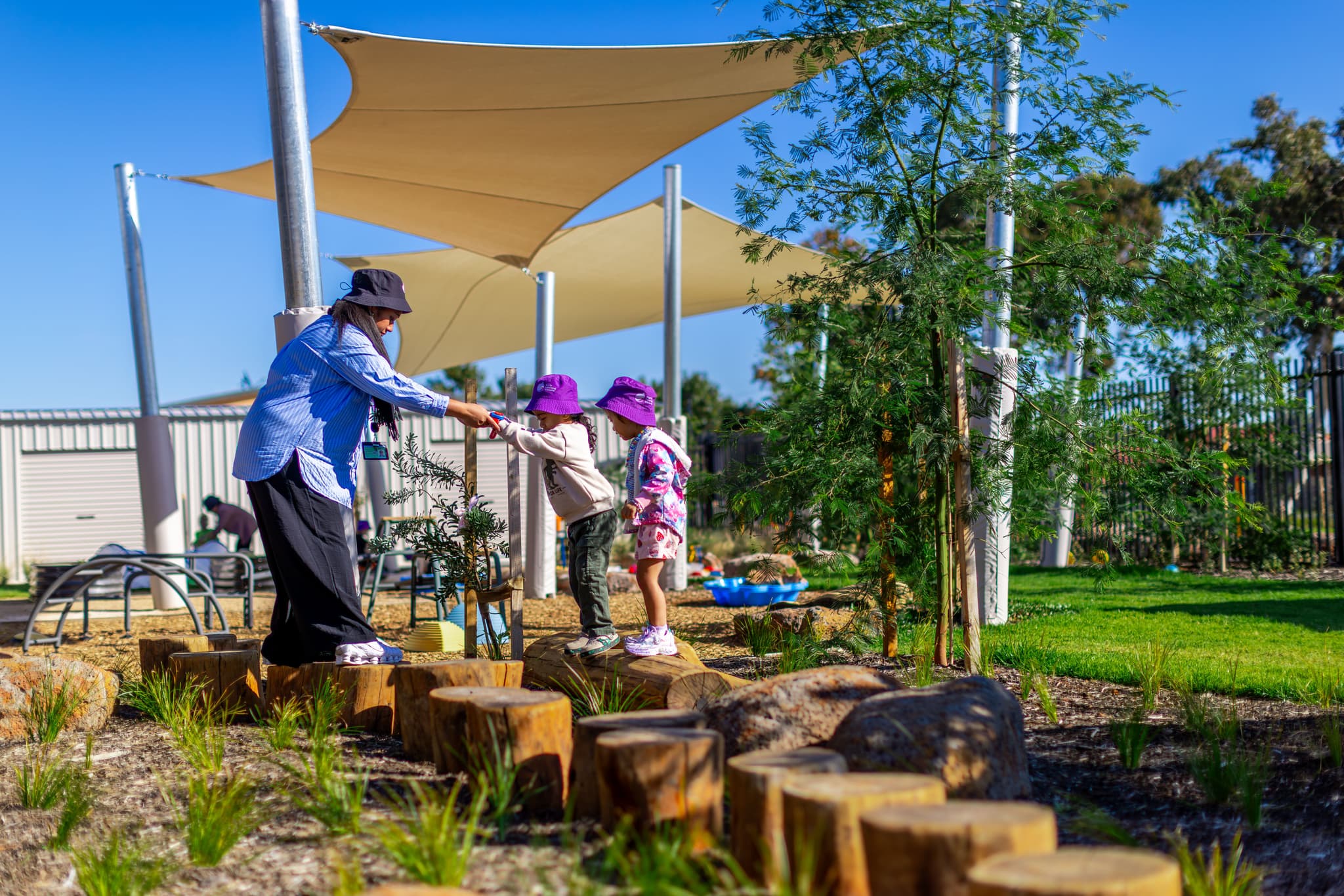
Early Learning Victoria's educational approach centres on children and families, meaningful relationships and play-based learning, with programs for children from birth to five.
Its centres are designed to be inclusive and connected to local communities. Many are co-located with schools or other community services, supporting continuity in children’s learning and relationships.
Within this shared approach, Early Learning Victoria has identified the importance of decisions that respond to local circumstances, supported by agreed organisational structures.
The conference session explored how the provider draws on each community’s strengths while developing consistent arrangements to support quality education and care across its network. Centre design and its role in promoting community connections also formed part of that discussion.
Establishing multiple services while building the organisation that supports them has required a deliberate focus on key priorities.
Mr Youngs and Ms Pilsworth discussed the complexity of expansion, including the need to be responsive to changing needs in the context of a rapidly changing early childhood sector during 2025.
Looking ahead, Early Learning Victoria has identified an opportunity to strengthen the evidence base for inclusion and quality improvement, building on Victorian Government initiatives such as the revised Victorian Early Years Learning and Development Framework.
For the broader sector, the session offered a practical perspective on the work behind a new provider’s establishment: developing a workforce, creating a shared purpose and building relationships that support services to become part of their communities.
Further information about centres, programs and enrolments is available on the Early Learning Victoria website.

Don’t miss a thing


Related Articles