


Before they can teach play, they need to play
 Article
We ask pre-service teachers to create rich learning environments for children and to understand curiosity, experimentation, imagination and discovery. Yet how often do we give them opportunities to experience these things for themselves? Before they can teach play, pre-service teachers need to play.
For many adults, toys and physical materials belong firmly to childhood. As blocks, clay, fabric, loose parts, puppets and construction materials are put aside, we can forget their capacity to invite questions, generate stories and suggest possibilities. A wooden block becomes simply a block; a cardboard tube becomes something to recycle.
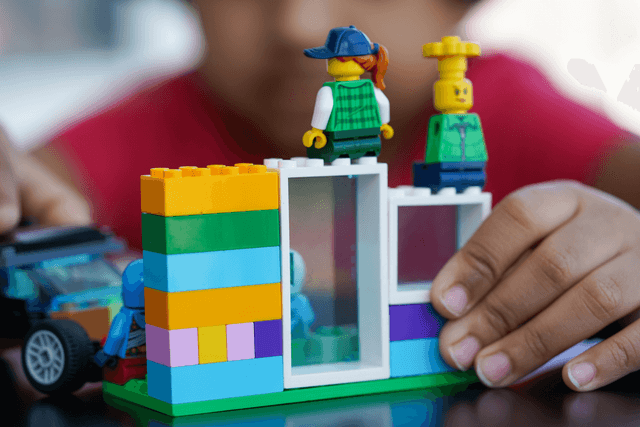
Children often see something different. A block can be a phone, a building, a bridge or a meal. Fabric might become a river, a roof or the landscape of an imaginary world. The possibilities within these materials do not disappear when adults stop playing with them; we simply become less able to see them.
This matters in teacher education. To recognise, support and extend children’s play, pre-service teachers need more than theories about its importance. They need to handle, combine, test and transform materials, experiencing both the uncertainty of beginning without a predetermined outcome and the satisfaction of discovering an idea through their hands.
A room for possibility
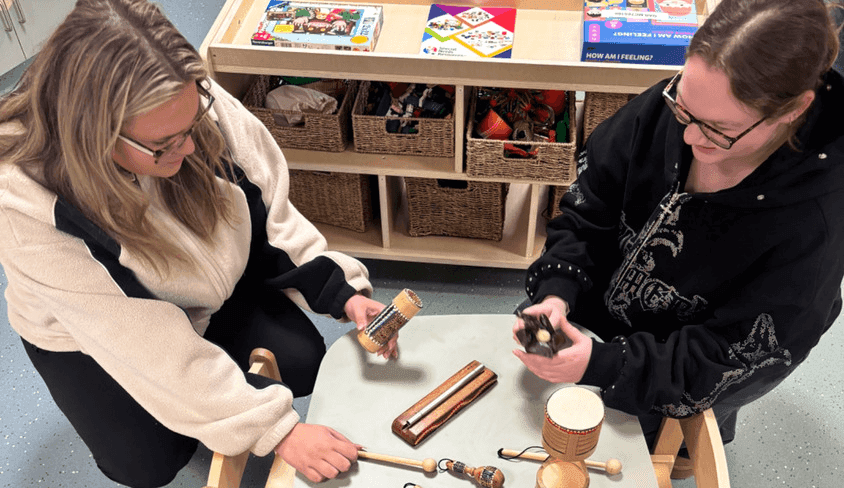
This is what makes Australian Catholic University’s (ACU) new play and learning space for pre-service teachers on the Melbourne campus important. It places real toys and open-ended materials in the hands of future teachers, giving them permission to explore before they are expected to design such experiences for children. This is not play as a break from serious learning; it is play as serious learning.
As students build with blocks, arrange loose parts, animate puppets or create environments with fabric and natural materials, they encounter balance, texture, weight, movement, pattern and scale. They make choices, solve problems, revise ideas and respond to unexpected results. They also experience play’s emotional dimensions: curiosity, delight, hesitation, frustration, absorption and pride.
These experiences can deepen their understanding of a child who repeatedly rebuilds a collapsed structure, spends a long time balancing two objects or uses a familiar material in an unfamiliar way. The space offers something a tutorial alone cannot: it makes play tangible.
An established idea in a new context
Providing pre-service teachers with play materials is not new. Teacher education has long used model classrooms, curriculum laboratories, simulated early learning environments and practical workshops to connect theory with the realities of teaching. ACU’s space belongs to this history. Its significance lies not in inventing play-based teacher education, but in asking what such an environment can offer students now.
At a time when much university learning is mediated through screens, written assessments and predetermined outcomes, the space returns attention to physical materials, embodied experience and open-ended inquiry. Rather than reproducing an early childhood classroom or demonstrating one “correct” arrangement, it offers a flexible studio where students can experiment, make mistakes and investigate how materials shape learning.
Because the space is new, its possibilities are not yet fully known. Students will not simply use a finished environment designed for them; their experiments and reflections can help shape what it becomes. This emerging place of shared inquiry can prepare them for future classrooms while inviting them to question and imagine what those environments could be.
Learning to notice
When adults engage with materials themselves, they can become more thoughtful observers of children’s play. A child who is “just playing with blocks” may be investigating balance, symmetry or spatial relationships. The finished model may be less important than the planning, negotiation and persistence involved in creating it. A teacher who recognises this may pause rather than demonstrate the “correct” use of a material, allowing the child’s own theory to develop.
Direct experience also helps future teachers examine the environments they create. Which materials invite many responses, and which imply a single outcome? What happens when materials are combined? How do arrangement, accessibility and presentation influence engagement? When should a teacher intervene, and when should they stand back? There are no universal answers, which is precisely why experience matters.
More than a collection of toys
ACU’s space is more than a room containing toys. It is a studio for material inquiry, where pre-service teachers can investigate the relationships among materials, play, learning and teaching. It positions them not simply as people acquiring techniques for future use, but as active learners who also need opportunities to wonder, take risks and make discoveries.
Adults do not need to become children again to engage meaningfully in play. They do need to recover some openness to uncertainty and resist making every experience efficient, purposeful and immediately measurable. This may feel uncomfortable. Some students may search for the “right” way to complete an activity or wait to be shown the finished product. Such responses reveal how strongly formal education can teach us to follow instructions, avoid mistakes and value products over processes.
A space that helps future teachers move beyond those habits may change not only how they understand materials, but also how they think about learners, teaching and knowledge. Its value will emerge through use: in structures built and rebuilt, unexpected combinations, new conversations and reconsidered assumptions. That openness is not a weakness; it is an invitation.
If we want teachers who can protect children’s curiosity, value their ideas and create environments rich in possibility, we must offer them firsthand experiences of curiosity, agency and discovery. Before they can create possibilities for children, they need to encounter it themselves. Before they can teach play, they need to play.


Don’t miss a thing



Related Articles