Australian study links toddler pretend play with stronger later mental health
 Article
A new Australian study has found children who demonstrate stronger pretend play skills at ages two and three are less likely to experience emotional and behavioural difficulties in the early primary years, offering fresh evidence of the long-term developmental value of play.
Published in the Early Childhood Education Journal, the University of Sydney study analysed data from more than 1,400 children participating in the Longitudinal Study of Australian Children. Researchers found stronger pretend play ability in toddlerhood was associated with fewer later mental health difficulties.
Importantly, the relationship remained after accounting for family socioeconomic position, maternal mental health, language ability and the security of parent-child relationships, strengthening confidence in the findings.
Recognition for educators’ professional role
A notable aspect of the study is that children’s pretend play ability was assessed by early childhood educators over a two-year period, recognising the profession’s critical role in observing, supporting and extending children’s development during the formative early years.
For a workforce often overlooked in broader policy debates, the findings reinforce that educators are central to identifying developmental strengths and creating environments where children can thrive socially, emotionally and cognitively.
Why this matters now
Mental health difficulties affect around one in seven Australian children, yet prevention efforts often focus on later childhood or adolescence.
The researchers said the findings shift attention to the earliest years, when foundational developmental capabilities are emerging rapidly and before many children enter formal schooling.
The study also arrives at a time when opportunities for imaginative play may be under pressure, with children spending more time on screens and participating in increasingly structured activities.
Lead researcher Dr Fontini Vasilopoulos said pretend play can be easy to overlook despite its potential importance for children’s mental health.
More than ‘just play’
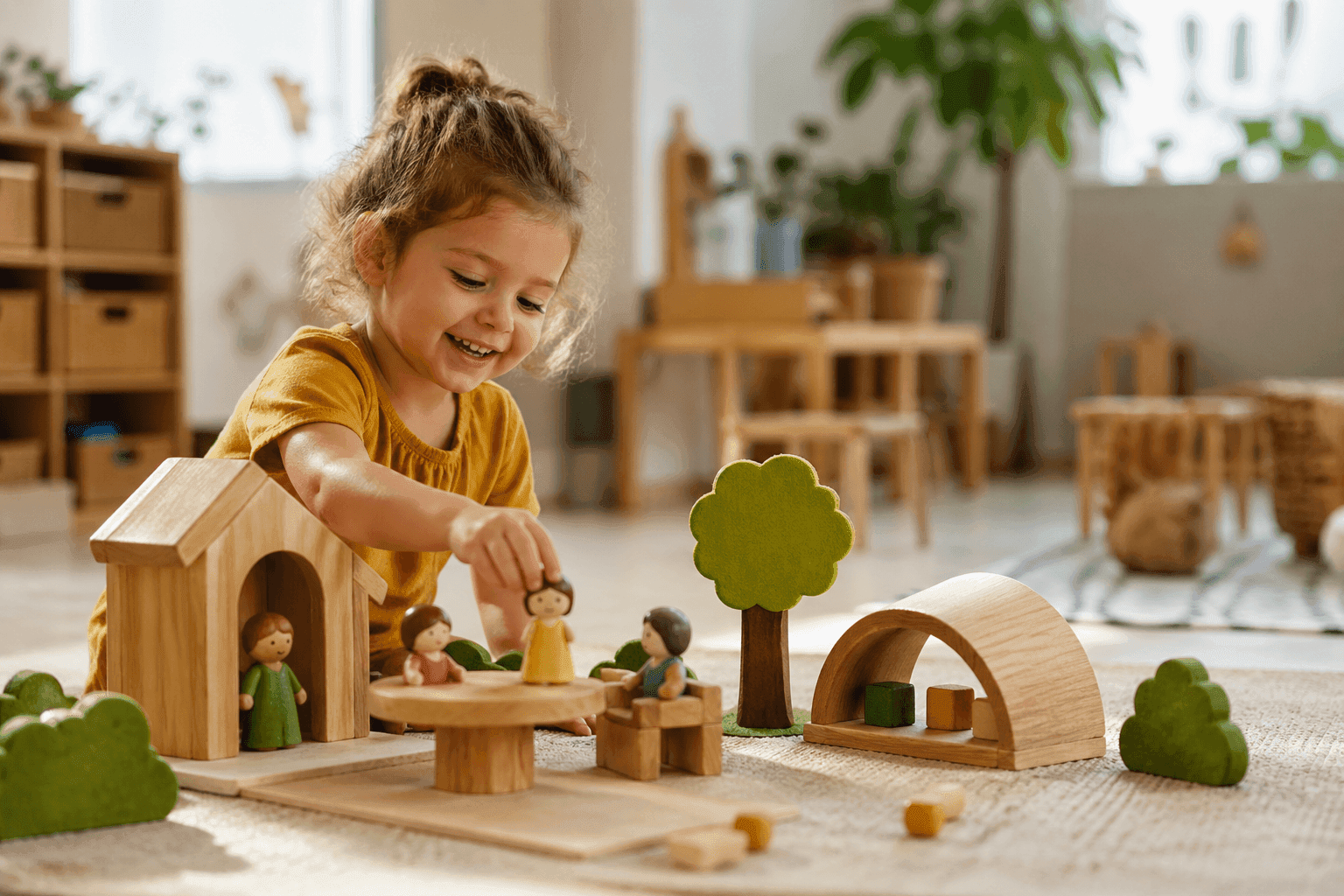
Pretend play allows children to create roles, stories, scenarios and symbolic experiences. Within ECEC settings, it often supports communication, negotiation, self-expression, problem-solving and collaboration.
The findings add further weight to play-based learning approaches already embedded in the Early Years Learning Framework, particularly outcomes linked to identity, wellbeing, communication and confident learning.
A surprising finding for the sector
Researchers also found emotional regulation did not explain the relationship between early pretend play and later mental health, challenging common assumptions about how play supports wellbeing.
Instead, they suggested other developmental mechanisms may be involved, including embodied cognition, where movement, imagination and brain development interact in still emerging ways.
Practical implications for services and families
The researchers encouraged adults to support child-led pretend play by:
- allowing play to unfold without constant correction
- following the child’s lead
- using open-ended comments rather than instructions
- joining play in low-power roles when invited
For providers and centre managers, the message is clear: protecting uninterrupted imaginative play time may be one of the simplest and most valuable investments in children’s long-term wellbeing.
As expectations around readiness, behaviour and outcomes continue to grow, the study offers a timely reminder that some of the most important developmental work may happen when children appear to be simply playing.
Read the full research report here.


Don’t miss a thing




Related Articles