


STEM in the early years: why AI is making early childhood education more important than ever

 Article
Artificial intelligence is reshaping how people work, communicate, solve problems and create. As technology develops, education systems face an increasingly difficult question: how do we prepare children for a future that cannot yet be clearly predicted?
A recent IT Brew article makes the case that science, technology, engineering and mathematics (STEM) learning should begin in early childhood, not to train preschoolers for specific jobs, but to develop the enduring capabilities they will need to navigate change.
For Australia’s early childhood education and care (ECEC) sector, the discussion has two important dimensions.
The first is how early STEM experiences can help children become curious, creative and confident problem-solvers. The second is how AI might support the educators responsible for that learning by reducing administrative and compliance-related workload.
Both possibilities deserve attention, but neither diminishes the importance of the human relationships at the centre of quality early childhood education.
AI is no longer a specialist technology used only by software developers and data scientists. It is becoming embedded across industries, influencing how information is produced, decisions are made and work is organised.
The precise jobs today’s preschool children will eventually undertake are impossible to predict. Many occupations will change, new roles will emerge and some tasks currently performed by people will become automated.
In this environment, preparing children for one particular technology may be less valuable than supporting them to develop adaptable ways of thinking.
Christine Cunningham, Chief Curriculum and Learning Officer at the Museum of Science in Boston, told IT Brew that early engineering experiences can help children build “durable” skills that remain relevant as they grow.
These include the capacity to:
- ask questions and identify problems;
- consider needs, limitations and competing priorities;
- generate and test different ideas;
- examine evidence;
- adapt when an initial solution does not work;
- collaborate with others; and
- persist through uncertainty.
These capabilities do not begin with coding lessons in secondary school. Their foundations can be found in children’s earliest experiences of playing, investigating, creating and testing their theories about the world.
In early childhood, STEM is not primarily about screens, software or formal instruction. It is about inquiry.
Children engage with STEM concepts when they:
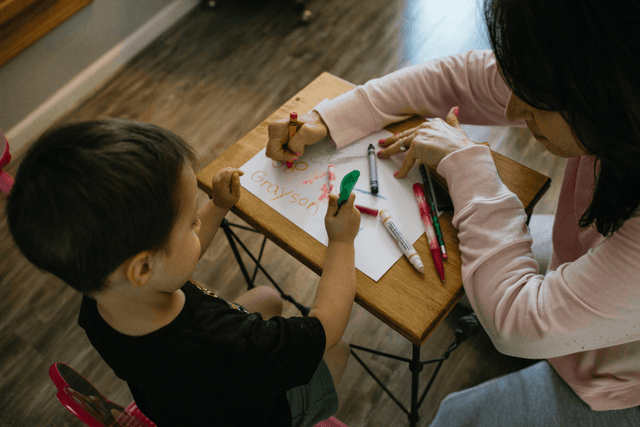
- explore volume, movement and cause and effect through water play;
- use blocks and loose parts to build stable structures;
- sort, count and compare objects;
- investigate plants, animals, weather and natural materials;
- notice patterns and make predictions;
- measure ingredients while cooking;
- test which materials roll, float, sink or absorb water; and
- redesign something after their first attempt does not work.
One preschool engineering experience highlighted by IT Brew asks children to help a puppet raccoon prepare for a birthday. Children combine everyday materials to design something that produces sound, then test and improve their creation.
The activity introduces an engineering process—explore, create and improve—without requiring expensive equipment or digital technology.
“Designing with a function in mind is something that’s not always present in preschool, but kids love doing it, and they’re very, very capable,” Cunningham said.
The value lies not only in the object children produce, but in the thinking that occurs along the way. Children make choices, test theories, encounter unexpected results and decide what to change.
Early STEM experiences can help children understand that they are capable of investigating questions and influencing the world around them.
When children are encouraged to experiment rather than reproduce a predetermined result, they learn that there may be more than one possible answer. They also discover that an unsuccessful attempt can provide useful information rather than represent failure.
For children, this can support:
- Confidence — children begin to see themselves as capable thinkers and problem-solvers.
- Curiosity — they are encouraged to ask questions, investigate possibilities and seek explanations.
- Persistence — testing and redesigning help children continue when something does not work immediately.
- Creativity — open-ended challenges invite children to imagine and compare different solutions.
- Collaboration — shared investigations require communication, negotiation and consideration of other perspectives.
- Reasoning — children learn to explain what they noticed and why they made a particular decision.
- Agency — children experience their ideas as meaningful and capable of producing change.
These abilities are relevant to an AI-shaped future, but they also matter to children now. They support children’s participation in play, relationships and learning long before they enter the workforce.
Early STEM should therefore not be framed as turning every child into a future engineer or technology professional. Its broader purpose is to ensure all children have opportunities to question, create, investigate and develop confidence in their own thinking.
The debate about AI and early childhood education should not focus exclusively on children’s direct use of technology.
AI may offer its greatest immediate benefit to ECEC by working in the background, helping educators and leaders manage administrative demands and creating more time for direct engagement with children.
Used appropriately, AI-assisted tools may help with tasks such as:
- drafting routine communications and administrative documents;
- organising information for policies and procedures;
- summarising meeting notes or regulatory guidance;
- identifying gaps in records or documentation;
- supporting roster development and workforce planning;
- structuring reflective questions and professional discussions;
- translating information to support communication with families; and
- reducing repetition across reporting and planning processes.
The objective should not be to produce more documentation simply because technology makes it possible. The real measure of value is whether AI reduces unnecessary workload and returns meaningful time to educators.
If used well, technology could allow educators to spend less time duplicating information, navigating systems and completing repetitive administrative tasks and more time observing, listening, playing and building relationships with children.
AI alone cannot remove the administrative burden experienced across ECEC.
Some of that pressure is created by duplicated systems, unclear expectations, overlapping reporting requirements and compliance processes that may not always be well integrated. Introducing another digital platform without addressing these underlying issues could add complexity rather than reduce it.
There is also a risk that time saved through automation could simply be replaced by expectations for more records, more analysis and more evidence.
Meaningful workload reduction will require governments, regulators, approved providers and technology developers to consider:
- which records are genuinely necessary to protect children and demonstrate quality;
- where information is being unnecessarily duplicated;
- whether systems can share information safely;
- how technology can fit into educators’ existing workflows;
- whether tools are accessible to services with different levels of resources; and
- how time saved will be protected for children, educators and pedagogical leadership.
The goal should be better systems and stronger practice, not merely faster administration.
AI may support educators, but it cannot replace what quality educators contribute to children’s learning and wellbeing.
It cannot take responsibility for active supervision, interpret every nuance of a child’s behaviour or build the secure relationships through which young children learn.
It cannot fully understand a child’s family, culture, communication, interests and lived experience. Nor can it replicate the professional judgement required when an educator notices a subtle change, responds sensitively to distress or adapts an experience in the moment.
Early childhood education is deeply relational. Its quality depends on educators who are emotionally available, knowledgeable and able to respond to each child within context.
Technology may assist with analysis, organisation and drafting. Responsibility for decisions must remain with people.
This principle is particularly important where AI is used in areas involving:
- children’s observations and assessments;
- behaviour and developmental concerns;
- child protection or incident records;
- staffing and performance decisions;
- family information; and
- photographs, videos or other personal data.
AI-generated content can be inaccurate, incomplete or affected by bias. Educators and leaders must verify outputs, protect privacy and remain accountable for the information they use and the decisions they make.
Strengthening STEM learning does not require young children to use generative AI or spend more time on screens.
Before introducing any child-facing AI tool, services should consider whether it is developmentally appropriate, supported by evidence and genuinely improves the learning experience.
They should also examine:
- what information the tool collects;
- where children’s data is stored;
- whether information is used to train an AI system;
- how consent is obtained;
- whether advertising or commercial influence is present;
- whether outputs may contain bias or misinformation; and
- whether the tool strengthens or displaces play, movement, creativity and human interaction.
In many cases, children may learn more about the foundations of STEM by building a bridge with blocks, investigating an insect or designing a water channel than by interacting with an AI application.
Children can be prepared for a technological future without placing technology at the centre of their childhood.
Play-based STEM does not mean placing materials on a table and expecting meaningful inquiry to occur automatically.
Educators extend children’s thinking by noticing their theories, introducing new language, making connections and asking questions without taking control of the investigation.
Questions such as “What did you notice?”, “Why do you think that happened?”, “What could you change?” and “Is there another way?” encourage children to reason, communicate and revise their ideas.
Educators also ensure STEM experiences are inclusive. Children with different abilities, cultural backgrounds, communication styles and previous experiences must all be able to participate and contribute.
As AI becomes more capable, these distinctly human elements of education become more, not less important.
For Australian early childhood services, STEM does not need to become a separate program or another requirement added to an already crowded workload.
It is already present throughout play-based learning. The opportunity is to recognise it, make it visible and intentionally extend children’s inquiry.
At the same time, AI presents a potential opportunity to reduce the administrative tasks that draw educators away from this work. Realising that opportunity will require careful design, strong privacy protections, professional oversight and a clear commitment to using technology in service of educators and children.
AI should not be used to replace relationships, automate professional judgement or move educators further away from children.
Its most valuable contribution may be the opposite: taking appropriate administrative tasks away from educators so they have more time to do the work only humans can do.
Early childhood education cannot predict every technology children will encounter. It can, however, nurture curiosity, creativity, persistence and critical thinking and ensure children are surrounded by skilled educators who know, understand and respond to them.
In an increasingly automated world, that human foundation may be more important than ever.


Don’t miss a thing


Related Articles