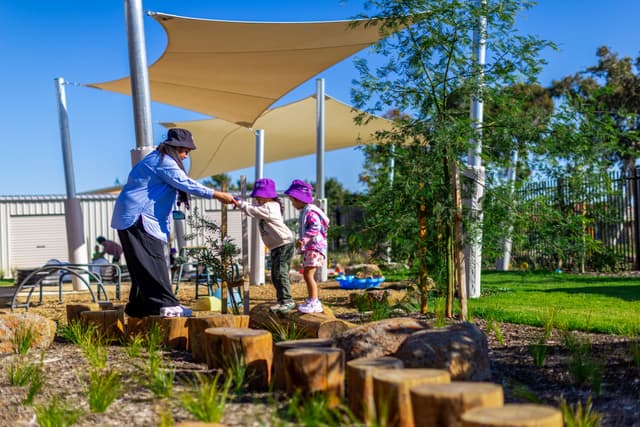



Active supervision in six steps: creating safer, more responsive learning environments

 Article
ACECQA’s practical guidance connects environment design, educator positioning and knowledge of children with supervision that supports safe, meaningful participation in play and everyday routines.
A conversation with a family at drop-off, a child needing assistance or a group moving outdoors can change supervision needs within moments. Effective supervision depends on educators recognising these changes, communicating with colleagues and adapting their approach.
The Australian Children’s Education and Care Quality Authority’s (ACECQA) Active supervision in 6 steps resource brings these practices together in a framework for educators and service leaders.
The guidance emphasises that adequate supervision involves more than meeting minimum educator-to-child ratios. It requires proactive planning, appropriate rostering and environments that enable educators to observe children and respond when needed.
The six steps work together throughout the day, helping educators maintain awareness of the whole group while responding to individual children.
1. Set up the environment
Arrange furniture, equipment and activities to support visibility, accessibility and movement. Consider how children will use each space and where educators can assist them while maintaining oversight of the wider group.
Regularly reviewing risk assessments helps teams identify supervision needs and suitable educator positions. Furniture height and equipment placement also affect sightlines, particularly around climbing equipment and experiences requiring closer assistance.
2. Position educators
Distribute educators across the environment, with attention to blind spots and activities requiring additional support. ACECQA suggests considering a position with an educator’s back to the wall so they can face most of the group.
Positioning needs to remain flexible. When an educator supports a care routine, speaks with a family or moves to another area, colleagues need to communicate and adjust coverage. Rostering must support these arrangements, including when children are using indoor and outdoor spaces simultaneously.
3. Scan and count
Continually observe children, their activities and emerging hazards. Scanning helps educators notice changes such as an open gate, equipment that has moved or a child approaching an area they should not access.
Regular headcounts and communication about children’s whereabouts support this awareness. Counting needs to sit alongside knowing which children are present, where they are and what they are doing.
4. Listen
Sounds can provide important cues about children’s wellbeing and safety. Crying, gasping, splashing, changes in tone or unexpected silence may signal that an educator needs to check what is happening.
Listening also extends to colleagues. A request for assistance or signs that an educator is becoming fatigued may indicate a need to review support and supervision arrangements.
5. Anticipate behaviour
Draw on knowledge of each child’s abilities, interests, culture and experiences to anticipate what may happen next. Observing play helps educators recognise when a child may need assistance or when an emerging situation could become unsafe.
ACECQA also recommends using service incident data to identify times and locations where incidents are more likely to occur. This information can inform supervision planning while supporting appropriate challenges and children’s developing independence.
6. Engage and redirect
Meaningful interaction is part of active supervision. Participate in children’s play when appropriate, remain close to those needing additional support and respond before situations become unsafe.
Engagement enables educators to understand what children are trying to achieve and guide their participation. Planning for periods when children may need more support, including before rest and towards the end of the day, also helps teams respond effectively.
Queensland Department of Education guidance, from which ACECQA’s resource was developed, includes an example from Brady Bunch Early Learning Centre in Hervey Bay. The team describes communicating when educators leave an area, adjusting positions as children move around the yard and arranging additional support when circumstances become more demanding.
The example highlights the value of mentoring educators to understand different supervision needs. An experience requiring close assistance, calls for different arrangements from one child, can navigate with greater autonomy.
For service teams, a useful reflection question is: when one educator’s attention or responsibilities change, how do colleagues know who is maintaining supervision across the group?
ACECQA’s supervision requirements guidance explains that educator-to-child ratios and adequate supervision are separate legislative requirements. Depending on the children attending and the service context, staffing above minimum ratios may be necessary.
Approved providers need to ensure staffing arrangements support children’s safety and individual needs. Service leaders must monitor practice, respond to concerns and equip educators with the skills and knowledge to supervise effectively.
Educators also need to adjust their approach during mealtimes, sleep and rest, and transitions between environments.
The framework can support team discussions about visibility, communication and responsiveness, including whether existing arrangements remain suitable as children’s needs, group dynamics or environments change.
ACECQA’s broader guidance calls for regular review of risk assessments, policies and procedures, and supervision and communication plans, including review after a serious incident or near miss.
Teams can use these discussions to identify specific changes, allocate responsibility and check how those changes work during everyday routines.
Educators and service leaders can explore the full guidance and download the poster through ACECQA’s Active supervision in 6 steps page.
Access the ACECQA: Active supervision in 6 steps, ACECQA: Supervision requirements under the NQF and Queensland Department of Education: Get your supervision active


Don’t miss a thing




Related Articles