



ACT climate listening report confirms urgent need to include the early years
 Article
The Australian Association for Environmental Education ACT Branch has welcomed the release of the ACT Government’s community listening report for the next ACT Climate Change Strategy, saying it confirms strong public demand for practical climate education, greater adaptation capability and stronger protection for young people and future generations.
The report finds that climate education is not adequately addressed in current policy and is essential for preparing young people. It also records strong community support for giving climate adaptation equal priority with emissions reduction, strengthening intergenerational responsibility and investing in community-led resilience and nature-based climate infrastructure.
AAEE ACT President Gabby Millgate said the findings reinforce the need for the new ACT Climate Change Strategy to explicitly include all children, starting with children from birth to five via the early childhood education and care sector.
“The community has clearly said that climate education, adaptation, intergenerational responsibility and community resilience must be central to the next Strategy. The missing piece is a clear implementation pathway for our youngest children.”
“Children under five are not waiting somewhere outside the climate future. They are already experiencing hotter days, smoke, storms, changing seasons and increasing pressure on the natural environments in which they live and learn.”
AAEE ACT made a submission to the consultation calling for early childhood education and care to be recognised as part of the ACT’s climate adaptation infrastructure.
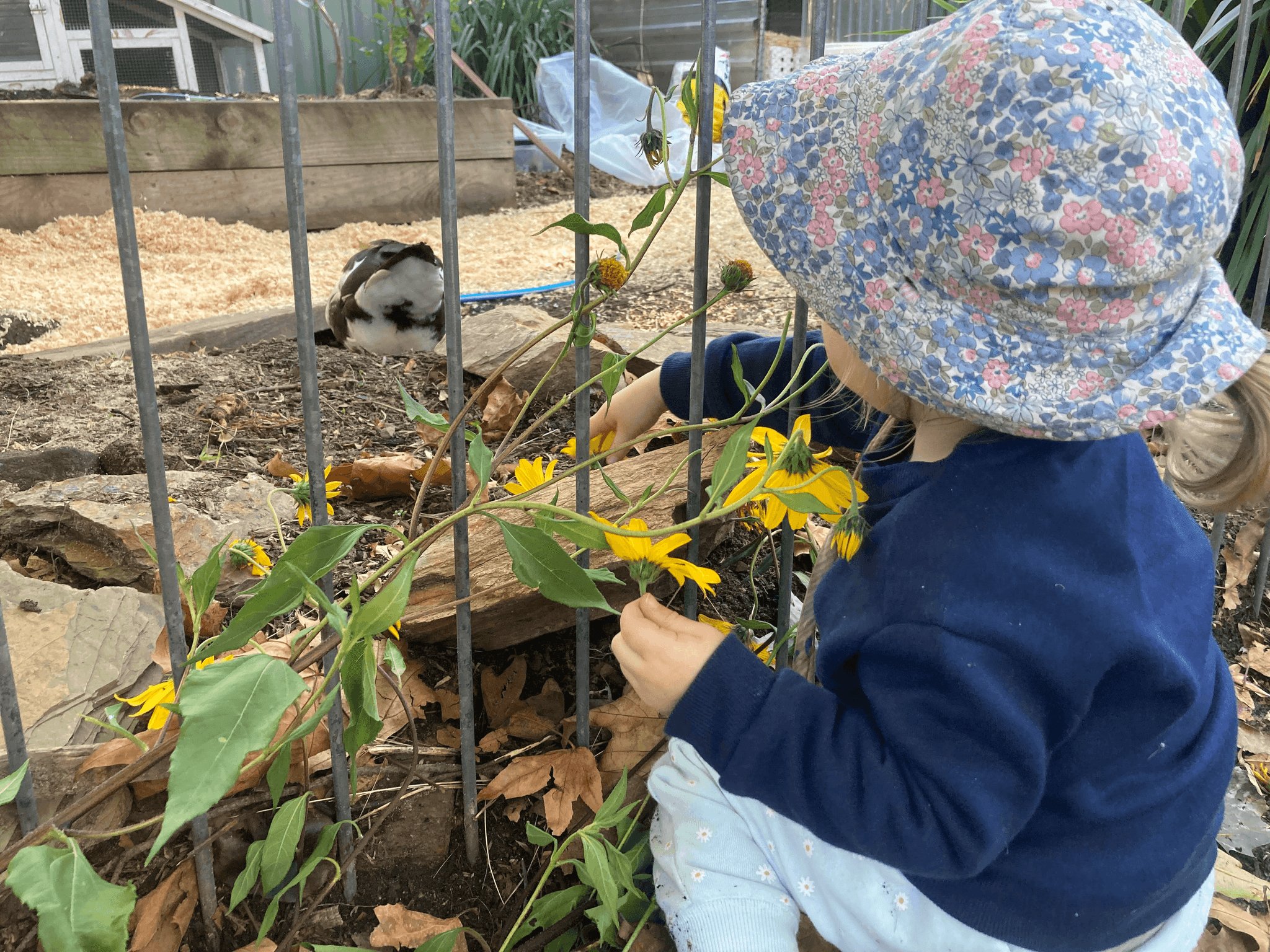
Early learning services are embedded in communities across Canberra and already work with children, families and educators every day. With appropriate policy recognition and workforce support, they can build climate capability through direct experiences of water, weather, biodiversity, food systems, shade, seasonal change, caring for place and community participation.
“Climate adaptation capability begins in the early years,” Ms Millgate said.
“This is not about frightening young children with abstract information about climate change. It is about helping them develop the observation, confidence, ecological knowledge, relationships and practical agency to participate in a changing world.”
This is not the first time the ACT has been urged to recognise the role of early childhood education in climate action. Recommendation 11 of the ACT Legislative Assembly’s 2024 Inquiry into Climate Change and a Just Transition called for a nature pedagogy pilot in early childhood settings.
“The pathway has already been identified,” Ms Millgate said. “The new ACT Climate Change Strategy is the opportunity to ensure Recommendation 11 does not remain in the realm of rhetoric, but becomes practical, funded and measurable action.”
AAEE ACT is calling for the ACT Climate Change Strategy 2026–2035 to:
- explicitly include children from birth to five in its commitments to young people and future generations
- recognise early childhood services as community-scale climate adaptation infrastructure
- include early childhood climate education within measurable implementation and reporting frameworks
- support nature pedagogy and access to nature across early learning services create meaningful mechanisms for young children’s voices and experiences to inform climate policy
- invest in educator capability so climate learning is practical, place-based and developmentally appropriate.
The Listening Report also highlights strong support for nature-based cooling, tree canopy, waterways, green corridors, Caring for Country practices and climate-
ready community infrastructure. AAEE ACT says these priorities must extend to the places where young children spend their days.
“The ACT does not need to invent this work from scratch. Early childhood services are already demonstrating what practical adaptation education can look like.”
“The opportunity now is to connect that existing practice to ACT climate policy, provide proper support and ensure that the youngest members of our community are visible in the Strategy.”
This is here.
This is real.
Learning ourselves, with the children.
Author:
Gabby Millgate is President of the Australian Association for Environmental Education ACT Branch and Nature Pedagogy Leader at Woden Valley Early Learning Centre. Drawing on almost a decade of practice in nature-based early childhood education, she developed the Early Years Climate Strategy to strengthen the visibility of children from birth to five in climate adaptation, education and policy. Her work focuses on child agency, access to nature, educator capability and the role of early learning services as community scale climate adaptation infrastructure.


Don’t miss a thing




Related Articles