Research

Provider
Innovative Research
Understanding Children
Intentional science play: a three‑stage pathway to foster children’s scientific literacy in the early years
Fiona Alston
Dec 10, 2025
Save
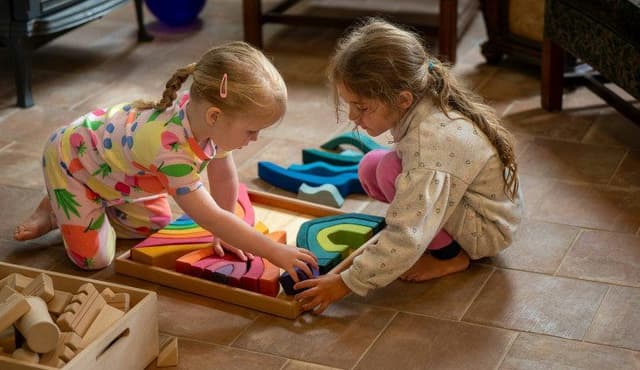
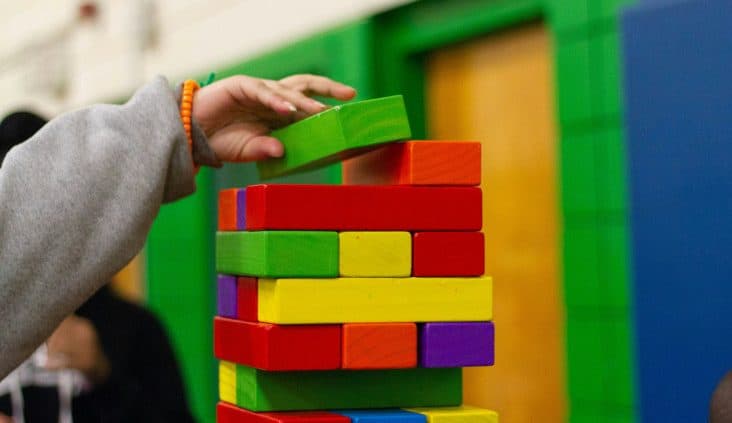
If we are truly committed to developing children’s scientific literacy, we must reconsider where science begins for the young, at the block corner, the water tray, and with the magnifying glass in hand.
Our recent article, “Understanding the Process of Scientific Literacy Development among Children in the Early Years Through Play and Intentionality”, highlights how children foster their scientific understanding through play and, importantly, through educators’ deliberate incorporation of science into play activities.By observing preschool science play, we outlined a three-stage continuum that transforms simple moments into powerful educational opportunities: planning, active play-based exploration and creation, and reflective pedagogical practice.
Why does this matter for Australian society? Scientific literacy is not just about rote facts; it’s about applying ideas to the real world through observing, predicting, testing, and explaining. By doing so, science becomes not only about “getting the right answer,” but exploring interconnectedness, wonder, and emergent understanding. This study situates early childhood play within a practical framework, demonstrating that children naturally grasp concepts such as cause and effect as they engage in activities like building, pouring, comparing, and telling stories. When educators intentionally guide these experiences, play becomes more than just fun, it becomes a meaningful way to understand the world, embodying the very kind of learning our best early childhood programs aim to foster.
Intentional planning ignites a deep curiosity in children’s play. Our research highlights educators who thoughtfully prepare materials, explain scientific phenomena, and pose questions that prompt children to notice differences and make comparisons, such as variable ramps, varied textures, and simple measuring tools. Reflecting professionally beforehand elevates the quality of these interactions. This deliberate approach to science play aligns perfectly with the Early Years Learning Framework for Australia, which emphasises intentionality and science activities rooted in children’s interests and ideas.
Over more than seven hours of video, our study captures spontaneous investigations and creations, drawings, constructions, explanations, that reveal children’s thinking in action. Educators demonstrate purposefulness by introducing new variables (“What happens if the ramp is steeper?”), naming concepts (“You noticed friction”), or connecting to prior play, weaving scientific practices into the fabric of children’s explorations.
Post-play reflection transforms these experiences into meaningful learning pathways. Teachers carefully analyse what transpired, identify emerging ideas and misconceptions, and plan follow-ups that build on children’s current understandings. Well-structured and connected play sequences help children develop higher-order thinking skills.
Supporting this approach, the broader research shows that when young children explore in authentic contexts, they deepen their content knowledge and reasoning about socio-scientific issues, skills vital for citizenship and critical thinking. Simply put, thoughtful play nurtures the thinking habits that science demands.
Four practical steps to enhance services and teams:
Recognise everyday contexts as science‑rich environments. Rather than relying solely on structured “science activities”, educators can draw on children’s interactions with natural materials, water, sand, plants, animals, light and shadow, or social and emotional dynamics. These moments provide opportunities for inquiry, exploration and wonder.
Value children’s curiosity and questions, especially the unexpected or open‑ended ones. Educators should nurture children’s spontaneous wonder, encourage their questions, and treat “why?”, “how?” or “what if?” as valid pathways to learning, even if they do not lead to predetermined answers.
Foster collaborative, emergent learning rather than teacher‑led instruction. An intentional approach invites educators to co-investigate with children, exploring, experimenting, and reflecting together, rather than delivering fixed content.
Embrace diversity, in experience, culture and being as a strength. This approach encourages respect for diverse ways of knowing, living, and learning, including Indigenous, ecological, embodied, and material ways.
The core argument is straightforward: play fosters and extends children’s learning when educators are intentional. By aligning thoughtful design with joyful exploration, early childhood services can make scientific literacy a reality. This approach isn't just good pedagogy; it’s essential preparation for a world that demands citizens capable of reasoning with evidence, testing ideas, and revising views. It starts with a timeless question in childhood, "What happens if...?", asked in classrooms that honour the importance of play.
At a time when many systems are under pressure to standardise, assess, and quantify learning, this perspective offers a refreshing yet important counterbalance. For services willing to reflect, reimagine and evolve, the rewards could be substantial: deeper engagement, more inclusive learning environments, and children who feel respected as full participants in their world.
If adopted widely, this approach holds the potential to reshape early childhood science, not only in what children learn but also in how they learn, who participates, and what counts as knowledge.
Authors and Affiliations
Roy, G., Sikder, S. & Letts, W. (2025). Understanding the process of scientific literacy development among children in the early years through play and intentionality. Research in Science Education. Https://doi.org/10.1007/s11165-025-10291-9
Don’t miss a thing
Related topics
Provider Quality
 WorkforceResearch
 Policy
 Practice
 Economics
Professional development
Advocacy
Allied Fields
In The Field
Innovative Research
Leadership
Understanding Children
Compliance
Family Day Care
Long Day Care
NQF and Policy Changes
Outside School Hours Care
Politics
Preschool
General News
Affordability & Accessibility
Corporate activity
Marketplace
Supply & Demand
Property
Report Summaries
Legislation
Changes
Reporting
Examples
Services
Events News
Personnel Appointments
Products