



ACECQA Snapshot reveals governance, safety and workforce pressures shaping quality outcomes in ECEC

 Article
Australia’s early childhood education and care (ECEC) sector continues to demonstrate strong overall performance under the National Quality Framework (NQF), with the latest NQF Snapshot Q1 2026 confirming that 92 per cent of rated services are Meeting NQS or above. This marks the fourth consecutive quarter of stability at this level.
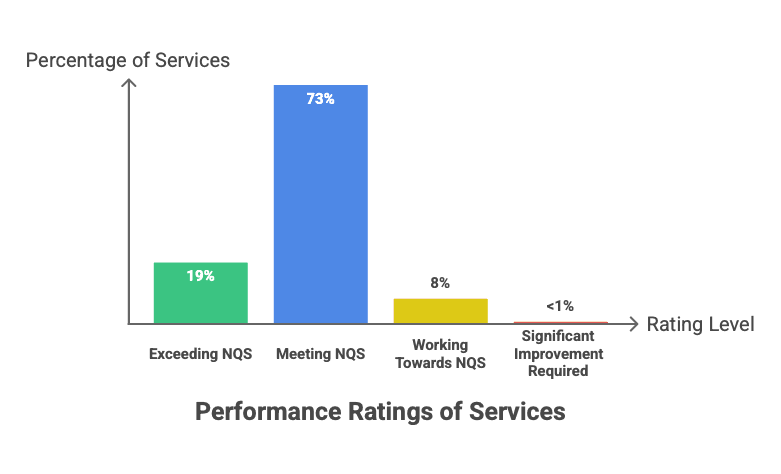
The report, released by the Australian Children’s Education and Care Quality Authority (ACECQA), shows that of the 17,043 services with a quality rating:
- 73% are rated Meeting NQS
- 19% are rated Exceeding NQS
- 24 services currently hold the Excellent rating
While these headline figures reflect a mature and largely stable quality system, the Snapshot also highlights persistent pressure points, particularly in governance, safety, supervision, and workforce capability, that continue to shape quality outcomes across the country.
Governance and leadership remains the most challenged quality area
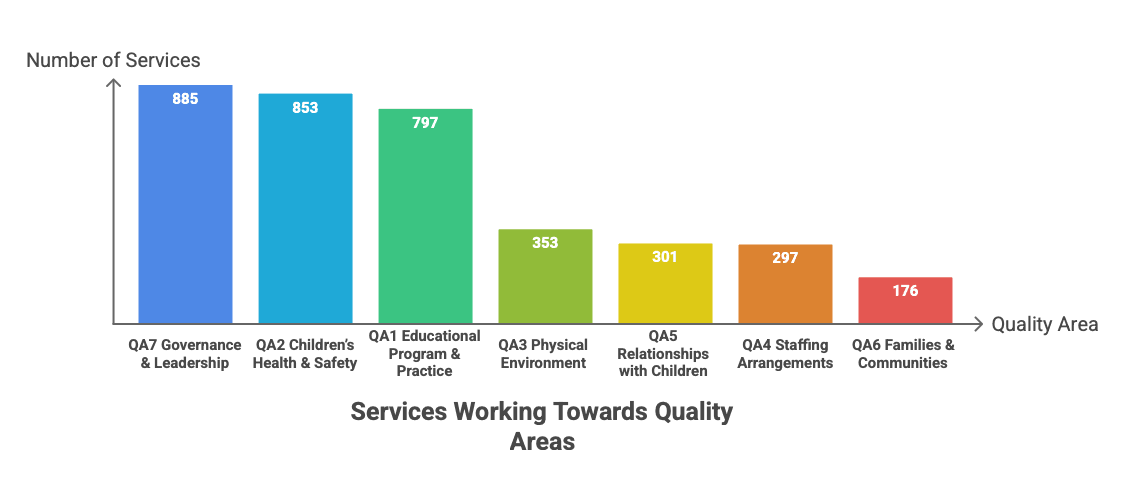
Quality Area 7 Governance and Leadership, again recorded the highest proportion of services rated Working Towards NQS nationally.
Key findings include:
- 885 services were rated Working Towards NQS in QA7
- QA7 recorded the highest proportion of Working Towards ratings (5%)
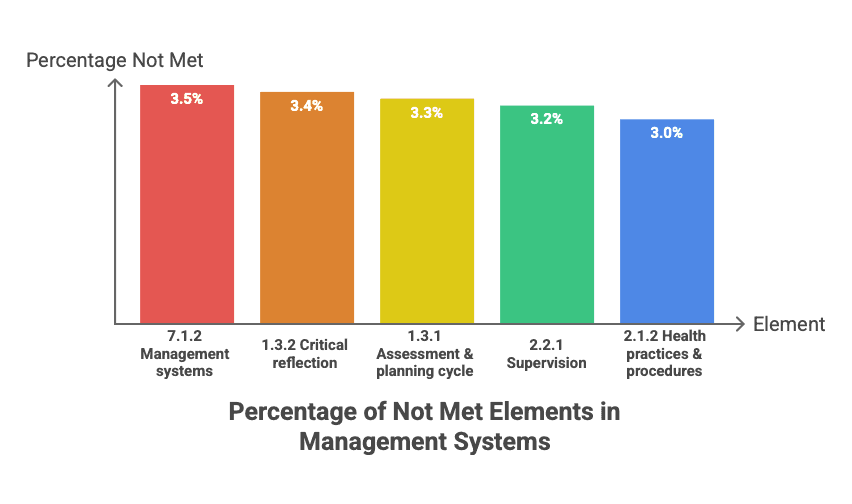
- The most commonly “not met” element nationally was Element 7.1.2, Management systems, with 3.5% of services not meeting the requirement.
Other frequently unmet elements included:
- Critical reflection (Element 1.3.2) - 3.4% not met
- Assessment and planning cycle (Element 1.3.1) - 3.3% not met
- Supervision (Element 2.2.1) - 3.2% not met
- Health practices and procedures (Element 2.1.2) - 3.0% not met
These results reinforce ongoing national conversations about operational governance, compliance systems, educational leadership, and professional learning structures within ECEC services.
While these headline figures reflect a mature and largely stable quality system, the Snapshot also highlights persistent pressure points, particularly in governance, safety, supervision, and workforce capability, that continue to shape quality outcomes across the country.
Governance and leadership remains the most challenged quality area
Quality Area 7 Governance and Leadership, again recorded the highest proportion of services rated Working Towards NQS nationally.
Key findings include:
- 885 services were rated Working Towards NQS in QA7
- QA7 recorded the highest proportion of Working Towards ratings (5%)
- The most commonly “not met” element nationally was Element 7.1.2, Management systems, with 3.5% of services not meeting the requirement.
Other frequently unmet elements included:
- Critical reflection (Element 1.3.2) - 3.4% not met
- Assessment and planning cycle (Element 1.3.1) - 3.3% not met
- Supervision (Element 2.2.1) - 3.2% not met
- Health practices and procedures (Element 2.1.2) - 3.0% not met
These results reinforce ongoing national conversations about operational governance, compliance systems, educational leadership, and professional learning structures within ECEC services.
Safety and supervision remain under scrutiny as compliance actions surge
Quality Area 2 Children’s Health and Safety, was the second‑highest area for Working Towards ratings, reflecting continued regulatory focus on safety, supervision, and risk management.
The Snapshot also reveals a significant increase in statutory compliance activity:
- 933 compliance actions were recorded in Q1 2026
- Up from 574 in Q1 2025, a 63% increase
Notable increases include:
- Compliance notices: 359 → 398
- Emergency action notices: 41 → 118
- Approval cancellations: 7 → 133
- Prohibition notices: 20 → 54
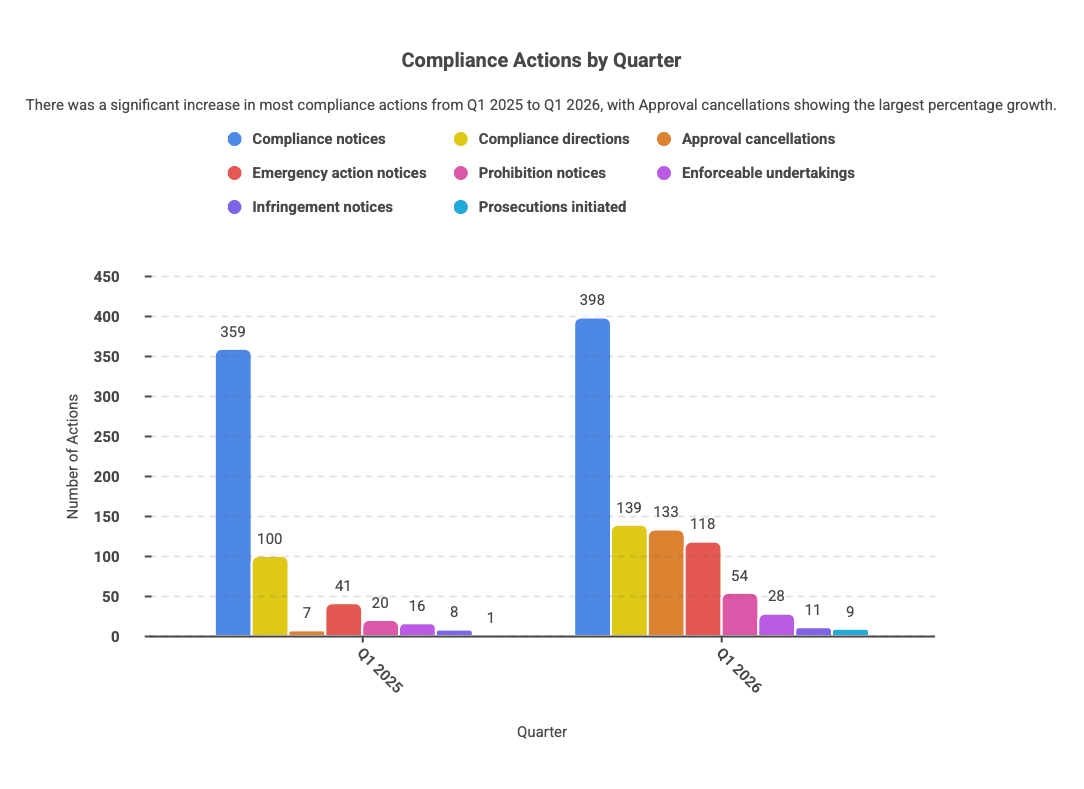
This escalation aligns with heightened public and political scrutiny of child safety, supervision, and regulatory oversight, as well as strengthened enforcement approaches emerging in several jurisdictions.
Workforce pressures continue to influence quality and compliance
Workforce strain remains a defining challenge across the sector.
The Snapshot shows:
- 5.1% of services nationally hold a staffing waiver
- Staffing arrangements remain one of the weakest‑performing quality areas
- Educational leadership and professional development continue to feature among the most common “not met” elements
The elevated rate of staffing waivers reflects:
- Ongoing educator shortages
- Qualification pressures
- Increased staffing requirements introduced in recent years
The provider landscape also remains dominated by small operators:
- 78% of approved providers operate a single service
- Only 1% operate 25 or more services
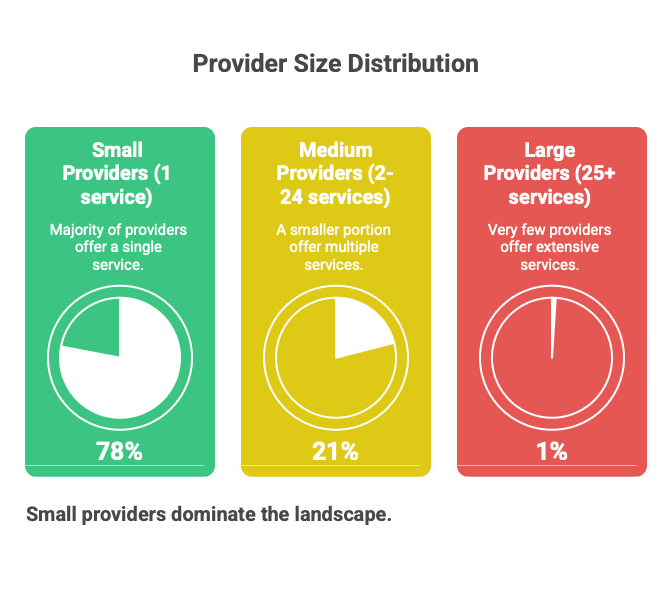
This fragmentation continues to influence workforce capability, governance maturity, and operational resilience.
Preschool/kindergarten services continue to outperform other service types
Preschool and kindergarten services remain the strongest‑performing service type nationally:
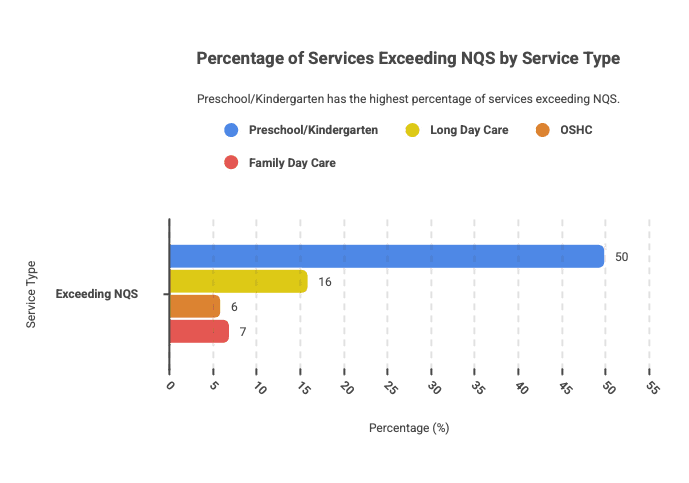
- 50% are rated Exceeding NQS
- Only 3% are rated Working Towards NQS
By comparison:
- Long day care: 16% Exceeding
- OSHC: 6% Exceeding
- Family day care: 7% Exceeding
Differences in performance also appear across provider management types:
- Private not‑for‑profit community‑managed services: 36% Exceeding
- Private for‑profit services: 10% Exceeding
ACECQA notes that these differences often reflect service mix, operating models, and jurisdictional contexts, rather than simple performance gaps.
Quality improvement remains strong despite system pressures
The Snapshot provides encouraging evidence that quality improvement continues to occur across the sector.
Among services previously rated Working Towards NQS and later reassessed:
- 69% improved their overall rating
- 5,190 services improved from Working Towards to Meeting NQS
- 831 services improved from Working Towards to Exceeding NQS
These results highlight the impact of:
- Continuous improvement processes
- Regulatory feedback
- Professional support
- Strengthened educational leadership
A sector balancing improvement with rising expectations
While national quality ratings remain stable, the Q1 2026 Snapshot paints a picture of a sector navigating:
- Increasing regulatory scrutiny
- Workforce shortages
- Heightened child safety expectations
- Growing operational and governance pressures
For policymakers and sector leaders, the data reinforces the need for investment in:
- Workforce capability
- Leadership development
- Governance systems
- Integrated support structures across the ECEC system
Read the full ACECQA NQF Snapshot Q1 2026 here.


Don’t miss a thing



Related Articles